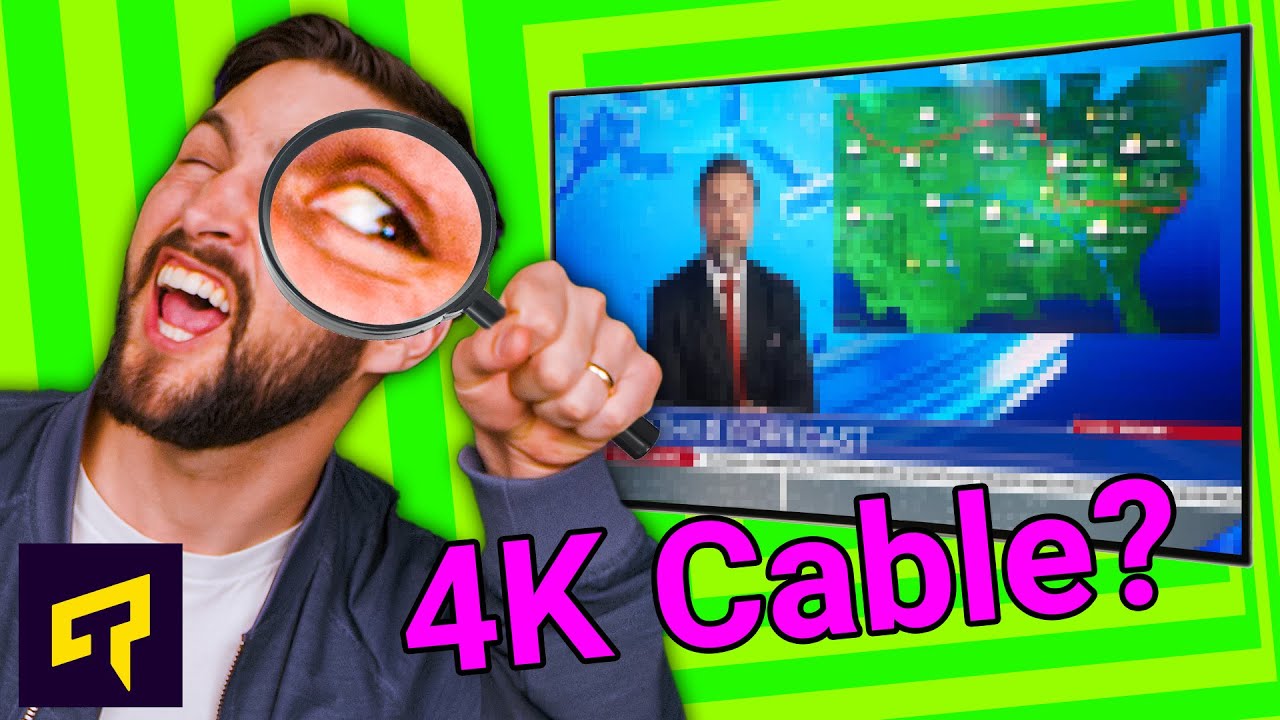
Why Isn't Cable TV In 4K?
0 up · 0 down · 0 ratings
Promos
Answer your emails faster, in the appropriate tone, and with confidence with Grammarly! Go to grammarly.com to sign up for a FREE account and get 20% off Premium! It's easy to stream videos in 4K - so why is there so little 4K content available on traditional cable and satellite? Leave a reply with your requests for future episodes, or tweet them here: twitter.com ► GET MERCH: lttstore.com ► AFFILIATES, SPONSORS & REFERRALS: lmg.gg ► PODCAST GEAR: lmg.gg ► SUPPORT US ON FLOATPLANE: floatplane.com FOLLOW US ELSEWHERE --------------------------------------------------- Twitter: twitter.com Facebook: @LinusTech Instagram: @linustech TikTok: @linustech Twitch: twitch.tv
The video explains why traditional cable and satellite television struggle to offer 4K content, despite the ubiquity of 4K-capable TVs. It argues that demand from viewers is not strong enough to justify the massive investment required for 4K production and distribution, especially for live broadcasts like sports where the economics are tighter. Broadcasters prioritize 1080p at 60 frames per second for revenue-generating sports events, with HDR receiving more emphasis because its visual impact is perceived as more compelling than simply increasing resolution. The production workflow for 4K is significantly more complex and costly, requiring upgraded cameras, lenses, longer and more expensive wiring, and specialized trucks to capture, edit, and deliver the content. Even when 4K content exists, the existing bandwidth and channel lineup constraints mean providers risk squeezing out multiple channels, which they are reluctant to do. While new standards like ATSC 3.0 enable 4K over the air, actual 4K broadcast content remains limited and not yet widespread, making 4K feel like a future upgrade rather than an immediate norm. In sum, while 4K has clear technical advantages, the combination of cost, existing infrastructure, and perceived viewer demand keeps it from becoming standard fare on conventional cable and satellite services for the near term, with streaming services already embracing 4K more readily. The host closes by noting TechQuickie’s own 4K work and inviting viewer engagement for future topics.
Topics · technology · television · broadcasting · 4k
Questions answered
- Why is 4K content scarce on traditional cable and satellite services?
- Because producing and delivering 4K content, especially live events like sports, requires much higher costs for cameras, lenses, infrastructure, and broadcast trucks, and the potential demand from viewers is not enough to justify those investments for many providers.
- Do new broadcast standards make 4K TV more common over the air?
- ATSC 3.0 enables 4K capable over‑the‑air TV, but actual 4K broadcasts remain limited and not yet widespread, and not all 4K-capable TVs are receiving 4K content via OTA.
- Is HDR more important than 4K for most viewers?
- According to the video, broadcasters see HDR as delivering a bigger visual impact due to brighter colors and higher contrast, making it a more compelling upgrade for many viewers than simply increasing resolution from HD to 4K.