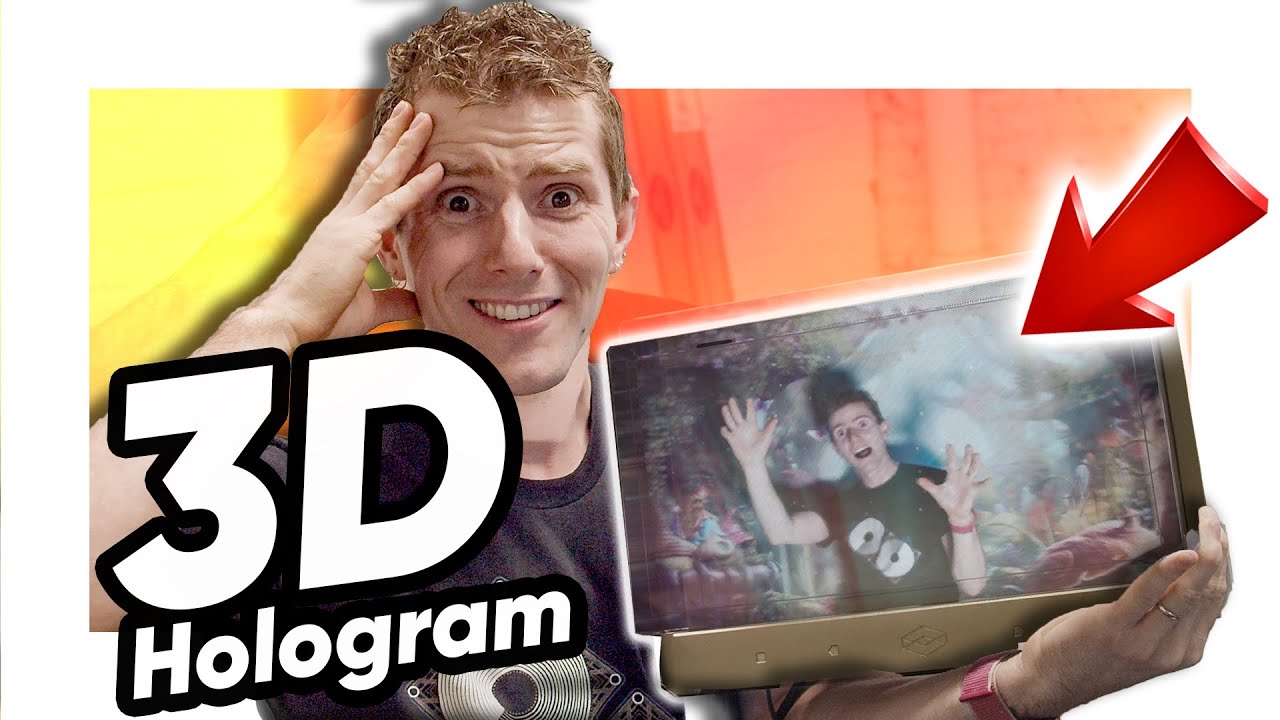
I could hardly believe my eyes! - Looking Glass Holographic Monitor
0 up · 0 down · 0 ratings
Promos
New users can get $20 off the Drop Koss GMR-54X-ISO Gaming headset at dro.ps Save 10% and Free Worldwide Shipping at Ridge Wallets by using offer code LINUS at ridge.com 3D glasses, VR headsets- they're OK but nothing compares to a real 8K hologram! Learn more about the Looking Glass 8K Display: look.glass Purchases made through some store links may provide some compensation to Linus Media Group. Discuss on the forum: linustechtips.com Our Affiliates, Referral Programs, and Sponsors: lmg.gg Get a Displate Metal Print at lmg.gg Get a 30-day free trial of Amazon Prime at lmg.gg Linus Tech Tips merchandise at lttstore.com Our Test Benches on Amazon: amazon.com Our production gear: geni.us Twitter - twitter.com Facebook - @LinusTech Instagram - @linustech Twitch - twitch.tv Intro Screen Music Credit: Title: Laszlo - Supernova Video Link: youtube.com iTunes Download Link: itunes.apple.com Artist Link: soundcloud.com Outro Screen Music Credit: Approaching Nirvana - Sugar High youtube.com
The video presents a detailed tour of Looking Glass holographic displays, starting with the company’s early concept of using a field of light rather than ink to render moving 3D visuals. The host explains the core idea behind stereoscopic 3D without eyewear, emphasizing how the display can be viewed by a group within a 50 degree viewing cone and how each head position yields a slightly different perspective. The discussion then dives into the technicalities of 45 perspective slices per 2D pixel, how light directionality creates depth, and the substantial processing required to render scenes from multiple angles. Through demonstrations of 2.5K and 4K development kits, the video contrasts the perceived realism and depth with the practical constraints of hardware power, including GPU demands and the need for per-eye rendering. The host highlights tangible advantages of the 8K model, such as finer image detail, reduced reliance on optical tricks, and the ability for objects to appear to sink into or pop out of the display, all of which substantially elevate realism. The narrative also covers calibration challenges, subpixel remapping accuracy, and the software-driven nature of most engineering work, underscored by SDKs for Unity and Unreal Engine and tools that ease interaction with 3D objects using standard input devices. Finally, the host reflects on real-world applications in medicine, architecture, and education, noting the surprisingly comfortable viewing experience and the potential for immersive collaboration without wearing headsets, before addressing price barriers and the likelihood of demos at events like CES 2020. The tour then introduces the 8K Looking Glass model, which quadruples or more the pixel count to deliver sharper detail and more convincing depth. The host recounts seeing a lifelike 3D face model and a real 3D scan that approaches uncanny realism, while also pointing out the thinner front slab and the ability to deepen focal points thanks to higher resolution. Real-world benefits such as reduced need for optical tricks and improved lighting fidelity are discussed, alongside the potential for objects to appear to recede or emerge from the display with enhanced clarity. The 8K unit is noted as impressive yet costly, with practical constraints making it mostly suitable for commercial demonstrations rather than casual consumer use, and the host hints at CES 2020 as a primary venue for firsthand exposure. The video closes by tying the technology to future implications in architecture, medical visualization, and interactive design, while teasing related products and sponsor shoutouts. Overall, the video blends technical explanation with hands-on impressions, illustrating how the Looking Glass changes the way we perceive digital 3D content by providing simultaneous multi-view depth, real-time interaction, and high-resolution detail in a glasses-free, group-friendly format.
Topics · technology · display · holography · 3d-visualization · science-and-tech
Questions answered
- What makes the Looking Glass display capable of showing depth without glasses?
- It uses a field of light and 45 perspective slices per 2D pixel to create multiple viewpoints for each eye, so light directionality produces depth as your head moves within a viewing cone.
- Why is the 8K Looking Glass considered expensive and not widely affordable for consumers?
- The 8K model requires substantial display resolution, processing power, and advanced calibration, making it a high-end device mostly practical for demonstrations and professional uses rather than casual home use.
- What are some real-world applications mentioned for the technology?
- Potential uses include medical visualization, architectural design, and collaborative visualization where multiple people can interact with 3D content without headsets.