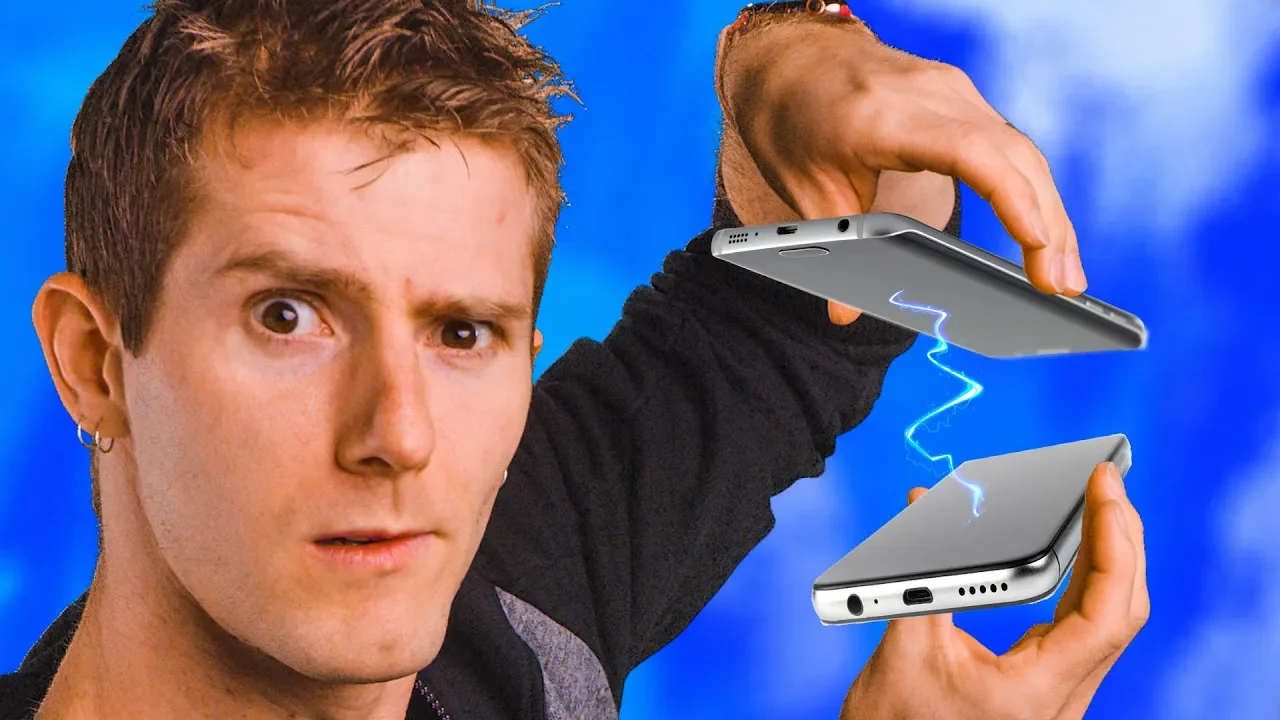
How does phone power sharing work?
0 up · 0 down · 0 ratings
Promos
The first 200 people who head to brilliant.org will get 20% off their annual premium subscription of Brilliant. How does wireless power-sharing work? LTT Merch Store: lttstore.com Follow: twitter.com Leave a reply with your requests for future episodes, or tweet them here: twitter.com
How does phone power sharing work? This TechQuickie episode explains wireless power sharing as a direct energy transfer from one phone to another using an internal induction coil, without the need for external chargers or power banks. The host contrasts this with traditional wireless charging, which relies on a base station or bank to provide power, whereas power sharing uses the phone’s own battery to supply charge to another device. The video notes that current implementations, such as on the Samsung Galaxy S10, can charge a Galaxy Watch or Buds and are reportedly present on the iPhone 11 lineup but disabled by Apple for unspecified reasons. A key point is the efficiency and practicality: power sharing is relatively inefficient, delivering roughly 500 milliamps under ideal conditions, which for a typical 3500 mAh phone battery translates to a long time to reach moderate charges and a noticeable drain on the source phone, with about a quarter of its own battery lost per hour of sharing. The segment emphasizes that this feature is best suited for quick top-ups or powering smaller, power-hungry accessories like watches, rather than fully charging a phone, and it frames future improvements as battery technology evolves. The episode also weaves in a light sponsor segment for Brilliant.org, highlighting critical thinking tools and problem-solving frameworks as a broader educational plug, before wrapping with a nudge to like, subscribe, and share ideas for future episodes.
Topics · technology · science · wireless charging · mobile devices · energy transfer
Questions answered
- What is the key difference between wireless power sharing and standard wireless charging?
- Wireless power sharing uses a phone's own battery to supply power directly to another device via an internal induction coil, whereas standard wireless charging relies on a base or external charger to provide power to the phone.
- How efficient is wireless power sharing and how long might it take to charge another phone?
- It is relatively inefficient, with roughly 500 milliamps of current under best conditions. Charging a typical 3500 mAh phone to 50% could take about three and a half hours, and the source phone loses about a quarter of its battery per hour of sharing.