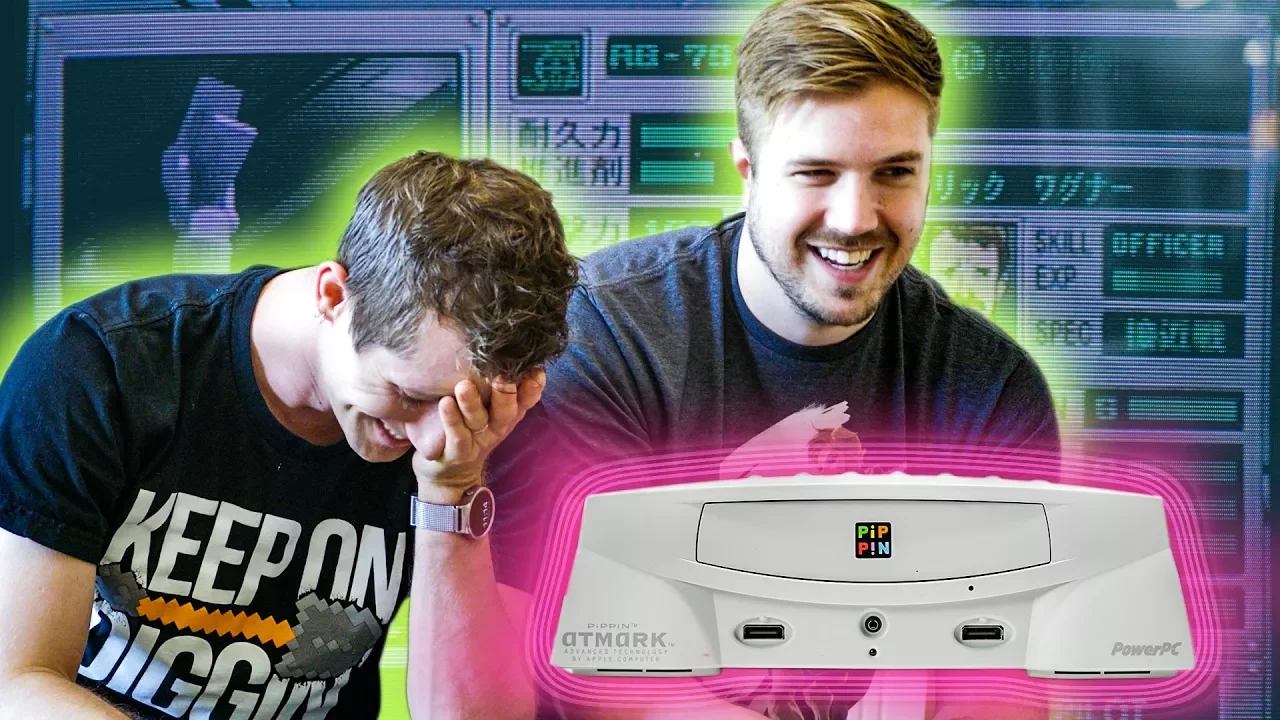
Testing Apple’s FORGOTTEN GAME CONSOLE from 1996!
0 up · 0 down · 0 ratings
Promos
Apple made a game console, and holy crap, it's horrible. Let's try out the Atmark Pippin!! Squarespace sponsor link: Visit squarespace.com and use offer code LTT for 10% off bequiet! sponsor link:
Check out bequiet's Dark Base Pro 900: Canada: geni.us USA: geni.us Buy game consoles on Amazon: geni.us Discuss on the forum: linustechtips.com Our Affiliates, Referral Programs, and Sponsors: linustechtips.com Linus Tech Tips merchandise at designbyhumans.com Linus Tech Tips posters at crowdmade.com Our production gear: geni.us Twitter - twitter.com Facebook - @LinusTech Instagram - @linustech Twitch - twitch.tv Intro Screen Music Credit: Title: Laszlo - Supernova Video Link: youtube.com iTunes Download Link: itunes.apple.com Artist Link: soundcloud.com Outro Screen Music Credit: Approaching Nirvana - Sugar High youtube.com Sound effects provided by freesfx.co.uk
The video opens with Linus sharing a nostalgic yet critical look at Apple’s forgotten 1996 game console, the Pippin Atmark. It frames this hardware as a bold but doomed experiment from a time when Apple was exploring living room convergence and gaming, complete with a regional switch to bypass typical lockouts and the ability to run on a Mac desktop. The host explains the historical context, including a high price point for the era and ambitious specifications like a Motorola PowerPC 603 CPU and expandable PCI slots, which, despite their tech-forward promise, did not translate into commercial success. Early on, the team physically unboxes and tests a sealed unit, marveling at the original packaging and the long-sealed peripherals, including the modem and the unusual ball mouse controller. They recap Apple’s marketing stance that this device was not just a computer, but a living room experience, while highlighting features such as motherboard upgrades, on-the-fly OS updates, and the platform’s goal of displacing traditional TVs with interactive content. The narrative then shifts to hands-on testing, with the guys connecting the console, selecting a region, and attempting to play a Japan-only Gundam strategy game, revealing language barriers and the era’s hardware limits in real time. They assess the gameplay experience, noting the English language barrier, clumsy controls, and the overall difficulty of enjoying a 1990s era title on hardware that was clearly ahead of its time in some respects but hampered by practicality and availability. The video closes by encountering the broader implications of the project, acknowledging the nostalgia many viewers feel while also recognizing the challenges of reviving or repurposing such an obscure, expensive relic, and ends with a plug for Squarespace and Be Quiet sponsorships as the hosts reflect on the retro-tech journey. Overall, it delivers a detailed retrospective that balances reverence for innovation with practical critique of product execution and market timing. The closing remarks invite viewers to share their opinions, highlighting the community’s ongoing debate about whether this hardware was a visionary misstep or a misunderstood pioneer. The video thus blends historical exploration with personal reaction to offer both informational and entertainment value for retro tech enthusiasts and Apple historians alike.
Topics · technology · retro gaming · consumer electronics · television and video
Questions answered
- What was the Pippin Atmark marketed as beyond a game console?
- It was marketed as a living room hub that could turn a TV into an interactive experience, with on-the-fly OS updates and expandability, aiming to go beyond pure gaming.
- Why was the Pippin considered ahead of its time despite failing commercially?
- Because it offered features like region-free NTSC/PAL switching, the ability to run on Mac hardware, a modem for online in-home access, and plans for expandability, which were unusual for a console in that era.
- What caused language and usability issues during the gameplay session?
- Many titles were Japanese only, there was limited English localization, and the control scheme was awkward, making the gameplay experience difficult to enjoy.
- What is the overall takeaway about Apple’s 1996 console in this video?
- The takeaway is a balanced view that appreciates the innovation while acknowledging the marketing, pricing, and practical barriers that prevented mass adoption.