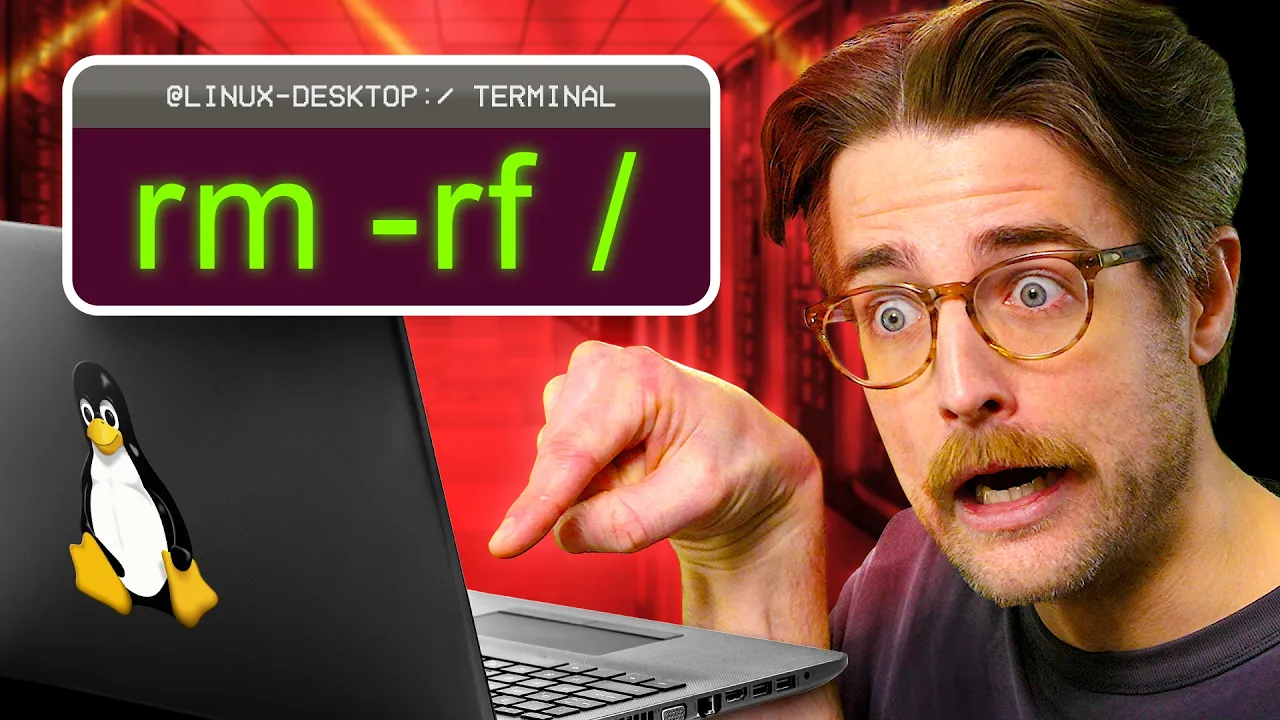
The Most Dangerous Linux Command Explained
0 up · 0 down · 0 ratings
Promos
Get a free 15-day trial of Odoo’s all-in-one business solution and see how it can make your life easier! Check it out at odoo.com Purchases made through some store links may provide some compensation to Linus Media Group. The rm -rf / command is one of the most dangerous things you can type on a Unix system - Riley explains what it does, why it exists, and how to protect yourself from accidentally nuking your computer. Leave a reply with your requests for future episodes. ► GET MERCH: lttstore.com ► GET EXCLUSIVE CONTENT ON FLOATPLANE: lmg.gg ► SPONSORS, AFFILIATES, AND PARTNERS: lmg.gg FOLLOW US ELSEWHERE --------------------------------------------------- Twitter: x.com Facebook: @LinusTech Instagram: @linustech TikTok: @linustech Twitch: twitch.tv
The video opens with a stark warning about the rm -rf / command, framed as a numeric eight-character fuse that could wipe out an entire system. The host breaks down the Unix command structure, explaining how a command name, flags, and arguments interact, and then dives into rm as the removal tool for files. He clarifies that rm targets directories and files, and that the -r flag makes it recursive, sweeping through subdirectories to erase everything in its path. The discussion emphasizes the precision required when typing commands, because a single mistake can lead to catastrophic data loss, including personal files and system configurations. The segment also contextualizes the dangers by comparing Linux behavior to Windows, and it sets the stage for understanding how such a powerful tool should be handled with caution and safeguards.
Topics · technology · computing · linux · data_security · system_administration
Questions answered
- What exactly does the command rm -rf / do on a Linux system?
- rm removes files, the -r flag makes it recursive to delete directories and their contents, the -f flag forces deletion without prompts, and / designates the root of the filesystem, so the command deletes everything reachable from the root without asking for confirmation.
- Why is this command considered so dangerous, and can it be recovered from easily?
- Because it can permanently delete almost all data and configurations across the entire filesystem, including system files; recovery is not guaranteed and backups may fail, so the impact can be irreversible without robust safeguards.
- What practical safeguards can prevent accidental damage from rm -rf or similar commands?
- Use backups and snapshots (3-2-1 rule), alias rm to require confirmation, employ safe rm tools that blacklist critical directories, and consider immutable EFI variables and no preserve root protections to reduce accidental root deletions.