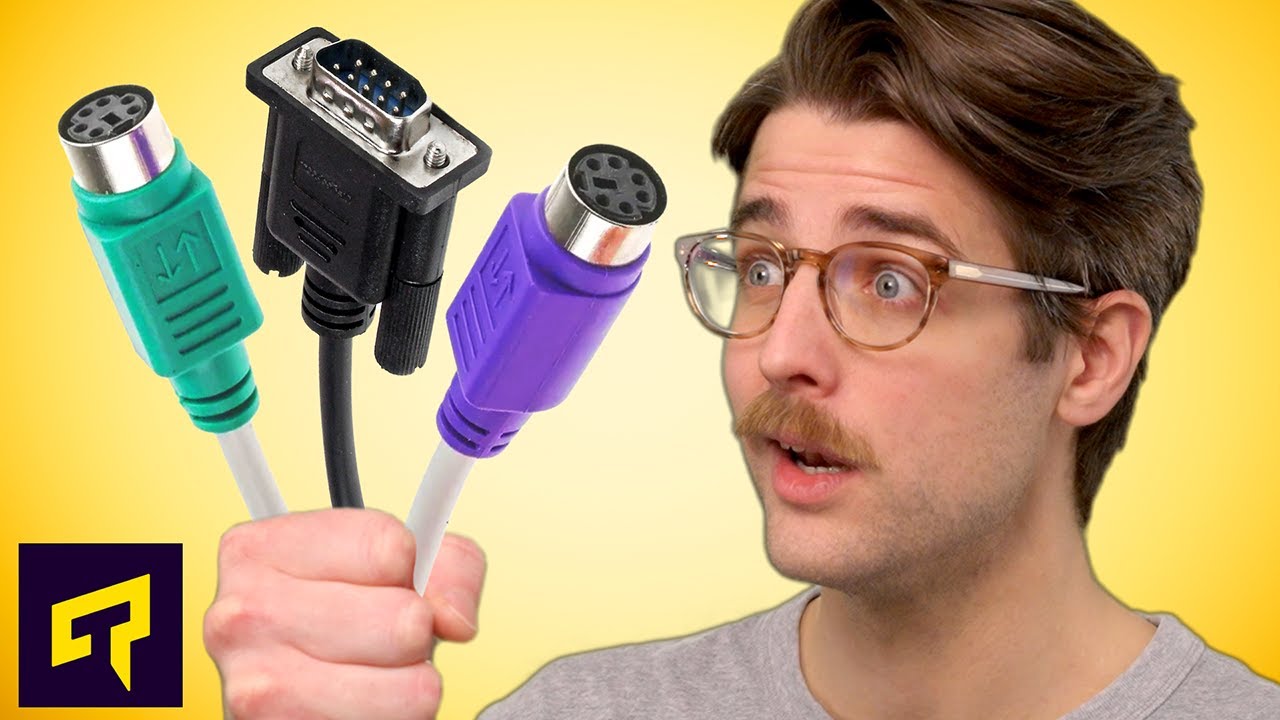
Before USB, we had THIS
0 up · 0 down · 0 ratings
Promos
Get started with ClouDNS today at bit.ly Thanks to Wendell of Level1Techs for his help with this video. Learn about the ports we used on our computers before USB became popular. Leave a reply with your requests for future episodes. ► GET MERCH: lttstore.com ► GET EXCLUSIVE CONTENT ON FLOATPLANE: lmg.gg ► SPONSORS, AFFILIATES, AND PARTNERS: lmg.gg FOLLOW US ELSEWHERE --------------------------------------------------- Twitter: twitter.com Facebook: @LinusTech Instagram: @linustech TikTok: @linustech Twitch: twitch.tv
The video starts by addressing a common question about why USB became the universal standard for external devices, and then frames the history of computer connectivity by walking through the many port types that preceded USB. It begins with the PS/2 port, introduced in 1987 for IBM systems, which served as a dedicated keyboard and then mouse connector with distinctive purple and green color coding. The host explains how PS/2 offered a stable, point-to-point interface on the motherboard, and why it persisted in some environments for reliability and BIOS-level control, including cases where USB could be disabled to prevent unauthorized drives. The discussion then moves to even older and more obscure options like the Apple Desktop Bus, which supported a broader set of peripherals and could be daisy-chained, before spinning forward to serial ports that connected mice, modems, and early devices one bit at a time. The narrator then covers the parallel port, or printer port, which significantly increased data throughput for printers and data-heavy devices but still lagged behind USB in overall speed, often maxing out at a few megabytes per second and facing synchronization challenges. Throughout, the video links the evolution of these interfaces to why a universal, hot-swappable standard like USB became dominant, while noting that certain legacy ports still see use in specialized industrial or scientific contexts. By the end, the host hints at future topics and invites viewer requests for other episodes, signaling a broader series on the hardware that shaped early PC experiences and the transition to modern connectivity.
Topics · technology history · computer hardware · peripherals · hardware evolution · consumer electronics
Questions answered
- What were PS/2 ports originally used for in early PCs?
- PS/2 ports were primarily used for keyboards and mice, providing a dedicated motherboard connection and color-coded purple for keyboards and green for mice.
- Why did USB eventually replace serial and parallel ports?
- USB offered higher data transfer speeds, simpler hot-swapping, and a universal connector standard, which reduced the need for multiple, device-specific ports and improved user experience.