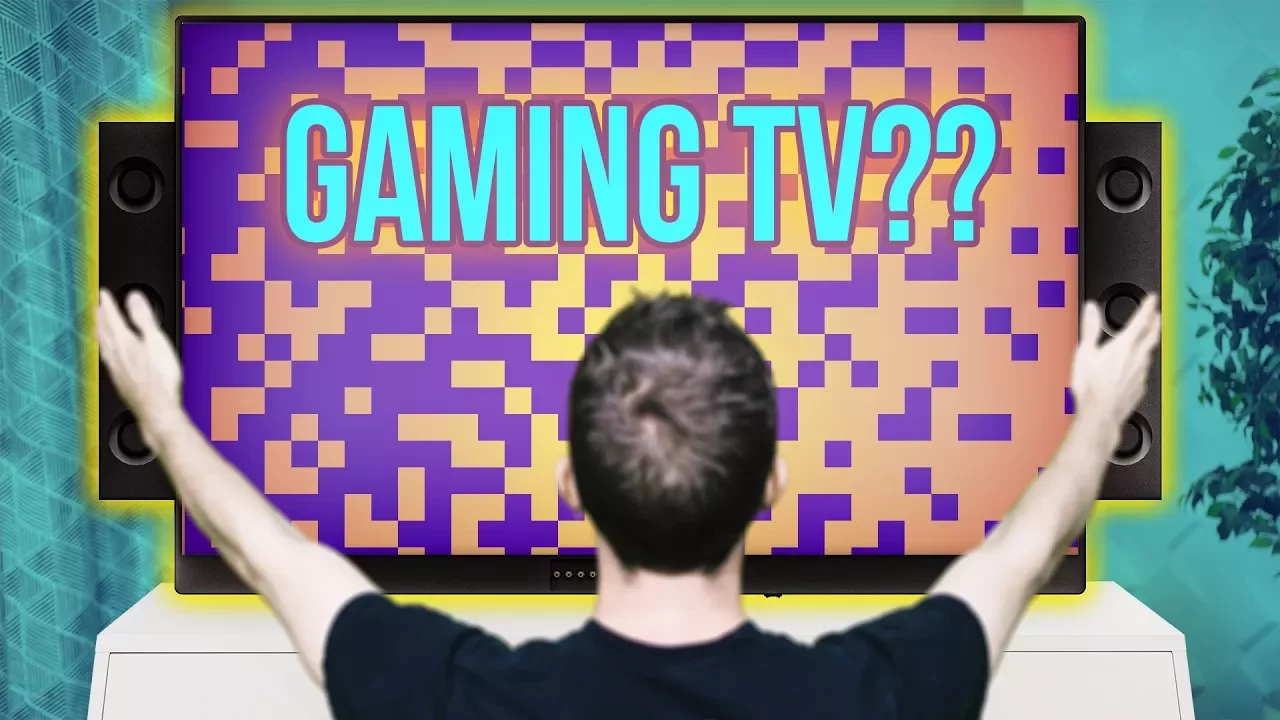
We Designed the ULTIMATE Gaming TV
0 up · 0 down · 0 ratings
Promos
Thanks to Casper for sponsoring this video! Get a discount on your Casper mattress of $50 USD (as a US viewer) or $65 CAD (as a Canadian viewer) when you purchase by going to bit.ly and using promo code LINUS We think TV manufactures are missing an opportunity not making a TV for gamers - here is what we think they should make. The Corsair One features a compact form factor that is fast, quiet and compact. Check it out through Amazon or Newegg at the links below. Buy the CORSAIR ONE on Amazon: geni.us Buy the CORSAIR ONE on Newegg: geni.us Buy a gaming monitor on Amazon: geni.us Newegg: geni.us Discuss on the forum: linustechtips.com Our Affiliates, Referral Programs, and Sponsors: linustechtips.com Linus Tech Tips merchandise at designbyhumans.com Linus Tech Tips posters at crowdmade.com Our production gear: geni.us Twitter - twitter.com Facebook - @LinusTech Instagram - @linustech Twitch - twitch.tv Intro Screen Music Credit: Title: Laszlo - Supernova Video Link: youtube.com iTunes Download Link: itunes.apple.com Artist Link: soundcloud.com Outro Screen Music Credit: Approaching Nirvana - Sugar High youtube.com Sound effects provided by freesfx.co.uk
The video presents a bold speculative vision for a gaming oriented television, arguing that the best path forward is to combine the immediacy and accuracy of gaming monitors with the convenience and size of a TV. The host frames the concept as a flagship, acknowledging the trade-offs involved while emphasizing the goal of ultra low input lag, CRT-like pixel response, and crisp, factory-calibrated color accuracy. They propose an OLED panel to minimize blur, with game mode that bypasses the typical cinema-like processing to maintain snappy reaction times, while still offering flexible color management. The design also envisions high refresh rates, capable of 4K at 60 Hz or 1080p at up to 165 Hz, and introduces options for interpolation and 1 to 4 pixel mapping to preserve sharpness when running at non-native resolutions. The concept expands beyond the panel, detailing dual input modules to support G-Sync and FreeSync, a thicker chassis to accommodate a standalone receiver, and a rich suite of connectivity including DisplayPort, multiple HDMI ports, legacy inputs, and a built-in upscaler reminiscent of a Framemeister for retro gaming. The audio strategy is deliberately modular, suggesting bookshelf-style speakers mounted to the sides of the TV with detachable wiring to enable easy upgrade or integration into surround setups, alongside a traditional amp and DAC path, and even Bluetooth multi-stream support for wireless headsets. The video then explores a stereo 3D concept for in-home gaming with parallel full-screen displays for different users, note-worthy remote options including Bluetooth, a potential integrated keyboard, and a smart app connected lighting system, all aimed at delivering a premium, configurable PC-gaming experience from a living room device. Finally, the host invites feedback on what might be missing and contemplates the feasibility of pricing that could still be accessible to dedicated gamers who expect meaningful features for their budget, while also touching on sponsorship and real-world considerations for bringing such a vision to market.
Topics · technology · gaming · consumer_electronics · product_design · display_technology · audio · innovation
Questions answered
- What is the core goal of the designed gaming TV concept?
- The core goal is to deliver a TV that meets the needs of gamers by combining ultra low input lag, CRT-like pixel response, high refresh rates, accurate factory-calibrated colors, and rich connectivity, while providing options for retro inputs and modular audio.
- Which technologies are proposed to support smooth gameplay?
- The concept includes an OLED panel with low processing delay, game mode with a simple sRGB profile, 4K at 60 Hz or 1080p at up to ~165 Hz, and support for both G-Sync and FreeSync via dual input modules.