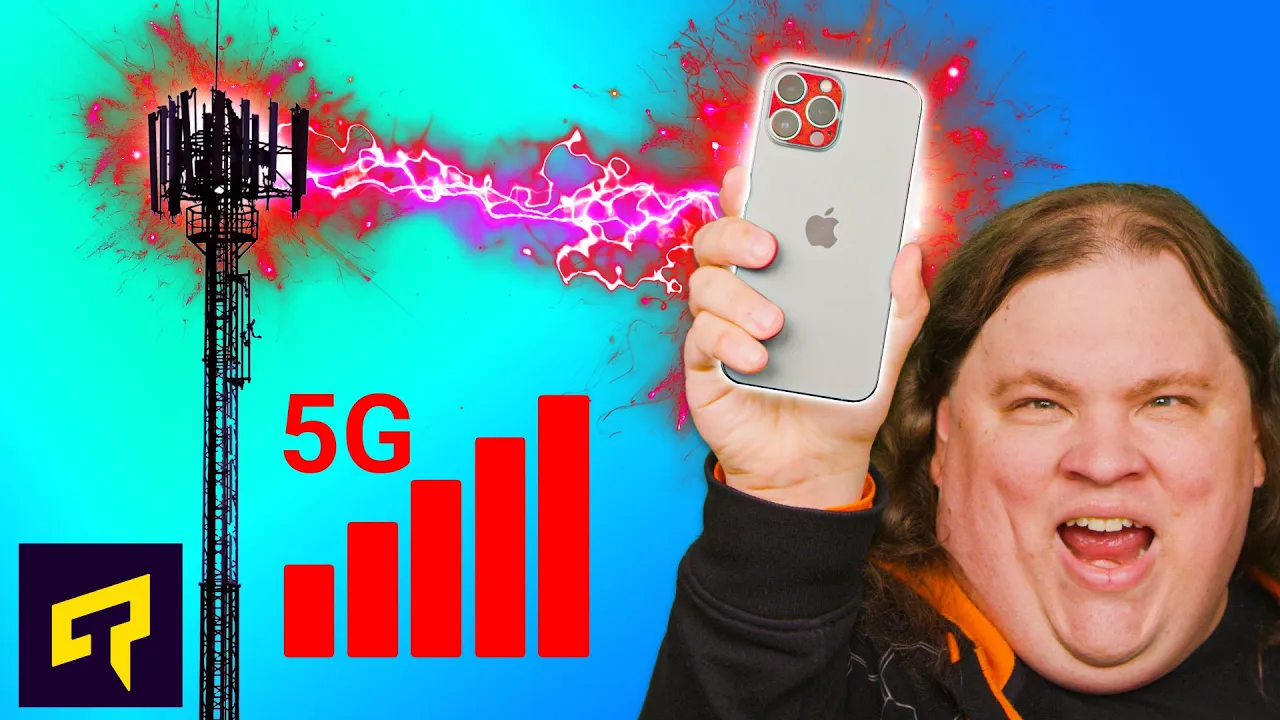
Why Cell Towers Look Funny
0 up · 0 down · 0 ratings
Promos
Get 59% off Bitdefender Premium Security at bit.ly Why do cell towers have so many antennas - and where do they get THEIR signals from, anyway? Leave a reply with your requests for future episodes, or tweet them here: twitter.com ► GET MERCH: lttstore.com ► AFFILIATES, SPONSORS & REFERRALS: lmg.gg ► PODCAST GEAR: lmg.gg ► SUPPORT US ON FLOATPLANE: floatplane.com FOLLOW US ELSEWHERE --------------------------------------------------- Twitter: twitter.com Facebook: @LinusTech Instagram: @linustech TikTok: @linustech Twitch: twitch.tv
The video explains how cell towers operate and where they obtain the signals they relay to mobile devices. It starts by framing the question of where towers get their signals from and clarifies that towers are not the sole source of all content; instead, they connect to a carrier’s network via backhaul that links them through cables to routers. The host then introduces the concept of microwave antennas used for wireless backhaul, describing their directional nature and how they are aimed at other towers to maintain network connectivity, especially when wired infrastructure is impractical. The central insight is that while backhaul connects towers to the broader network, the actual phone signal is produced by the local antennas on the tower that face specific directions for optimal coverage. The video details typical antenna arrangements, such as triangular layouts with 120-degree coverage and additional layers sometimes used by different carriers sharing towers, and explains why some antennas tilt downward to minimize interference and avoid dead zones. Finally, the discussion covers practical signal reach, noting that 4G towers can reach roughly 40 miles in open areas, whereas mid-band 5G towers have shorter ranges and thus use denser deployments or even rooftop antennas in urban settings, concluding with a light remark on the aesthetic of future tower designs that blend into cityscapes. The video blends practical engineering facts with accessible analogies, aiming to demystify what shapes a reliable mobile signal while highlighting real-world deployment challenges and future trends.
Topics · telecommunications · science & technology · engineering · networking
Questions answered
- What provides the actual signal that your phone uses, if backhaul connects towers to the network?
- The antennas on the tower that are directed toward specific areas generate and transmit the mobile signal to devices.
- Why are cell tower antennas usually directional and tilted downward?
- Directional antennas focus coverage to reduce interference, extend reach to the edge of adjacent towers, and minimize dead zones, while downward tilt helps avoid blind spots directly beneath the tower.
- How far can a 4G or 5G signal reach from a tower under typical conditions?
- A typical 4G tower can reach about 40 miles in open space, while mid-band 5G towers have shorter ranges, often around six miles, leading to denser deployments or rooftop installations in urban areas.