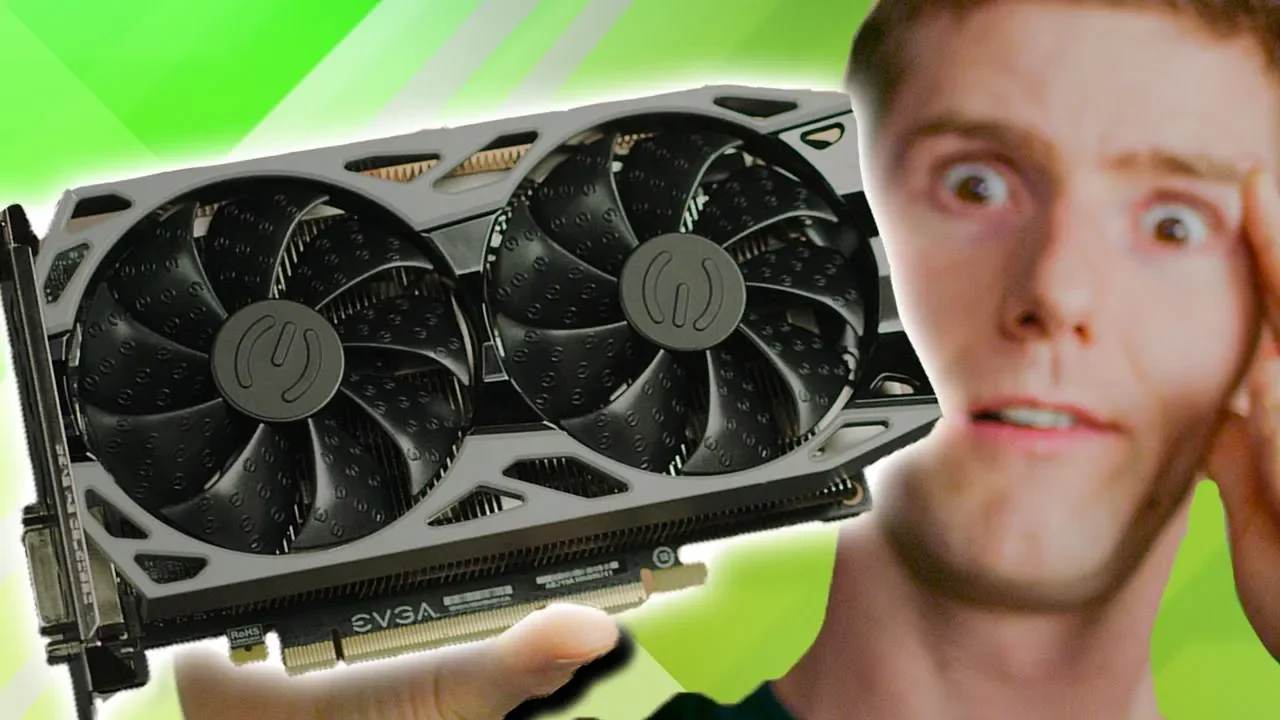
NVIDIA, I retract my apology. - GTX 1660 Super Review
0 up · 0 down · 0 ratings
Promos
It looks like SUPER is here to stay, because now even the GeForce GTX cards are getting in on the action. They may not be RTX cards, but could this be the bump Nvidia needs to make their users upgrade? Buy a GTX 1660 SUPER: On Amazon: geni.us On Newegg: lmg.gg Buy a GTX 1660 Ti: On Amazon: geni.us On Newegg: lmg.gg Buy an RX 590: On Amazon: geni.us On Newegg: lmg.gg Purchases made through some store links may provide some compensation to Linus Media Group. Discuss on the forum: linustechtips.com Our Affiliates, Referral Programs, and Sponsors: lmg.gg Get a Displate Metal Print at lmg.gg Get a 30-day free trial of Amazon Prime at lmg.gg Linus Tech Tips merchandise at lttstore.com Linus Tech Tips posters at crowdmade.com Our Test Benches on Amazon: amazon.com Our production gear: geni.us Twitter - twitter.com Facebook - @LinusTech Instagram - @linustech Twitch - twitch.tv Intro Screen Music Credit: Title: Laszlo - Supernova Video Link: youtube.com iTunes Download Link: itunes.apple.com Artist Link: soundcloud.com Outro Screen Music Credit: Approaching Nirvana - Sugar High youtube.com
The GTX 1660 Super is framed as a modest upgrade rather than a new platform, essentially a GTX 1660 with GDDR6 memory. The host immediately retracts an earlier apology, emphasizing that the upgrade is primarily about memory bandwidth, moving from 192 GB/s to 336 GB/s, which Linus argues is enough to meaningfully impact game performance in many titles. The video dives into how this memory boost shifts bottlenecks, showing testing results across modern titles like Shadow of the Tomb Raider, Borderlands 3, Rainbow Six Siege, and CS:GO. It is noted that the 1660 Super approaches 1660 Ti performance in several scenarios, with memory bandwidth playing a decisive role in real-world framerates, especially in more demanding or memory bandwidth-sensitive games. The discussion expands to software features introduced alongside the hardware, including Nvidia Ultra-Low Latency (with compatibility for G-Sync), a built-in image sharpening option in the Nvidia Control Panel, and reshade-like filtering integrated into GeForce Experience. The host commends Nvidia for this integration, highlighting the potential for easier post-processing and customization without manual DLL tweaking, while acknowledging that support for filters is not universal across all games. In conclusion, the 1660 Super is positioned as a strong 1080p gaming card with solid 1440p capability for many titles, and as a viable entry point for streaming given the included NVENC capabilities. The video also highlights that while it improves in content creation workloads like Blender, V-Ray, and Octane due to higher memory bandwidth and clocks, the core gaming focus remains dominant, and Nvidia has effectively superseded older SKUs without discontinuation. Viewers are encouraged to subscribe for upcoming comparisons against competing GPUs in the same price range and to consider the 1660 Super in the context of the broader market and upcoming RDNA competition.
Topics · technology · hardware · gaming · hardware-reviews · gpu-perf
Questions answered
- How does the GTX 1660 Super differ from the GTX 1660 in terms of memory and bandwidth?
- The GTX 1660 Super uses GDDR6 memory, boosting memory bandwidth from about 192 GB/s to around 336 GB/s, which helps reduce memory bottlenecks and brings performance closer to the GTX 1660 Ti in many games.
- What software features accompany the 1660 Super, and who benefits from them?
- Features include Nvidia Ultra-Low Latency, simultaneous G-Sync with low latency, and built-in image sharpening in the Nvidia Control Panel. Reshade-like filtering is integrated into GeForce Experience for easier post-processing, benefiting gamers who want to customize visuals without manual file tweaking.