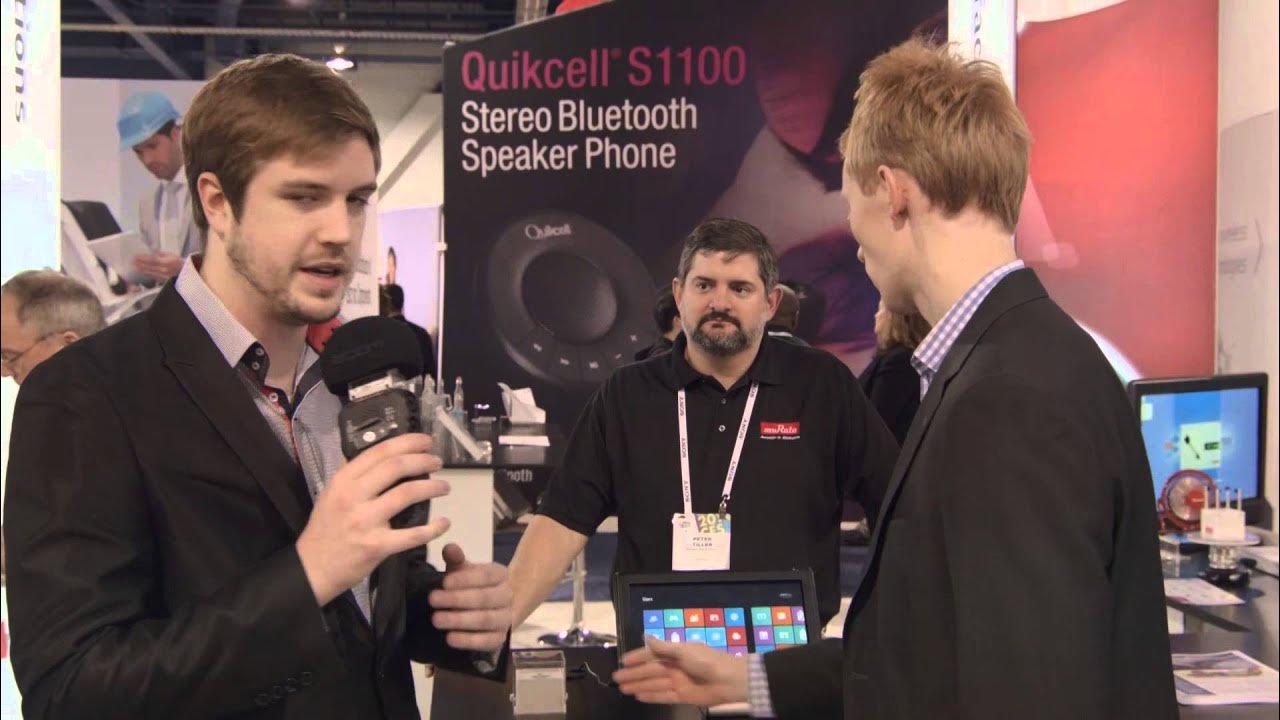
Touchless Mobile Device Control by Ellipticlabs - CES 2014
0 up · 0 down · 0 ratings
Channels and socials
This is not a specific device but it is more a technology that utilizes ultrasound and could be added into other devices like tablets, smartphones, monitors, etc. Our CES 2014 Sponsors: linustechtips.com twitter.com twitter.com @LinusTech Join our community forum: bit.ly
Touchless Mobile Device Control by Ellipticlabs at CES 2014 showcases a novel interaction approach that uses ultrasound to track hand movements without touching a screen. The presenters explain the motivation behind touchless interfaces, such as avoiding fingerprint smudges on laptops and mobile devices, and demonstrate how a depth-sensing dot can be tracked at varying distances from the screen. As the user moves their hand, the system maps precise coordinates and movement, allowing actions like panning up and down based on proximity to the display. The demo emphasizes how this technology could be embedded into devices like tablets, smartphones, or monitors, enabling new input modalities even before the user physically touches a surface. The segment also comments on latency and precision issues observed during the demonstration and frames touchless interaction as a promising but evolving area for future consumer electronics. The host closes by noting the relevance of new computer interactions at CES and thanks sponsors, underscoring the theme of innovative input methods gaining traction in the tech industry.
Topics · technology · consumer-electronics · human-computer-interaction · demonstration
Questions answered
- What is the core input method demonstrated by Ellipticlabs at CES 2014, and how is it different from touchscreens?
- The core input method is touchless interaction using ultrasound to track hand position above a display, allowing control without touching the screen. Unlike touchscreens, accuracy depends on proximity sensing and does not require physical contact.
- What potential devices could integrate this touchless technology, according to the demonstration?
- The demonstration suggests integration into devices such as tablets, smartphones, monitors, and other consumer electronics to enable new input modalities without finger contact.
- What are the main challenges highlighted during the demo and in viewer reactions?
- The primary challenges discussed include latency and precision of hand tracking, as well as the practicality of replacing touch input with gestural control in everyday use.