Is Intel’s Thermal Paste ACTUALLY That Bad?
0 up · 0 down · 0 ratings
Promos
By harvesting TIM from old Intel CPUs we can finally find out just how bad it is. For your unrestricted 30 days free trial, go to freshbooks.com and enter in “Linus Tech Tips” in the how you heard about us section. Try Tunnelbear for free, no credit card required, at tunnelbear.com Buy better thermal paste On Amazon: geni.us On Newegg: geni.us Discuss on the forum: linustechtips.com Our Affiliates, Referral Programs, and Sponsors: linustechtips.com Linus Tech Tips merchandise at designbyhumans.com Linus Tech Tips posters at crowdmade.com Our production gear: geni.us Get LTX 2018 tickets at ltxexpo.com Twitter - twitter.com Facebook - @LinusTech Instagram - @linustech Twitch - twitch.tv Intro Screen Music Credit: Title: Laszlo - Supernova Video Link: youtube.com iTunes Download Link: itunes.apple.com Artist Link: soundcloud.com Outro Screen Music Credit: Approaching Nirvana - Sugar High youtube.com Sound effects provided by freesfx.co.uk
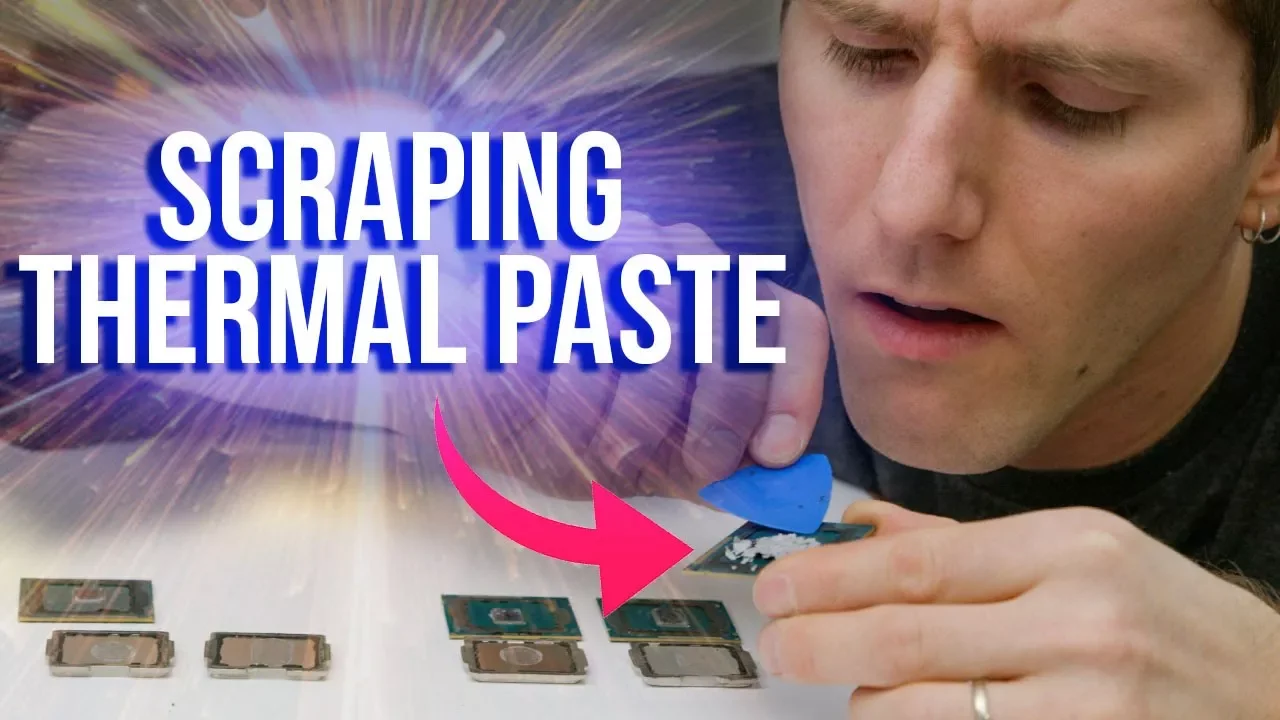
Is Intel’s Thermal Paste ACTUALLY That Bad? walks through a hands-on experiment by Linus Tech Tips to evaluate the quality and impact of Intel’s thermal interface material (TIM) over multiple generations. The video opens by addressing a common belief in the community that Intel uses a suboptimal paste between the CPU die and the integrated heat spreader, and it notes that traditional testing is confounded by many variables when the IHS is removed. The crew devises a method to harvest TIM from several old Intel CPUs and compares it against a high-end Noctua TIM with a premium cooler. The setup includes a controlled baseline using Noctua NT-H1 and a stock cooler to measure performance, while ambient temperature is kept constant to isolate material performance. A key segment shows the elaborate “TIM harvest” process, where CPUs are opened and the paste is scraped for later testing, followed by an exploration of how to reconstitute and apply the paste for a meaningful comparison. The test then proceeds with applying the reconstituted TIM and monitoring temperatures under load, documenting how the recovered paste behaves when pushed to its limits. The video emphasizes that there are many variables in play when delidding and reapplying TIM, such as mounting pressure, paste thickness, silicone seal integrity, and flatness of the heat spreader, and concludes that Intel’s longevity-focused TIM strategy, rather than pure performance, drives much of the observed results. In the closing analysis, Linus explains that while the reconstituted paste can reach usable temperature ranges, it remains clearly inferior to modern, solder-free, performance-oriented pastes, and emphasizes the broader context of testing methodology and product design choices. The video ends with practical takeaways on testing practices, a candid acknowledgment of the experiment’s limitations, and a call for better sample availability from Intel for more definitive comparisons, alongside a plug for sponsor messages and channel encouragements to subscribe.Overall, the episode blends humor with a methodical teardown, delivering both entertainment value and a discussion about what TIM actually contributes to real-world CPU cooling and longevity, while balancing the constraints and variables of such experiments.
Topics · hardware · technology · science & tech · cpu cooling
Questions answered
- What was the baseline paste used for comparison in the experiment?
- The baseline used for comparison was Noctua NT-H1 thermal paste applied with a NH-D15 cooler to establish a high-quality standard.
- What did the test reveal about Intel’s thermal paste performance compared to the Noctua paste?
- The test suggested Intel's paste is less effective than modern performance-oriented pastes, contributing to higher temperatures under load, though the setup highlighted many variables that can affect results, such as application thickness and mounting pressure.