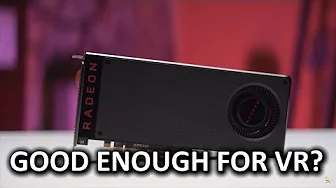
VR Gaming GPU for 200$??
0 up · 0 down · 0 ratings
Channels and socials
The RX 480 has arrived, and it has proven itself as a very capable gaming card. But how does it fare in VR? Well, that question doesn't have a simple answer... Feenix Vitesse Amazon link: geni.us Enter the Feenix giveaway: linustechtips.com Buy RX480 on Amazon: geni.us Discuss on the forum: linustechtips.com Affiliates, referral programs, & sponsors: linustechtips.com Join our community forum: bit.ly twitter.com @LinusTech Intro Screen Music Credit: Title: Laszlo - Supernova Video Link: youtube.com iTunes Download Link: itunes.apple.com Artist Link: soundcloud.com Outro Screen Music Credit: Approaching Nirvana - Sugar High youtube.com Sound effects provided by freesfx.co.uk
The video opens by addressing a provocative claim: could a virtual reality gaming GPU cost around $200, a price point that would dramatically lower barriers to VR adoption? The host explains why VR benchmarking is uniquely challenging, noting that VR headsets enforce a strict 90 Hz frame rate and motion sickness considerations mean traditional metrics like raw frames per second can be misleading. He discusses how VR benchmarks must account for variables such as motion, latency, and scene complexity, and why software tools relying on standard FPS figures may not reflect real user experience. The discussion then shifts to score-based VR benchmarks, including upcoming or experimental systems like Mark's VR score and Basemark VR, which aim to quantify display latency and persistence across different APIs. The host cautions that synthetic benchmarks are not perfect proxies for actual play, but highlights their value in offering repeatable, widely shareable benchmarks that help prospective VR buyers gauge system compatibility. Overall, the RX 480 is shown performing surprisingly well for a $200 card, with the host noting it can enable VR gaming at reasonable quality and price, while acknowledging limitations and the evolving state of VR benchmarking. In the concluding segment, the host reflects on the current state of VR benchmarking, signaling a potential future where more concrete, metric-based VR results become common after more review cycles and hardware testing. He reiterates that the RX 480’s VR performance is a notable achievement for its price, and invites further discussion on forums and upcoming NVIDIA and AMD benchmark results. The video ends with a reminder of the ongoing effort to refine VR metrics and a tease about more in-depth, hardware-specific performance data to come, encouraging viewers to like, subscribe, and participate in related discussions. The overall takeaway is that affordable GPUs can enable VR experiences, but meaningful benchmarking requires careful methodology and context-aware interpretation of results.
Topics · technology · hardware · virtual reality · gaming
Questions answered
- Can a RX 480 GPU realistically drive VR at a price point around $200?
- Yes, the video presents evidence that the RX 480 performs surprisingly well in VR for its price, enabling playable VR experiences while noting there are trade-offs and the importance of benchmarking methodology.
- Why are traditional frame rate benchmarks less useful for VR, and what alternatives are suggested?
- Traditional FPS metrics can be misleading in VR due to the 90 Hz headset refresh requirement and motion-sickness concerns; alternatives include VR-specific metrics like latency, frame timing, and score-based benchmarks such as Basemark VR score that measure display latency and persistence.