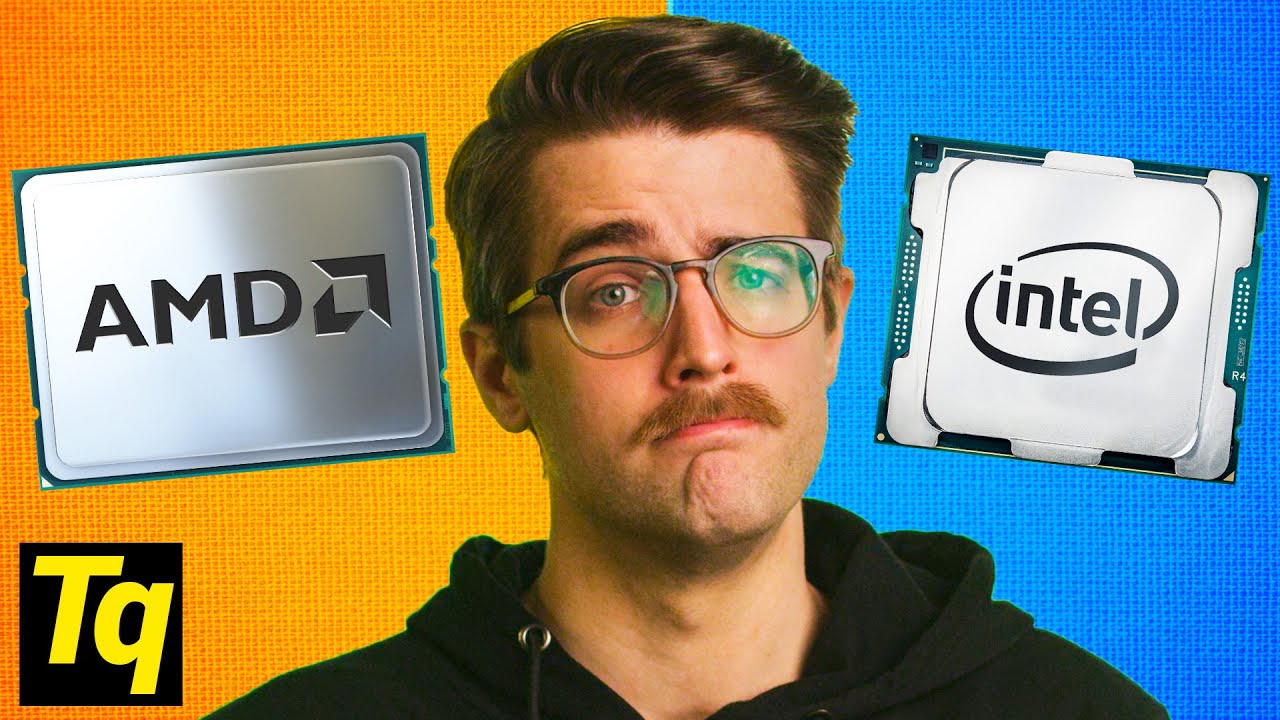
Why Are There Only Two CPU Companies?
0 up · 0 down · 0 ratings
Promos
Try FreshBooks free, for 30 days, no credit card required at freshbooks.com Why are AMD and Intel your only options? Leave a reply with your requests for future episodes, or tweet them here: twitter.com ►GET MERCH: lttstore.com ►SUPPORT US ON FLOATPLANE: floatplane.com ►LTX EXPO: ltxexpo.com AFFILIATES & REFERRALS --------------------------------------------------- ►Affiliates, Sponsors & Referrals: lmg.gg ►Private Internet Access VPN: lmg.gg ►MK Keyboards: lmg.gg ►Nerd or Die Stream Overlays: lmg.gg ►NEEDforSEAT Gaming Chairs: lmg.gg ►Displate Metal Prints: lmg.gg ►Epic Games Store (LINUSMEDIAGROUP): lmg.gg ►Official Game Store: nexus.gg ►Amazon Prime: lmg.gg ►Audible Free Trial: lmg.gg ►Our Gear on Amazon: geni.us FOLLOW US ELSEWHERE --------------------------------------------------- Twitter: twitter.com Facebook: @LinusTech Instagram: @linustech Twitch: twitch.tv FOLLOW OUR OTHER CHANNELS --------------------------------------------------- Linus Tech Tips: lmg.gg TechLinked: lmg.gg ShortCircuit: lmg.gg LMG Clips: lmg.gg Channel Super Fun: lmg.gg Carpool Critics: lmg.gg
The video explains why the PC market ended up with effectively two major CPU suppliers, focusing on the historical path from the early IBM PC to today. It recounts how IBM chose the Intel 8088 processor for the original IBM PC in 1981, a decision that anchored the entire ecosystem around x86 and created demand from software developers to optimize for that architecture. As a result, Intel gained outsized influence in the microcomputer CPU space, and Intel began licensing the x86 design to other companies to meet demand without shouldering all manufacturing alone. AMD entered as a licensee and, over the years, leveraged licensing to challenge Intel at various points, including through competition in the 1990s when AMD began to improve its own x86 designs. The video also covers other players like Cyrix, whose attempts to compete on integer performance failed due to shifts in software optimization toward floating point, and explains why many alternative entrants did not survive. It then describes how the industry evolved with 64-bit x86 and cross-licensing between AMD and Intel, which cemented the dominance of a red vs blue duopoly in desktop CPUs, while noting that non x86 architectures like ARM have carved out strong positions in mobile and other areas. The takeaway is that architectural momentum, software alignment, and multi-fab capabilities kept the duopoly intact, even as notable competitors have influenced design directions and margins along the way. The host closes with a nod to related tech shifts and emphasizes that the duopoly is unlikely to vanish soon, while briefly separating this topic from political debates and personal finances. The video also highlights practical details such as the meaning of x86-64, and points to further exploration of how licensing and architectural decisions shape the modern CPU landscape.
Topics · technology · computing history · hardware · semiconductors
Questions answered
- What event helped Intel secure dominance in the early PC market?
- Intel's selection by IBM for the 1981 PC and the subsequent licensing of the x86 architecture to other vendors helped cement Intel's dominance.