The WAN Show: Anti-Piracy in School & Free 290 to 290X Upgrades and GUEST Ryan Shrout - Nov 22, 2013
0 up · 0 down · 0 ratings
Promos
After party : Included with this video. There was cake. Live Stream Doc:linustechtips.com Squaresspace Link: squarespace.com - Offer code LINUS11 Squarespace giveaway: The winner drawn in our website giveaway is..... ttechmedia.squarespace.com Congrats on winning a free year of Squarespace! 5:20 Forever Jane 10:30 THE CAKE ARIVES 13:45 Ryan Shrout joins us! 59:17 Copy-write teaching in schools? 1:04:25 New LSI Sand-force Controllers 1:11:12 Xbox One scratches disks 1:14:22 Github project for gamestream support! 1:29:05 Build logs of the week 1:33:23 290X Birthday Cake 1:43:44 Linus goes insane
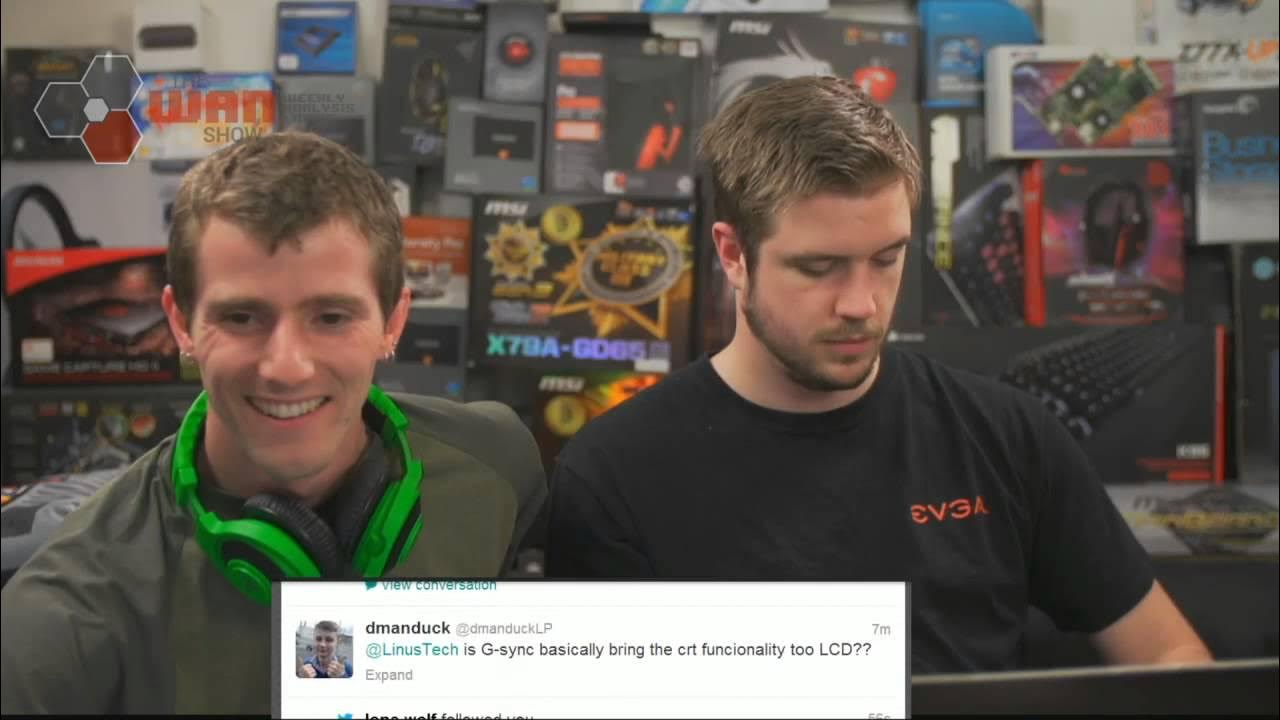
The WAN Show episode dated November 22, 2013 covers a wide range of topics in technology and gaming hardware, anchored by host Linus and featured guest Ryan Shrout. The intro sets the stage for a discussion about AMD Mantle, AMD's new API aimed at reducing driver overhead and unlocking more draw calls to boost performance, especially in titles like Battlefield 4. They explain the concept of draw calls as commands the CPU sends to the GPU, and how Mantle could allow developers to push more complex scenes or higher detail by removing certain bottlenecks. The hosts note that Mantle’s impact will vary by engine and game, with some titles seeing more significant gains than others, and they highlight the potential for better CPU/GPU balance in AMD systems. The conversation also touches on the broader implications for PC gaming performance, including how Mantle could enable mid-range systems to achieve better visuals without upgrading CPUs. The discussion includes a lay explanation of how Mantle can potentially increase draw calls and reduce overhead, with examples from developers like Cloud Imperium who discuss more flexible engine performance. The show emphasizes that Mantle is not a universal fix and that real-world gains depend on engine integration and the rest of the system. In addition to Mantle, Ryan Shrout provides insight into APU strategies and the Cav APU approach, explaining how AMD plans to balance CPU and GPU capabilities with integrated graphics to compete with Intel’s offerings. The hosts also explore the topic of anti-piracy education in schools, noting RIAA and MPAA initiatives to introduce curricula about piracy risks, while acknowledging resistance from teachers and concerns about practicality. The discussion shifts to storage technology, with LSI’s SandForce controller and its potential to unlock next-generation SSD performance, including capabilities like higher IOPS and better parallelism. The show notes the emergence of pre-flashed Radeon 290 cards that can be upgraded to 290X BIOS, a move that creates a price/performance dynamic in the high-end GPU market. The hosts address ongoing AMD hardware narratives, including the 290X’s market reception and the potential for 290 cards flashed to 290X configurations, which raises questions about product positioning and consumer value. They comment on the relationship between CPU and GPU in the context of AMD’s Cav and Richland families, discussing power efficiency, performance expectations, and price-to-performance considerations for enthusiasts and mainstream buyers. The dialogue also covers the Xbox One disk scratching issue and how hardware issues can affect user experience, along with notes on online projects such as GitHub initiatives for gamestream enhancements. The episode includes a “build logs of the week” segment and recaps on marketing and community events, including cake and a fan-created celebration moment that underlines the show’s playful, informal tone. Throughout, Linus and Shrout compare Mantle with Nvidia’s G-Sync in terms of practical value, discuss monitor technology, and highlight how display synchronization technologies can impact perceived performance and tearing. The conversation closes with reflections on how new technologies are introduced to consumers, the challenges of communicating benefits, and the role of hands-on demonstrations to convey real-world impact, all while maintaining the show’s characteristic balance of technical detail and humor. In sum, the episode provides a snapshot of late-2013 PC hardware dynamics, including Mantle's potential, Cav APU strategy, SSD advancements, GPU pricing and strategy, anti-piracy education debates, and the ongoing evolution of the gaming and PC enthusiast landscape. The hosts end with a lighthearted note about the 290 to 290X upgrade storyline and a playful discussion about Linus’s state of mind, reinforcing the show’s informal, conversational style. The episode remains a reference point for early Mantle discussions, AMD’s APUs, and the broader questions of performance optimization in a rapidly evolving PC gaming ecosystem.
Topics · technology · gaming · computing_hardware · video_podcast
Questions answered
- What is Mantle and why was it introduced?
- Mantle is AMD's API designed to reduce driver overhead and increase draw calls, enabling developers to push more graphics work directly to the GPU and improve performance on AMD hardware.
- How does Mantle compare to G-Sync in terms of impact on gaming?
- Mantle and G-Sync address different problems. Mantle aims to increase overall rendering performance by reducing CPU-GPU overhead, while G-Sync eliminates screen tearing and smooths frame delivery at the display level. They are complementary rather than interchangeable technologies.
- What is Cav APU and why is AMD pursuing it?
- Cav APU is AMD's integrated CPU+GPU solution aimed at improving performance-per-watt and delivering capable graphics on lower-cost platforms, appealing to home theater and small form factor builds where discrete GPUs may not be present.
- Why were 290 cards flashed to 290X BIOS considered significant?
- Pre-flashed 290 cards to 290X BIOS offered a cheaper upgrade path to higher-end performance, affecting pricing dynamics and consumer choice in the high-end GPU market.