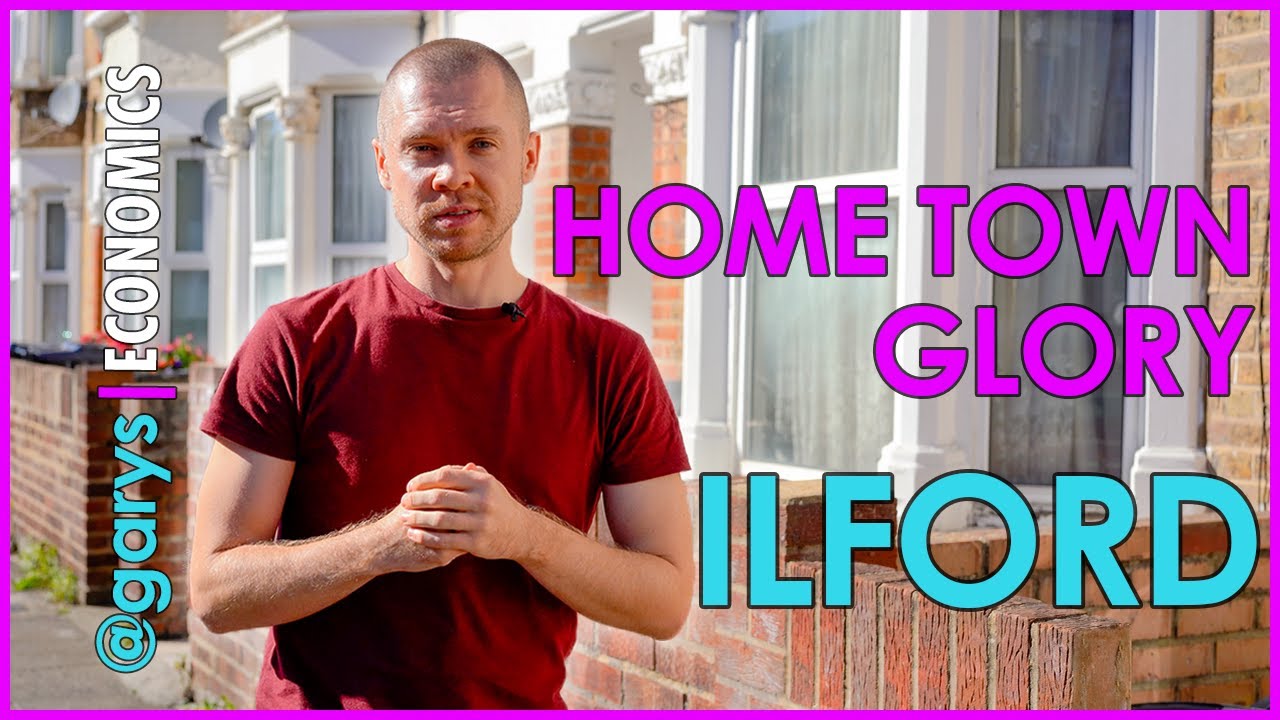
Ilford - Hometown Glory
0 up · 0 down · 0 ratings
Channels and socials
In this video we do something a little different. Gary take us back to his home town of Ilford, East London. He recalls his memories as he shows us around his childhood home and then walks us down his street. He finishes with an important message about the voices we hear in the mainstream media with regards to economics. SUBSCRIBE, SHARE & START A CONVERSATION SOCIAL MEDIA: WEBSITE - wealtheconomics.org TWITTER - @garyseconomics FACEBOOK - @garyseconomics INSTAGRAM - @garyseconomics Performed by Gary Stevenson GARYSECONOMICS Produced by Simran Mohan MOHAN MEDIA
Gary Stephenson, introducing himself as a former trader and self-described people’s economist, kicks off a personal tour of Ilford to answer the question of where he comes from. He revisits the house he grew up in, starting with his old bedroom where he shared a bunk bed and stored his things, and he recalls the early mornings when his father would catch the train to work just outside his window. The narrative then moves to the front room, the family dynamics, and the makeshift study space he used during a difficult period after being expelled from school, highlighting his perseverance and the small space that housed his aspirations. He reflects on the role of education, the small victories in his GCSEs, and the sense that staying focused in that cramped environment set the foundation for his later success in the city. The segment ends with a quick tour of the bathroom and the garden, where he links these intimate spaces to his ambition, ultimately framing his childhood as the seed of his later public economic work.
Topics · economics · urban-life · personal-journey · local-history · education · culture
Questions answered
- What is Gary's main message about wealth and taxation in this video?
- Gary argues that wealth inequality shapes housing and wages and that the current tax system largely privileges the very rich; he promotes stronger taxation of wealth to improve outcomes for ordinary people.
- Why does Gary walk through Ilford and show his childhood spaces?
- He uses his hometown and the places he grew up to illustrate how economic structures affect everyday communities and to ground his economic critique in lived experience.