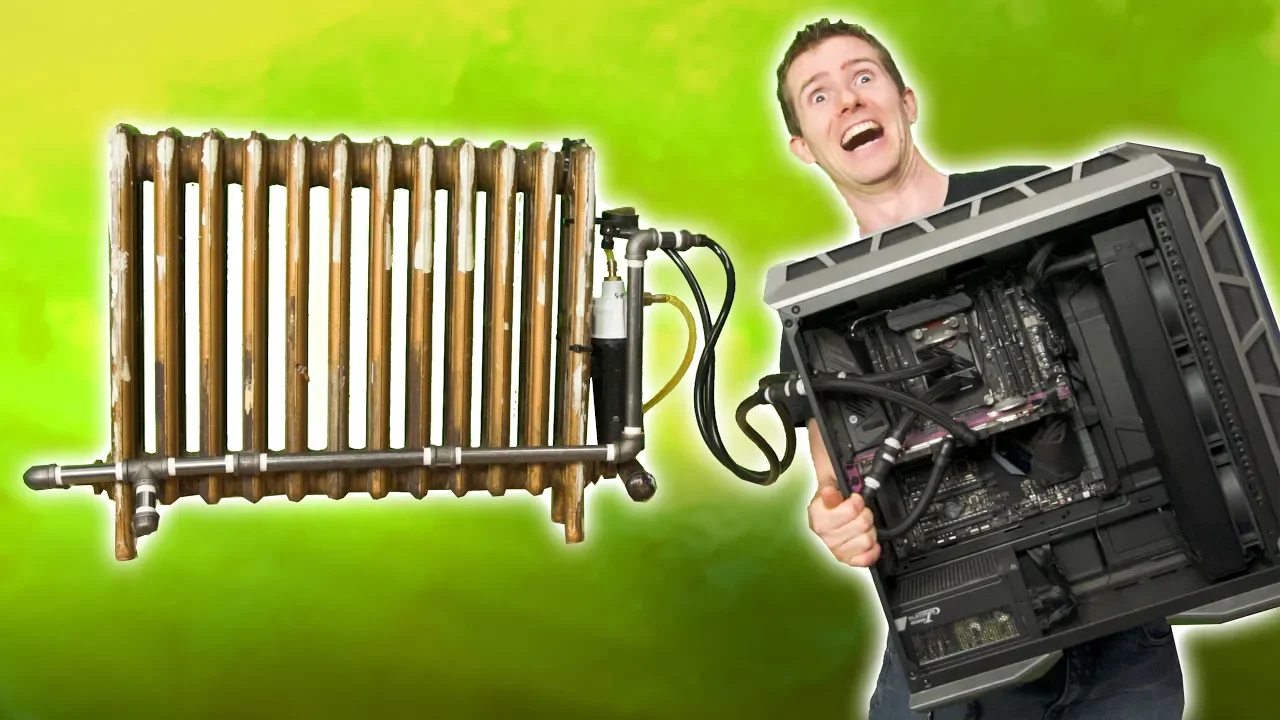
Lower your heating bill... with GAMING
0 up · 0 down · 0 ratings
Promos
Sign up for Private Internet Access VPN at privateinternetaccess.com Buy noblechairs ICON Series Real Leather Gaming Chair at geni.us Does it make ANY sense to harness the heat energy that your PC disperses to replace a purpose-built space heater? Buy video cards on Amazon: geni.us Discuss on the forum: linustechtips.com Our Affiliates, Referral Programs, and Sponsors: linustechtips.com Linus Tech Tips merchandise at designbyhumans.com Linus Tech Tips posters at crowdmade.com Our Test Benches on Amazon: amazon.com Our production gear: geni.us Get LTX 2018 tickets at ltxexpo.com Twitter - twitter.com Facebook - @LinusTech Instagram - @linustech Twitch - twitch.tv Intro Screen Music Credit: Title: Laszlo - Supernova Video Link: youtube.com iTunes Download Link: itunes.apple.com Artist Link: soundcloud.com Outro Screen Music Credit: Approaching Nirvana - Sugar High youtube.com Sound effects provided by freesfx.co.uk
In the video, the host introduces a provocative idea: can a gaming PC double as a room heater, potentially reducing the need for a traditional space heater by repurposing the heat generated by high-performance hardware? The discussion opens with thermodynamics basics, explaining that all the power consumed by a PC eventually becomes waste heat in the room, so in theory a PC acts as a sophisticated space heater. The team then details their experimental setup, including converting an old radiator into a water cooling loop and connecting it to the PC to transfer heat from the components into the room. They emphasize practical hurdles, such as cleaning a radiator, sealing connections, and managing corrosion in a water loop, while also engineering a test bench inside a small “sanity closet” to monitor temperature and control the experiment. The overall goal is to quantify how well the PC-fired heat compares to a purpose-built space heater in terms of room warming rate and energy use, and to provide a grounded conclusion on feasibility and practicality. As the experiment unfolds, the crew walks through the hardware choices, highlighting the use of a Phoenix MLc water cooling kit for modularity, and they describe their mixed results in real time. The radiator loop initially encounters leaks and gasket issues, forcing a flush and reseal process, followed by a shutdown to fix a leak with teflon tape and a temporary drain line. Temperature data from a five cubic meter room shows the sanity closet starting at about 23.7 C, with the goal of reaching 36.7 C to mimic human comfort. They observe that even with water cooling, the GPU begins to thermally throttle, and the pump adds an additional 75 watts of load, complicating the energy balance. The team analyzes why the PC lags behind the space heater by roughly two degrees but concludes that the temperature rise in the room proceeds at a similar rate when properly timed, leading to a nuanced verdict on whether a PC can function as a room heater. The final takeaway is both descriptive and actionable: yes, a PC can heat a room, but the method used in the video introduces notable lag and inefficiencies that make it impractical as a replacement for a dedicated space heater. The host emphasizes that the two-degree lag is a disqualifying factor for gamers, who are sensitive to latency in performance; moreover, the high-power pump and heat exchange dynamics complicate energy use. The video pivots to a sponsor plug and related product recommendations, but it also references broader context like VPNs as a separate practical concern, ensuring viewers understand the broader scope of their tech lifestyle coverage. The result is a scientifically grounded conclusion that while PC heat transfer to a room is real, relying on a PC-based heating solution is not recommended as a primary heating method, especially given efficiency, control, and reliability considerations.
Topics · science technology · energy efficiency · home improvement · gaming hardware
Questions answered
- Can a PC effectively heat a room like a dedicated space heater, and how does it compare in efficiency?
- Yes, a PC can heat a room as waste heat from its components, but it lagged by about two degrees behind a space heater in the test, making it impractical as a replacement for a dedicated heater.
- What were the main technical challenges when routing heat from the PC through a radiator?
- Cleaning and preparing an old radiator, sealing connections, dealing with leaks, and managing corrosion in a mixed-metal loop were the primary hurdles.
- What is the final verdict of the experiment regarding using a PC as a room heater?
- A PC can heat a room, but the approach shown is not recommended due to lag, inefficiency, and the complexity of maintaining the system.