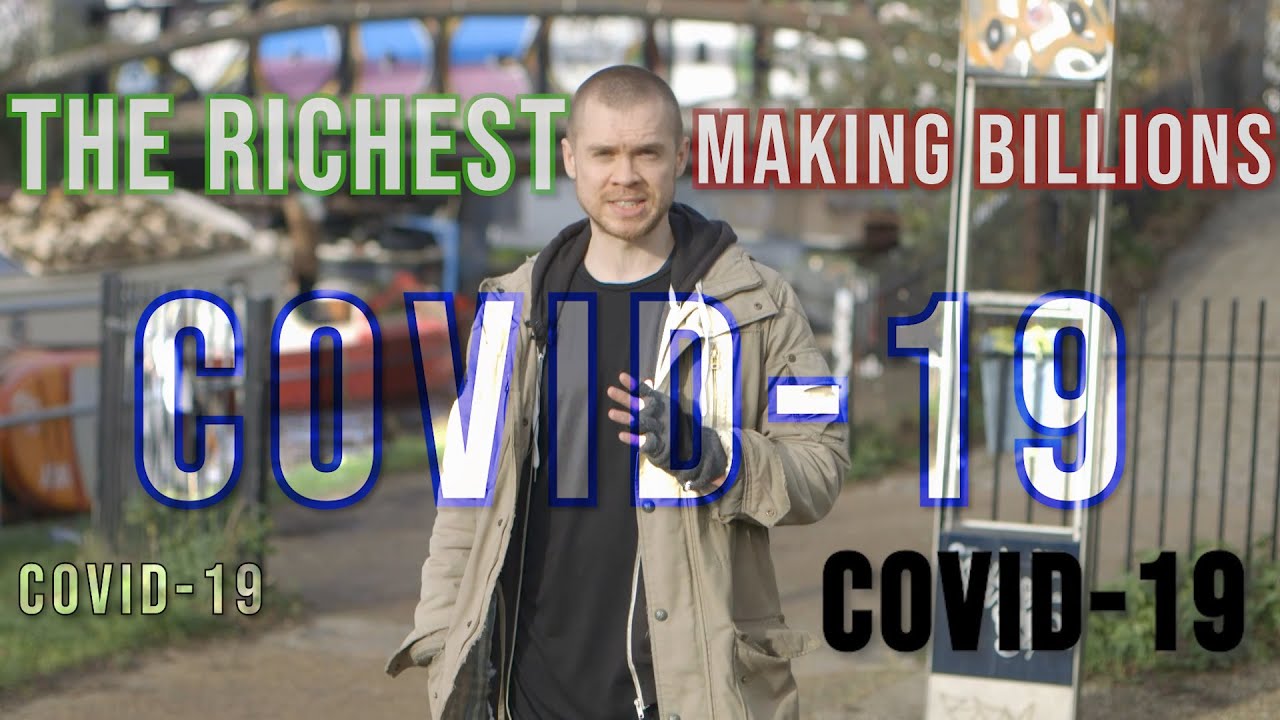
COVID-19 & INEQUALITY: Why the rich are getting richer but the economy will NOT recover
0 up · 0 down · 0 ratings
Channels and socials
"If austerity happens it’s going to increase inequality even further…we’re not going to have an economic recovery." I made this video to show how this crisis allows the rich to increase their wealth. SOCIAL MEDIA: WEBSITE - wealtheconomics.org TWITTER - @garyseconomics FACEBOOK - garyseconomics INSTAGRAM - garyseconomics GARY'S ARTICLES: www-express-co-uk.cdn.ampproject.org theguardian.com cityam.com opendemocracy.net opendemocracy.net nationalobserver.com MORE VIDEOS: COVID-19 MONEYFLOW THEORY - youtu.be youtu.be Written, Performed & Produced by Gary Stevenson GARY'S ECONOMICS Shot, Edited & Directed by EQUALS @thisisequals twitter.com @EqualsNews
The video argues that the COVID-19 crisis has not just caused health and employment challenges but has also amplified wealth concentration, predicting that the richest in society are increasing their fortunes while the overall economy struggles to recover. The creator, Gary Stevenson, reflects on his own history as a trader to illustrate how money flows in economies in normal times and how those flows were disrupted by COVID-19. He explains that rich households typically spend and circulate money, supporting wages and jobs for ordinary workers, but when lockdowns hit, their spending collapsed. This creates a bottleneck where money stops circulating, leaving ordinary people unable to pay rents, mortgages, and bills. The video then critiques the policy response, noting that stimulus funds were printed and funneled to the government rather than being distributed in a way that sustains the circular flow, effectively accumulating wealth at the top. Stevenson warns that continuing with austerity or tax structures that favor the ultra-rich will deepen inequality and stall a genuine economic recovery. He shares a vivid comparison to the 2008 crisis, arguing that past recoveries predominantly benefited owners of assets rather than ordinary families, and outlines a path toward reform through taxation of wealth, not just income, to restore mobility and housing access for the broader population. The closing message is a call to collective action to reform the tax system so the wealthiest contribute more equitably, with the aim of creating a fairer economy and preventing a bleak long-term outlook if inequality remains unaddressed.
Topics · economy · public policy · income inequality · financial markets · housing affordability · tax policy · macroeconomics
Questions answered
- How does the video characterize the impact of COVID-19 on wealth distribution?
- It argues that the crisis has disproportionately boosted wealth for the rich while leaving ordinary families financially strained, potentially delaying or preventing a broad economic recovery.
- What policy change does the video advocate to address inequality?
- It calls for reforming the tax system to tax wealth and capital more effectively, not just income, to ensure the ultra-rich contribute fairly and to improve housing and financial security for ordinary people.