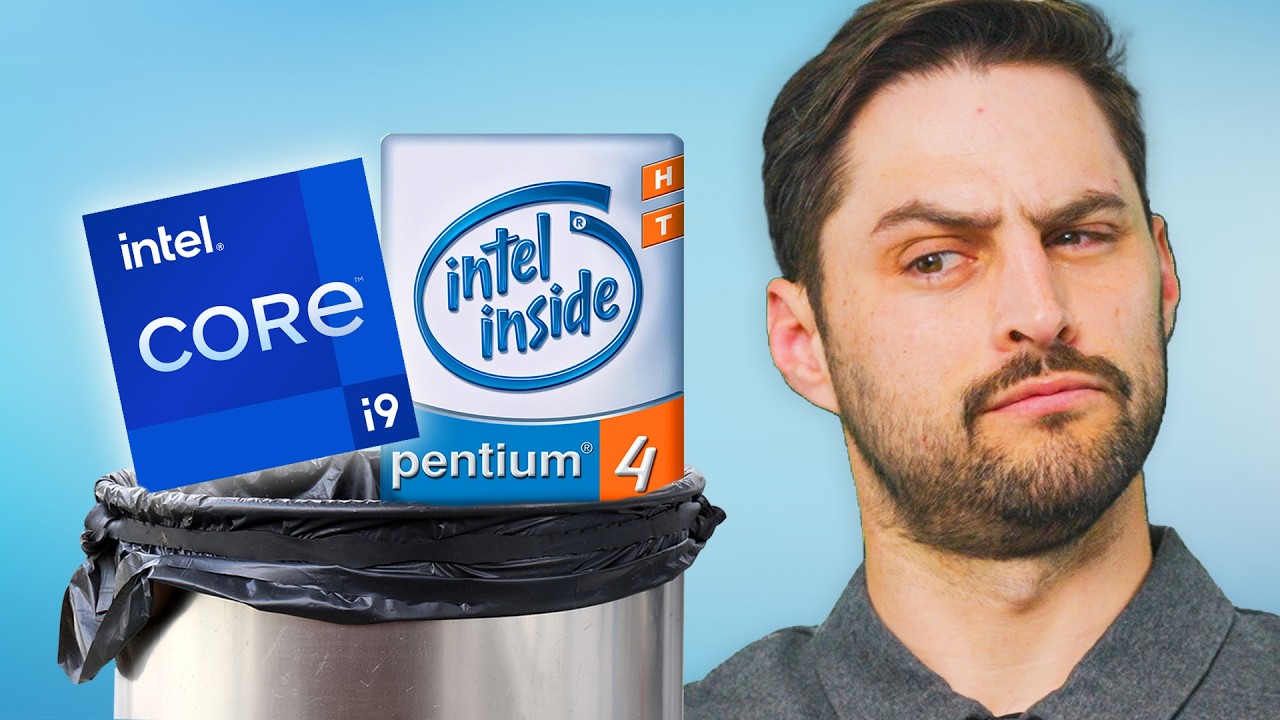
The End of Hyper-Threading
0 up · 0 down · 0 ratings
Promos
Get 20% off DeleteMe US consumer plans when you go to joindeleteme.com and use promo code Techquickie at checkout. DeleteMe International Plans: international.joindeleteme.com Intel looks to be ditching their long-standing Hyper-Threading feature...but why? Leave a reply with your requests for future episodes. ► GET MERCH: lttstore.com ► GET A VPN: piavpn.com ► GET EXCLUSIVE CONTENT ON FLOATPLANE: lmg.gg ► SPONSORS, AFFILIATES, AND PARTNERS: lmg.gg FOLLOW US ELSEWHERE --------------------------------------------------- Twitter: twitter.com Facebook: @LinusTech Instagram: @linustech TikTok: @linustech Twitch: twitch.tv
The video explains that Intel’s long-standing hyper-threading technology, which has allowed a single CPU core to process multiple threads concurrently, is being reconsidered in the company’s upcoming Lunar Lake and AeroLake generations. It frames hyper-threading as a feature that boosted average throughput by about 30 percent while increasing power draw by roughly 20 percent, a trade-off that matters especially in data centers and mobile devices where efficiency is critical. To address this, Intel has pushed a hybrid core design that combines performance cores (P-cores) and efficiency cores (E-cores), aiming to maximize both throughput and energy efficiency. The speaker notes that with this layout, processors can dedicate more work to the efficient cores when appropriate, potentially diminishing the relative advantage of hyper-threading. Intel claims that running extra threads on E-cores can be more power-efficient than relying on hyper-threading on P-cores, and they project that foregoing hyper-threading while increasing E-core counts could yield IPC improvements of about 15 percent per unit of power and around 10 percent per unit of die area. Nevertheless, the video also cautions that pure hyper-threading can still offer IPC advantages in certain contexts, and benchmarks will ultimately determine how well Lunar Lake and AeroLake perform in practice. The broader context is Intel’s effort to stay ahead of Arm-based rivals from Apple and Qualcomm, emphasizing efficiency to compete in laptops and data centers, while leaving room for a high-end, single-threaded performance machine for enthusiasts who still rely on strong single-core performance. The segment concludes with a nod to future independent benchmarks and a reminder that real-world results will reveal whether hyper-threading will remain part of Intel’s core strategy or yield to a predominantly E-core driven approach.
Topics · computing · hardware · cpu-architecture · performance · technology · science & technology