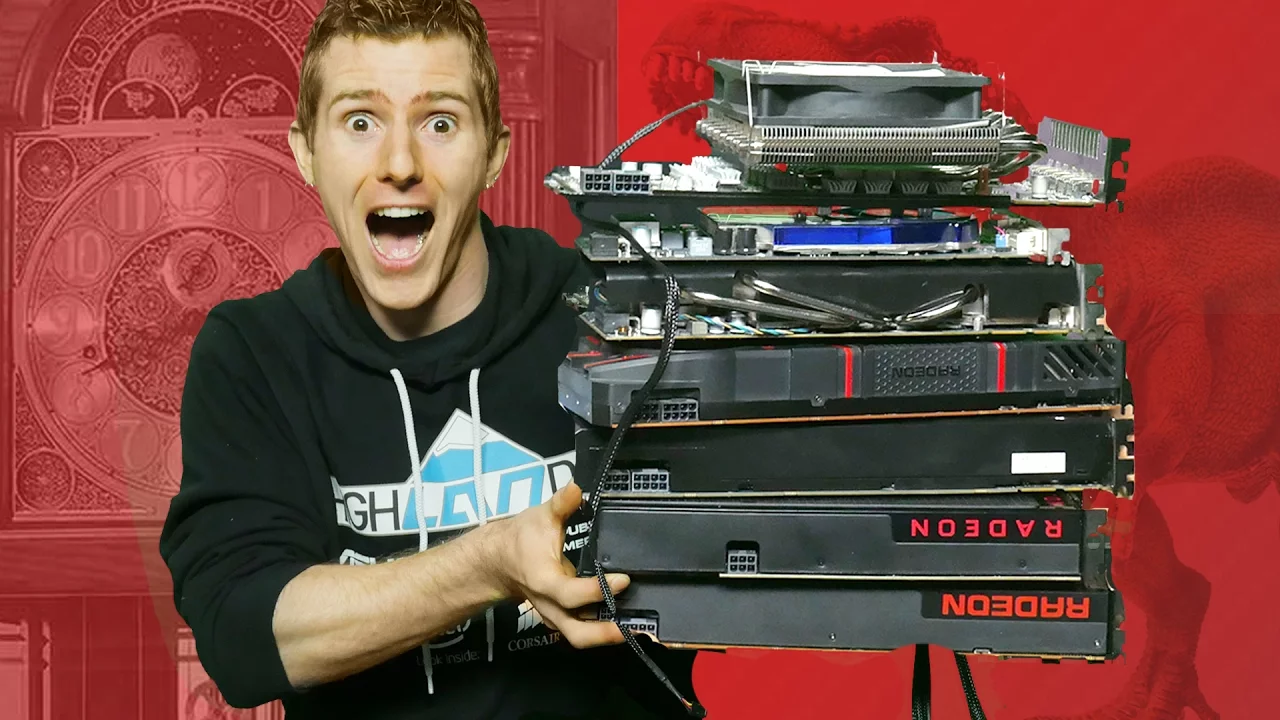
10 Years of AMD Video Cards BENCHMARKED!
0 up · 0 down · 0 ratings
Description
AMD Vega is rumored to be coming "soon," but before it arrives let's take a look back at the last TEN YEARS of AMD's flagship GPUs! For your unrestricted 30 days free trial, just go to freshbooks.com and enter in “Linus Tech Tips” in the how you’ve heard about us section.
Promos
Check out Coolermaster’s Masterkeys keyboard lineup at geni.us Buy AMD video cards on Amazon: geni.us Discuss on the forum: linustechtips.com Our Affiliates, Referral Programs, and Sponsors: linustechtips.com Linus Tech Tips Merchandise: designbyhumans.com Linus Tech Tips Posters: crowdmade.com twitter.com @LinusTech Intro Screen Music Credit: Title: Laszlo - Supernova Video Link: youtube.com iTunes Download Link: itunes.apple.com Artist Link: soundcloud.com Outro Screen Music Credit: Approaching Nirvana - Sugar High youtube.com Sound effects provided by freesfx.co.uk
AMD’s flagship GPUs have evolved dramatically over the past decade, and this video traces that journey from the early 2007 Radon HD 3870 to the modern RX 480. The host begins by highlighting the technological shifts that have driven AMD’s performance gains, noting the transition from a 55‑nm to a 40‑nm process and the introduction of PCI Express Gen 2.1 and DirectX 12 support. He then walks through a series of synthetic benchmarks and real‑world gaming tests, comparing the 3870, 4870, 6970, 7970, 390x, and 480 cards, and explains how each generation built on the previous one’s architecture, transistor count, and memory bus width. The video’s second half focuses on the practical impact of these improvements, showing how the 480’s 14‑nm process and 4‑096‑bit memory interface deliver a power‑efficient, high‑performance solution that rivals Nvidia’s offerings. The host also discusses the significance of the 480’s 8‑gig VRAM and the role of the new GCN architecture in future GPU design. Throughout, the host provides clear visual cues and data points, making the evolution of AMD’s GPUs accessible to both tech enthusiasts and casual viewers. Overall, the video offers a comprehensive, data‑driven look at AMD’s GPU history, with a strong emphasis on performance metrics and practical benchmarks. It serves as a useful reference for anyone interested in the technical evolution of AMD’s flagship graphics cards and the broader trends in PC gaming hardware.
Viewers praised the video’s thorough coverage and clear presentation, noting that the host’s comparison of benchmarks was especially helpful. Many comments highlighted the video’s usefulness for understanding AMD’s GPU evolution, with several viewers requesting a follow‑up on AMD CPUs. The overall sentiment was positive, with a high like count and several supportive replies indicating strong engagement.
Topics · review · performance · amd · tech · pc · gaming · linus · computer
Questions answered
- What process node did AMD use for the 3870 and how did it affect performance?
- AMD used a 55‑nm process for the 3870, which allowed it to deliver similar performance to its predecessor while being cheaper and more efficient.
- Which memory interface did the 480 introduce and why is it significant?
- The 480 introduced a 4‑096‑bit memory interface, providing a high‑bandwidth, low‑power solution that supports 8 GB of VRAM and improves gaming performance.
- How does the 7970 compare to the 390x in terms of transistor count and clock speed?
- The 7970 has over 4 billion transistors and a 28‑nm process, while the 390x, released later, added higher density memory chips and slightly higher clock speeds, making it a strong competitor in the high‑end market.