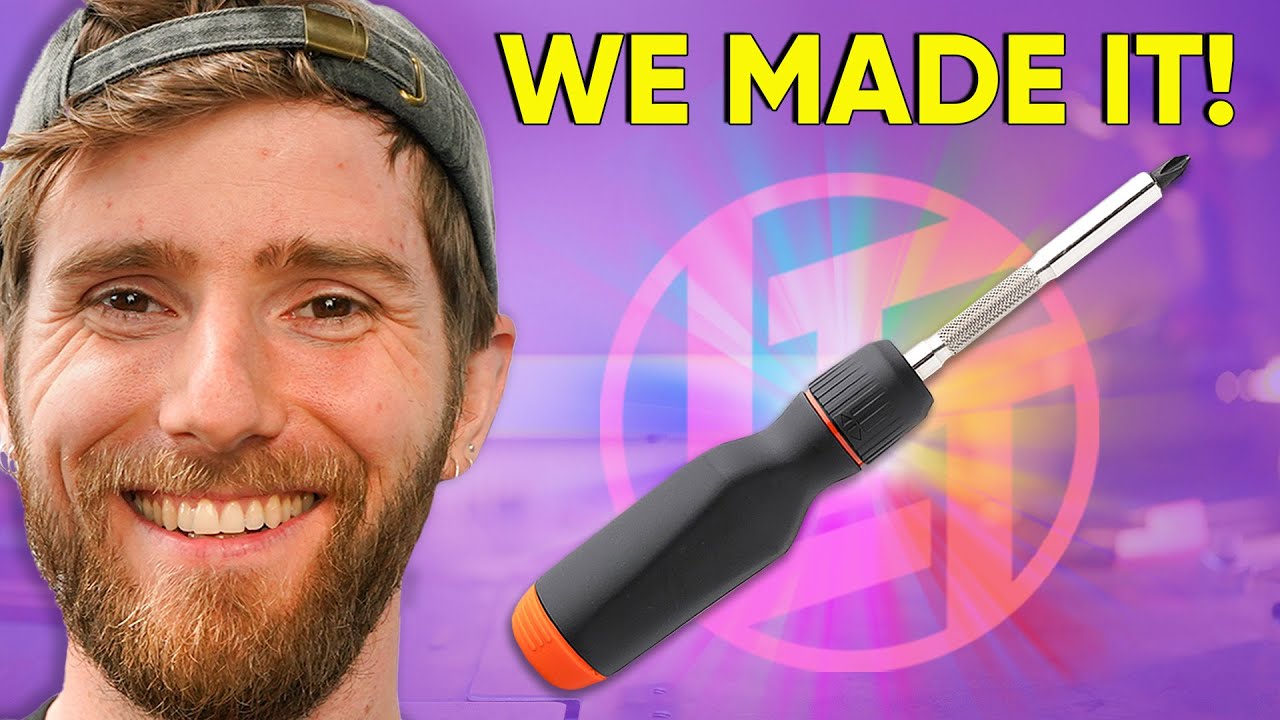
Why our Screwdriver took 3 YEARS
0 up · 0 down · 0 ratings
Description
Promos
Thanks again Pulseway for helping with today's video. Get started free today, or save 40% on all plans at lmg.gg One of my custom cooled gaming machines decided to leak. So what caused this water damage? Was it my fault? And how can I stop this from happening again? Discuss on the forum: linustechtips.com ► GET OUR MERCH: lttstore.com ► GET EXCLUSIVE CONTENT ON FLOATPLANE: lmg.gg ► GET A VPN: piavpn.com ► SPONSORS, AFFILIATES, AND PARTNERS: lmg.gg
Check out a TOROIDAL Isolation Transformer (120 VAC to 120 VAC): lmg.gg Purchases made through some store links may provide some compensation to Linus Media Group. Shop Linus Tech Tips Merchandise: 2. Backpack lttstore.com 3. LTT Northern Lights Desk Pad 1500mm x 900mm lttstore.com 4. Screwdriver All Black / Silver Shaft lttstore.com 5. Screwdriver Black and Orange / Silver Shaft lttstore.com 6. Stealth Desk Pad 1500mm x 900mm lttstore.com 8. Stubby Screwdriver Black and Orange / Silver lttstore.com 9. Tech Sack lttstore.com CHAPTERS --------------------------------------------------- 0:00 Intro 1:18 The theories 3:12 We have a solution 5:00 Jake gets grounded 7:50 Sensors 8:50 Draining the loop 11:00 A little help from Pi 14:24 Checking our work 16:15 Setting up the leak sensor 17:10 Why there won't be a "next time" 19:14 Test run 20:25 What about the pumps? 22:36 Fingers crossed 24:19 Outro
The video titled Why our Screwdriver took 3 YEARS chronicles an ambitious product development journey that spans years of hard lessons, prototyping, partnerships, and manufacturing evolution. The opening frames set the stage by presenting a seemingly simple tool that required substantial investment and decision making, highlighting the paradox of turning a basic screwdriver into a meticulously engineered product. Early on, the host explains that despite easy access to existing screwdrivers, the team pursued a bespoke redesign that would deliver superior ergonomics, balance, and a refined user experience. The narrative then shifts to the core design challenges: reshaping the handle for optimal grip, reorienting the ratchet mechanism, and ensuring compatibility with a broad range of bits. The discussion emphasizes the shift from a quick rebrand to a full bespoke redesign, with detailed rationale about direction, scope, and cost. The team outlines their manufacturing roadmap, including the pivot from automotive-focused handles to a general-use design and the stringent requirements of plastic mold tools, which require massive upfront investments and precise tolerances. The video also covers supply chain tensions, mold making, and the decision to switch factories after a major supplier’s missteps, underlining the impact of external partners on product delivery timelines. The latter sections dive into technical specifics, such as material choices for the shaft, the knurling, and the final passivation, all aimed at durability and reliability under heavy workloads. The host concludes with reflection on the project’s outcomes, acknowledging the inevitable compromises and celebrating the final product as a robust tool suitable for building computers and beyond, while inviting viewers to secure a place in line for a highly anticipated launch. Throughout, there are candid moments about budget, design iterations, and the iterative mindset that propelled the screwdriver from concept to production, illustrating how relentless refinement can transform a basic object into a high-performance, durable instrument. The video blends technical explanations with hands-on demonstrations, including real-world testing, QC checks, and a glimpse into the molding and assembly floor, providing a vivid, transparent view into modern hardware development. It ends on a note of gratitude for collaborators and viewers, reaffirming the team’s commitment to delivering value despite a long and winding path to market, and prompting the audience to explore the product lineup and related sponsor offers.
Topics · technology · manufacturing · product-design · hardware · engineering · process-management · videos-documenting-process · consumer-electronics
Questions answered
- What prompted the three year development timeline for the LTT screwdriver?
- The timeline was driven by iterative design changes, mold development, supplier challenges, and a factory switch, which together introduced substantial delays before mass production could begin.
- What materials were chosen for the shaft and why?
- The shaft was made from 303 stainless steel for a balance of durability and machinability, with a focused knurling and a protective coating strategy to prevent wear and improve longevity.
- How was the final handle design determined?
- The final handle, nicknamed Longboi, emerged after multiple iterations to optimize ergonomics for different hand sizes, while keeping the internal internals compatible with Megapro internals and ensuring manufacturability.