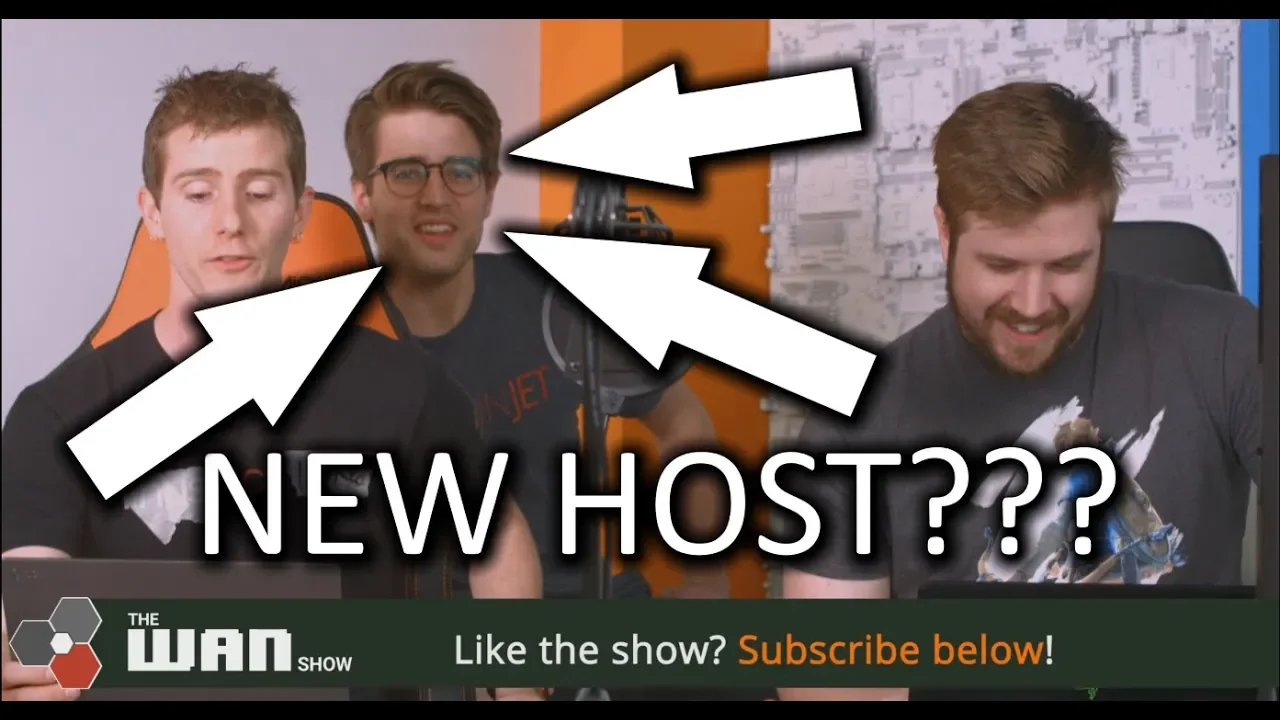
NEW HOST? - WAN Show May.11 2018
0 up · 0 down · 0 ratings
Promos
Savage Jerky: Use offer code LTT to save 10% on Savage Jerky at geni.us Spektrum: Save 10% on Spektrum bluelight glasses using offer code LINUS at geni.us FreshBooks: For your unrestricted 30 days free trial, go to freshbooks.com and enter in “The WAN Show” in the how you heard about us section. LTX: Come hang out with us at LTX 2018! Get tickets at ltxexpo.com Soundcloud: soundcloud.com Forum: linustechtips.com Timestamps courtesy of JJMC89. 00:02:15 - Google Duplex 00:14:47 - Boston Dynamics 00:23:28 - Nine Inch Nails will not sell tickets online for upcoming tour 00:36:50 - James's stabbing 00:41:58 - Sponsor: Savage Jerky 00:43:40 - Sponsor: Spektrum Glasses 00:45:34 - Sponsor: Freshbooks 00:47:48 - Nintendo Switch Online 00:54:40 - Games from Space 00:57:15 - Qualcomm making a smart watch chip 01:10:45 - TechLinked / Riley 01:17:18 - Scrap Yard Wars season 7
The WAN Show episode from May 11 2018 introduces a new host dynamic with Riley joining Linus and Luke for the show, while also delivering a dense roundup of tech topics that were hot at the time. The hosts kick off with light banter about their weekend and then pivot to a collection of major demonstrations and industry moves showcased at events like Google IO. A recurring theme is artificial intelligence and robotics, anchored by Google's demonstrated Duplex system that can place real human-sounding phone calls to make bookings, drawing immediate reactions about its realism and potential implications for everyday life. The discussion breaks down the technology behind Duplex including the use of WaveNet and the scripted structure of calls that aid natural-sounding responses, while also highlighting concerns about privacy, consent, and the regulatory landscape across states. The panel then shifts to Boston Dynamics, highlighting Atlas and SpotMini in action, with enthusiastic reactions to their mobility, balance, and potential commercial uses, while also noting limitations such as the brittleness of some movements and safety considerations in real-world environments. A separate thread covers Nintendo Switch Online, with expectations around online services for Nintendo’s popular console and how it compares to other online ecosystems, including launch timelines and feature expectations. The show also touches on the broader topic of event-ticketing economics, discussing scalping, bot-driven purchases, and potential solutions like verified fan programs and in-person sales, while acknowledging the trade-offs and ongoing debates in the industry. Throughout, the hosts weave in commentary about the evolving role of AI and AR, touching on future scenarios where information is surfaced passively through wearable devices and spatially-aware displays, rather than requiring explicit queries. The discussion of privacy and consent extends to the question of whether virtual assistants should clearly identify themselves as automated agents when making calls, a stipulation Google later pledged to address in rollout. The episode then circles back to robotics with a deeper dive into SpotMini and Atlas, complimented by a practical discussion about how these platforms navigate uneven terrain, stairs, and dynamic obstacles, and what improvements remain for broader adoption. In addition to hardware and services, the hosts explore business models and the economics of online ticketing, using Nine Inch Nails as a case study and outlining various strategies to reduce scalping while balancing consumer access with artist revenue. The show closes with lively banter about personal experiences at concerts, the ethics of filming performances, and the potential of future devices to enhance live events without diminishing the experience for attendees, while teasing upcoming content and projects like Scrap Yard Wars season 7. Across these segments, the hosts maintain a blend of skepticism, curiosity, and enthusiasm, inviting viewers to consider both the technical marvels and the societal implications of rapid tech advancement. The overall takeaway is a snapshot of a tech landscape in flux, where AI, robotics, and connected services are rapidly changing how we interact with machines and the world around us, while media coverage and consumer behavior adapt in parallel. The show exemplifies Linus Tech Tips’ signature mix of hands-on analysis, speculative discussion, and a light, accessible delivery that makes complex topics approachable for a broad audience. As Riley becomes more integrated into the WAN Show, the format signals a shift toward new energy and perspectives, even as fans consider how the station will balance nostalgia with innovation in future episodes.
Topics · technology · science_and_technology · video_podcast · robotics · ai · consumer_electronics · gaming_and_entertainment · media_and_entertainment
Questions answered
- What is Google Duplex and how does it work in interviews like this WAN Show discussion?
- Google Duplex is an AI system that can carry out natural sounding phone calls to complete tasks such as booking appointments. It uses advanced speech synthesis like WaveNet and scripted conversational flows to handle typical reservation scenarios, producing human-like responses and potentially reducing the need for human labor in simple call tasks.
- What are the main robotics highlights from Boston Dynamics that are discussed?
- The episode highlights Atlas and SpotMini with emphasis on their mobility, balance, and potential industrial or logistics applications, including navigating uneven terrain, stairs, doors, and autonomous navigation in some demonstrations.
- What ticketing problems are discussed and what solutions are proposed?
- The discussion centers on scalping and bot-driven ticket purchases, with proposed solutions like verified fan programs, in-person or timed sales, and identity-based verification to reduce scalping, though each approach has trade-offs in accessibility and fairness.