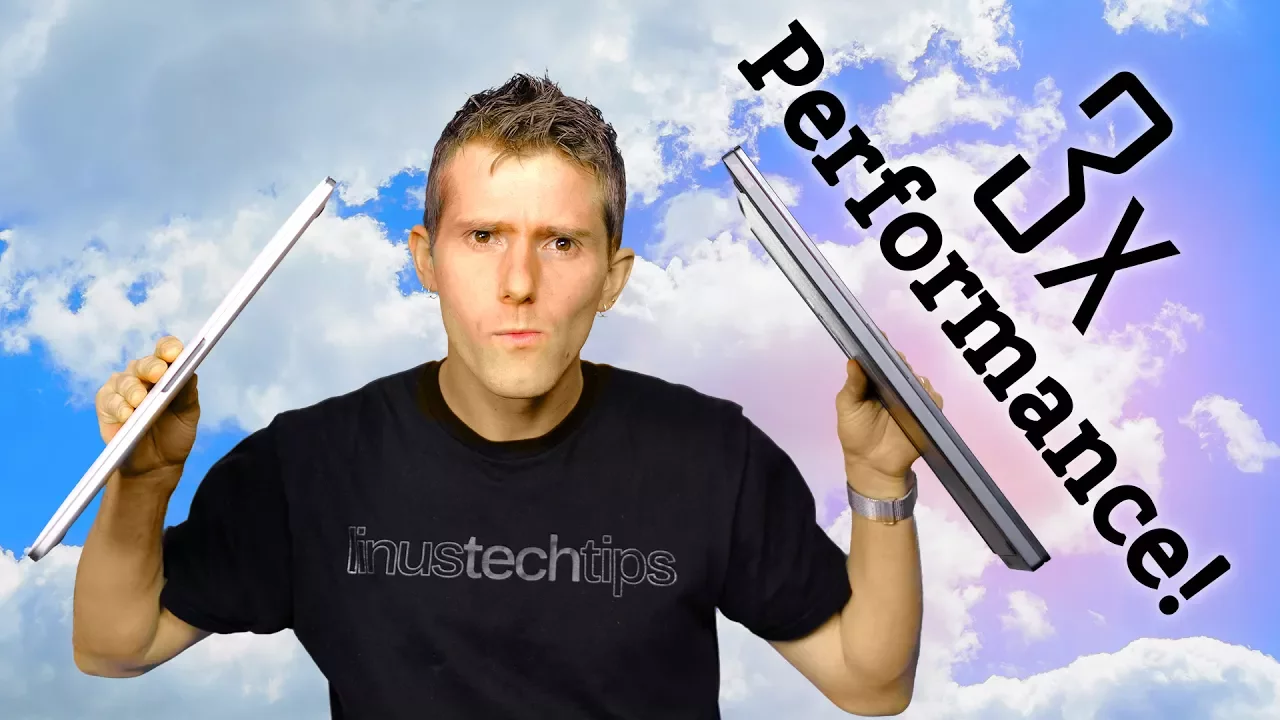
GTX 1080 Gaming Laptop Thin as Macbook Pro – ASUS Zephyrus
0 up · 0 down · 0 ratings
Description
Can a thin and light gaming laptop really get the full performance out of a GTX 1080? For your unrestricted 30 days free trial, go to freshbooks.com and enter in “Linus Tech Tips” in the how you heard about us section.
Promos
Check out CyberpowerPC’s desktops featuring Intel's 7th Generation Core i7 7700K processor on Newegg: geni.us Buy on Amazon: geni.us Buy on Newegg: geni.us Discuss on the forum: linustechtips.com Our Affiliates, Referral Programs, and Sponsors: linustechtips.com Linus Tech Tips merchandise at designbyhumans.com Linus Tech Tips posters at crowdmade.com Our production gear: geni.us Twitter - twitter.com Facebook - @LinusTech Instagram - @linustech Intro Screen Music Credit: Title: Laszlo - Supernova Video Link: youtube.com iTunes Download Link: itunes.apple.com Artist Link: soundcloud.com Outro Screen Music Credit: Approaching Nirvana - Sugar High youtube.com Sound effects provided by freesfx.co.uk
The ASUS Zephyrus aims to solve the classic trade-off between performance and portability by packing a GTX 1080 into a chassis only about 1.5 millimeters thicker than a MacBook Pro. Early remarks emphasize the bold design choice, presenting a thin, light laptop with substantial aluminum construction and RGB accents that looks both premium and gamer oriented. The reviewer details the core components, including an NVIDIA GTX 1080, an Intel Core i7 7700HQ, a 500 GB NVMe SSD, and up to 24 GB of DDR4 RAM, noting that North American models ship with 16 GB. While the device is small enough to carry easily, the Zephyrus keeps a robust set of I/O: three full-size USB Type-A ports, Thunderbolt 3, HDMI, a headphone jack, and even an included USB-to-Ethernet adapter, which reduces the need to rely on wireless networking for gaming. The discussion then pivots to real-world performance, acknowledging inevitable trade-offs of thermals in such a slim form factor. When subjected to full synthetic loads, the thermal solution can be overwhelmed, causing noticeable throttling, though under typical gaming workloads at room temperature the CPU and GPU still deliver strong performance for 1080p gaming and a 120 Hz IPS G-Sync display. The review compares the Zephyrus to larger gaming laptops, noting it trails desktop GPUs and bigger laptops by a margin but often surpasses some heavier machines while offering superior portability. In conclusion, the Zephyrus is lauded for its distinctive design and compelling value proposition for those prioritizing style and portability, as long as the user accepts some performance compromises in exchange for the form factor. The reviewer also comments on the keyboard feel, responsivity, and the included gaming mouse, highlighting that while battery life is not its strong suit due to the lack of Optimus, the overall package is a bold and innovative entry in ASUS’s lineup that redefines what a thin gaming laptop can be.
Topics · technology · laptops · hardware · product_review · gaming
Questions answered
- What are the main hardware components inside the Zephyrus?
- The Zephyrus houses a GTX 1080 GPU, an Intel Core i7 7700HQ CPU, a 500 GB NVMe SSD, and up to 24 GB of DDR4 RAM (with 16 GB in North American models). It also offers multiple I/O options including three full-size USB Type-A ports, Thunderbolt 3, HDMI, and a headphone jack.
- What are the thermal and battery performance characteristics of this thin gaming laptop?
- Under full synthetic loads, the thermal solution can become overwhelmed and throttling occurs, but in more realistic gaming scenarios at room temperature, both CPU and GPU perform strongly. The battery life is described as abominable because the device does not use Optimus to switch to integrated graphics at idle.
- Is the Zephyrus a good value for someone who wants portability over maximum performance?
- Yes, for users who want a very portable gaming laptop with premium aesthetics, the Zephyrus offers compelling value by delivering strong 1080p gaming and a 120 Hz display in a slim chassis, while accepting some performance trade-offs compared to larger, heavier gaming laptops and desktops.