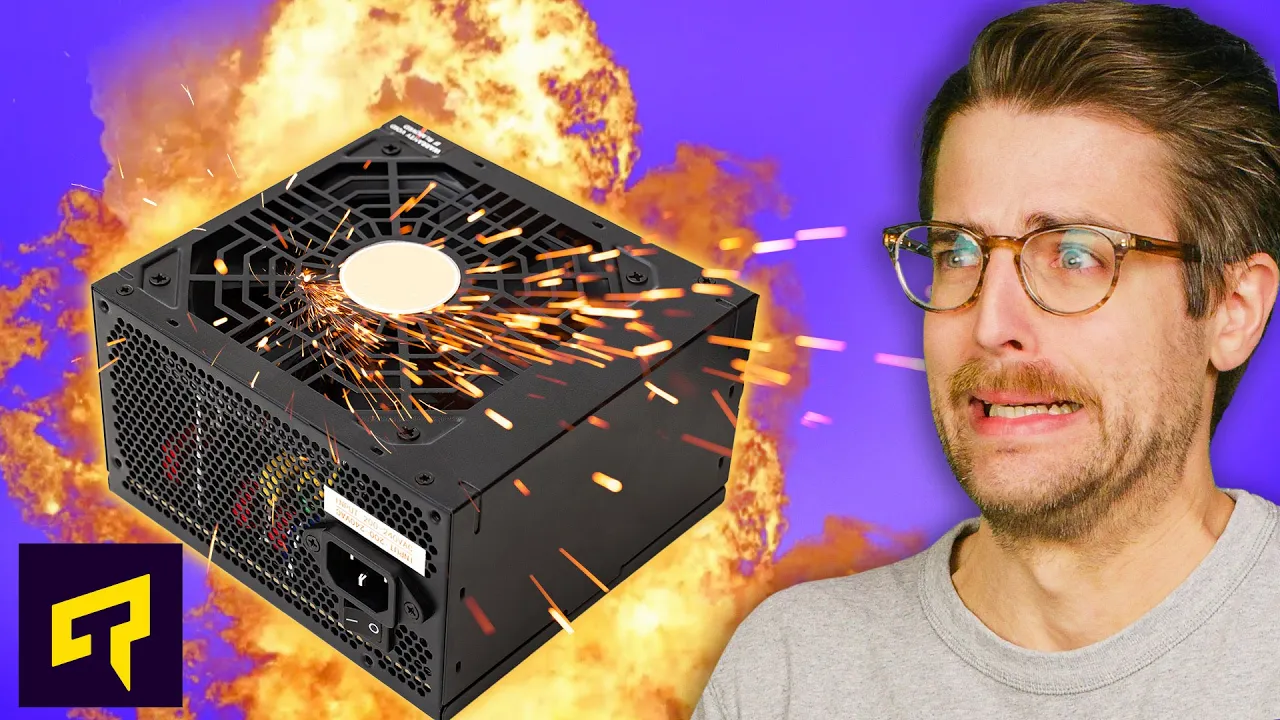
Why Cheap Power Supplies Explode
0 up · 0 down · 0 ratings
Promos
Thanks to Secretlab for sponsoring today's video! Check them out at lmg.gg Beware of buying a cheap PSU...it might just blow up! Leave a reply with your requests for future episodes. ► GET MERCH: lttstore.com ► AFFILIATES, SPONSORS & REFERRALS: lmg.gg ► PODCAST GEAR: lmg.gg ► SUPPORT US ON FLOATPLANE: floatplane.com FOLLOW US ELSEWHERE --------------------------------------------------- Twitter: twitter.com Facebook: @LinusTech Instagram: @linustech TikTok: @linustech Twitch: twitch.tv
The video explains why cheap computer power supplies (PSUs) are more prone to failure and even catastrophic events like fires or explosions. It begins by noting that although ATX PSUs have existed since the mid-1990s, some manufacturers still cut corners to reduce costs. A key point is that mislabeled or counterfeit units can misrepresent their true capabilities, creating dangerous situations. The host highlights two major failure points: capacitors and protective circuits. Cheap capacitors may have high resistance and mislabeling of voltage ratings, which can lead to overheating, excessive current, or immediate failure when stressed. Inadequate or removed protection circuits further increase the risk, as no automatic shutdown occurs under fault conditions. The video explains how proper protection like overvoltage, overcurrent, overheat, power limit, and short-circuit protection should immediately cut power to safeguard both the PSU and the connected components. It also covers external warning signs of a risky PSU, such as unusually light weight, thin cables, poor soldering, and fake certifications. The closing advice centers on buying from reputable manufacturers, checking reviews, and applying common sense to avoid obviously underpriced units. The sponsor segment interleaves with practical tips on product evaluation, such as inspecting cabling and housing, and reinforces the message to prioritize quality over price when selecting a PSU for any build, even DIY projects.
Topics · electronics · hardware · safety-and-regulation · consumer-technology · DIY-electronics
Questions answered
- What is a common failure mode for cheap power supplies?
- Common failure modes include capacitor degradation, mislabeled voltage or current ratings, and missing or weak protective circuits that fail to shut down on faults.