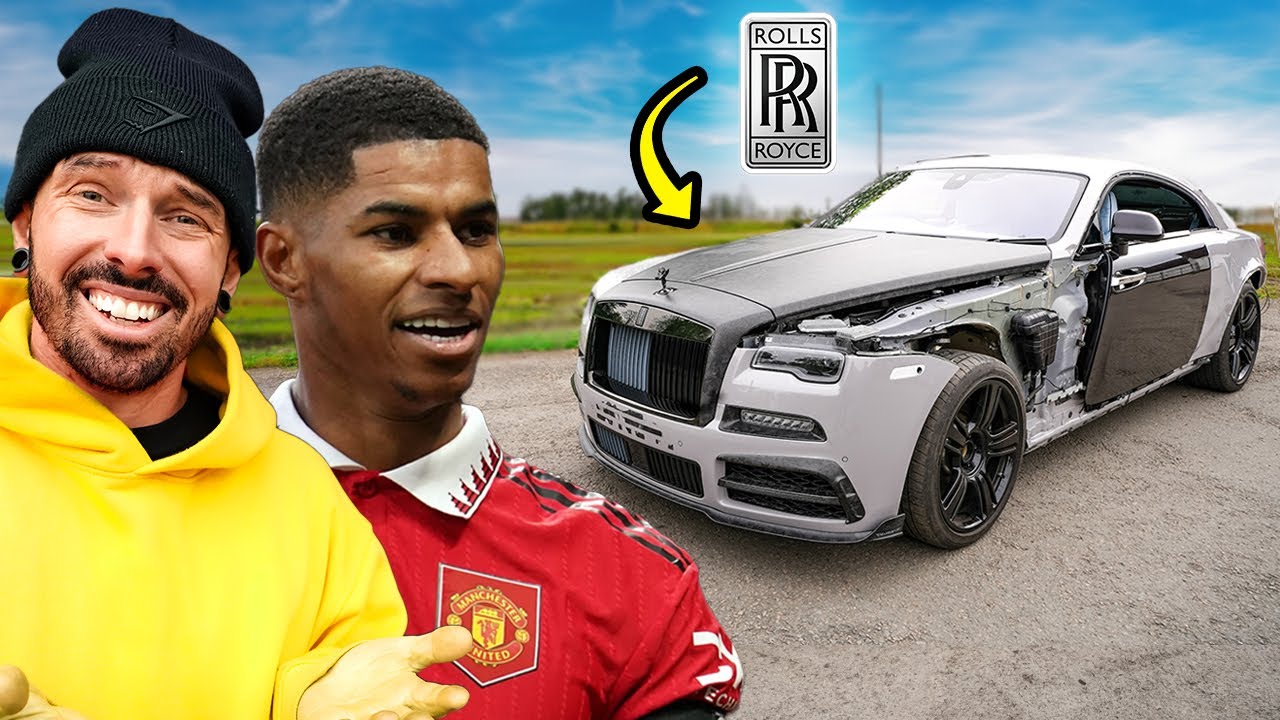
ROLLS ROYCE HELP ME REBUILD MARCUS RASHFORDS WRAITH
0 up · 0 down · 0 ratings
Promos
Check if your car was damaged with Car Vertical - 20% off here carvertical.com I bought Marcus Rashford's Wrecked Rolls Royce wraith from auction and now im going to rebuild it. We managed to get it driving in the last video but now i need to look at the structural damage which is not only expensive it also takes specialist repair. Im going to attempt it myself.
ALL MA MERCHANDISE
Channels and socials
FOR MORE CONTENT
CHECK OUT MY SECOND CHANNEL
Follow Me Here Aswell
Notes
The video documents Mat Armstrong and his team continuing the ambitious rebuild of Marcus Rashford’s Rolls-Royce Wraith after a high-profile crash. The creator starts by outlining the scale of the structural damage and the daunting cost of original parts, emphasizing the decision to source and replace a number of key structural panels rather than risk compromised components. The front chassis area becomes the initial focus, where the team carefully removes spot welds and separates panels to access the underlying structure, while debating the mixed materials used in the Wraith such as steel, aluminum, and cast aluminum components. Throughout, the narrative emphasizes precision and the willingness to learn new techniques, including dealing with rivets, panel bonding, and maintaining alignment to OEM tolerances. The team then installs fresh structural panels sourced from Rolls-Royce and BMW, leveraging panel bond and rivets, and meticulously reattaches sections while trying to preserve original panels where possible. The process is shown in a methodical, almost surgical fashion, with frequent checks on alignment and fitment as new parts are clamped, welded, and finished with seam sealer and primer to protect against corrosion. In parallel, the program highlights the drama and cost-savings of using compatible parts from Sue’s parts car, which helps avoid prohibitive bespoke RR pricing. Along the way, the video showcases the reassembly of the front end, including the bonnet area, bumper, lights, and the Spirit of Ecstasy and carbon fiber trim, with the team performing multiple trials to ensure everything lines up correctly. The brakes and airbags receive particular attention, with a detailed demonstration of bleeding the brakes using an unconventional method when standard diagnostics aren’t available, and the careful replacement of curtain and seat airbags using parts salvaged from the parts car to avoid replacement costs. Finally, the crew delivers a sense of cautious optimism as the car begins to resemble its former self with a working front end and new lighting, while acknowledging the remaining challenges such as the rear quarter and airbag system reliability. The video ends on a high note with the car appearing to come together, and the team encouraging viewers to stay tuned for further rebuild installments and continued discovery of the car’s hidden complexities and potential surprises in the restoration journey.
Topics · auto-restoration · luxury-car-repair · vehicle-rebuild · car-modification · mechanical-work · body-in-white · project-car · engineering-process
Questions answered
- What parts are being replaced on Marcus Rashford's Rolls-Royce Wraith and why?
- The video shows replacing structural panels, including parts of the front subframe, bottom/middle/top sections of a frame, and the rear quarter where there is significant damage. These replacements are necessary due to crash-related structural damage that cannot be repaired safely by patchwork, and some parts are replaced with pieces sourced from Rolls-Royce, BMW, and Sue’s parts car to keep costs reasonable.
- How is the brake system being addressed given the absence of a working diagnostic bleed?
- The team uses an improvised method to bleed the brakes by applying a high pressure to a brake bleeding setup (Mr Push) to push air out of the system, testing the pedal to confirm a solid brake feel. If air remains, the ABS controller and diagnostic bleed would normally be used, but the alternative method is demonstrated to achieve a functional brake pedal.