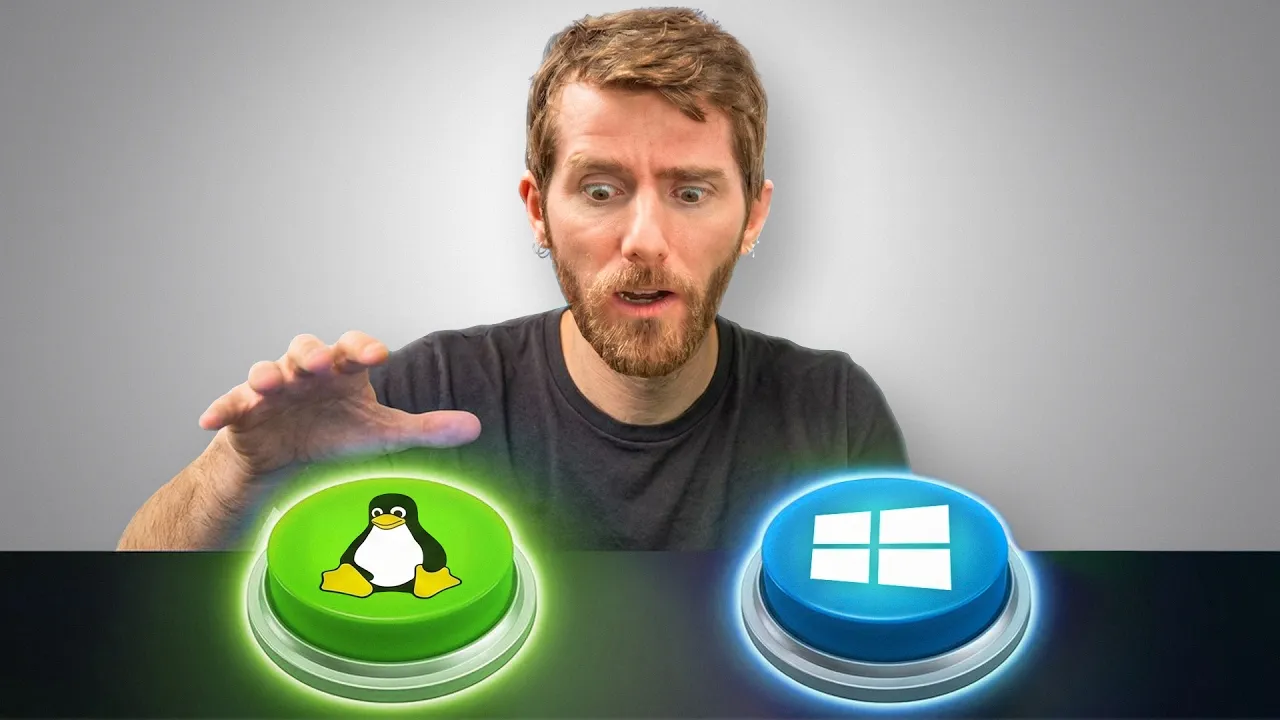
Why Gaming on Linux Suddenly Matters
0 up · 0 down · 0 ratings
Promos
Click this link boot.dev and use my code TECHQUICKIE to get 25% off your first payment for boot.dev. Thank you Boot.Dev for Sponsoring! From broken drivers to the Steam Deck selling millions, Linux gaming has gone from "is this the year?" to "wait, it actually works now." But getting here took a decade of tinkering, a billion-dollar bet from Valve, and an open-source community that refused to quit. In this video we talk to Valve and the Batocera project about how Linux quietly became a real threat to Windows - and why Microsoft is playing catch-up. Leave a reply with your requests for future episodes. ► SHOP OUR PRODUCTS: lttstore.com ► GET A VPN: piavpn.com ► GET EXCLUSIVE CONTENT ON FLOATPLANE: lmg.gg ► SPONSORS, AFFILIATES, AND PARTNERS: lmg.gg Purchases made through some store links may provide some compensation to Linus Media Group. Affiliate links powered in part by affilimate.com Linus Sebastian is an investor in Framework Computer, Inc and HexOS by Eshtek. Chapters ------------------------------------ 0:01 Is this the year of Linux gaming? 0:43 Why Microsoft is usually better 2:03 How Valve is fighting back 3:37 Sponsor 4:14 Steamdeck saved the day 4:50 Windows claps back 6:27 Valve is putting up a fight 7:40 Watch another video
Paragraph 1: The video frames the rise of gaming on Linux as a long time question that finally starts to answer itself. It traces the historical barrier to Linux gaming, noting drivers, game compatibility, and the reliance on Windows APIs like DirectX as major obstacles. The narration highlights Valve’s deliberate strategy, from native ports in 2012 to the Proton compatibility layer introduced in 2018, as a pivotal shift that unlocked Linux gaming for a broad audience. The segment explains why earlier efforts were not scalable for developers, and how Proton allowed a one-time investment to pay off across many games. It also recounts Valve’s experiments with hardware, including Steam Machines, and why those attempts failed before the software layer matured. The takeaway is that Linux gaming has moved from a tinkerer niche to a credible platform thanks to coordinated work from Valve, the open-source community, and game developers. Paragraph 2: The host discusses the Steam Deck as the catalyst that created a virtuous cycle: Deck users report bugs, developers fix them, and games become more compatible on Linux, encouraging more players to switch. The narrative contrasts Windows as a general-purpose OS with a gaming-focused ethos on Linux, arguing that Microsoft’s competitive moves have actually spurred improvements on the Linux side. It concludes that Linux gaming is no longer the work of a single company but a broad ecosystem of distributions and tools that share a common foundation, enabling a wide range of experiences from Arch to Ubuntu to Batocera. Finally, the video looks ahead to renewed efforts from Windows to catch up and hints at ongoing evolution through multiple specialized Linux distros that cater to different kinds of users, from casual gamers to power users, all built on the same open-source bedrock.
Topics · technology · gaming · operating systems · open source
Questions answered
- What unlocked Linux gaming popularity according to the video?
- The Proton compatibility layer and Valve's broader ecosystem efforts, including Steam Deck and open-source contributions, unlocked widespread Linux gaming.
- Why did Steam Machines fail and how did Valve pivot afterward?
- Steam Machines failed due to lack of native Windows game support and consumer expectations; Valve pivoted to Proton and a software-first approach, enabling Windows games to run on Linux.