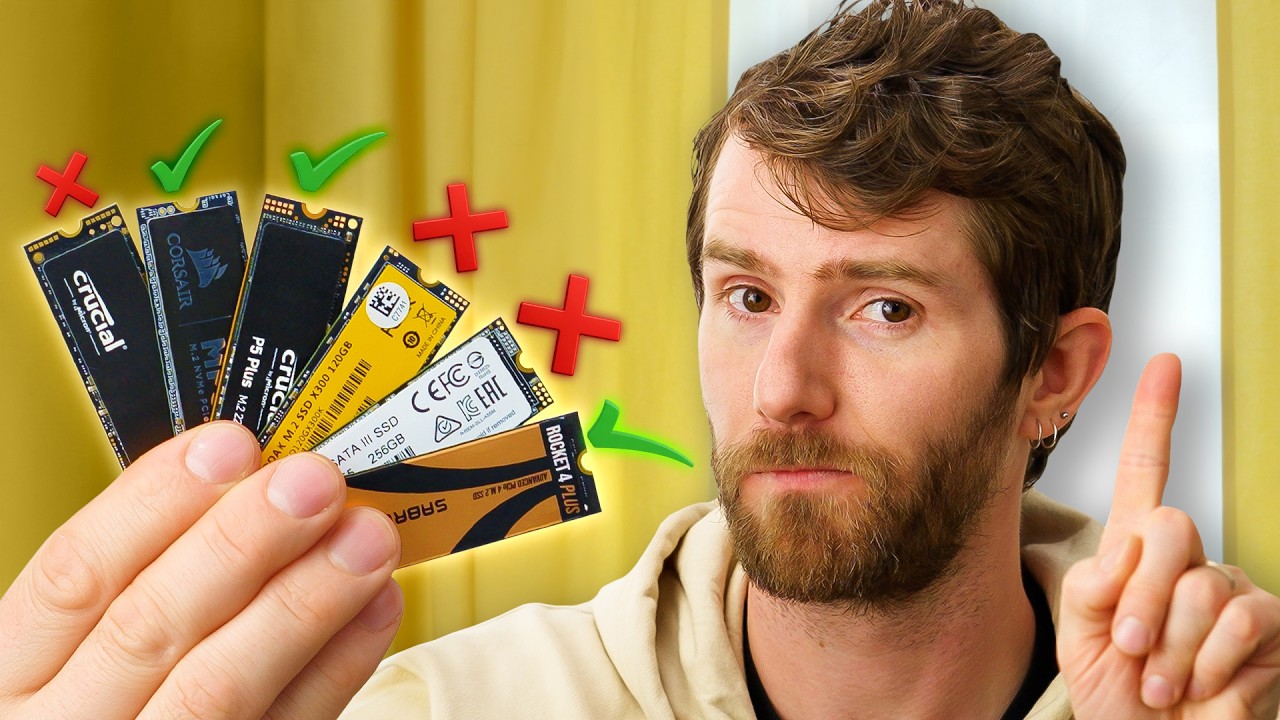
Please Stop Buying the Wrong SSD
0 up · 0 down · 0 ratings
Description
Buy Sihoo Doro C300 Pro V2 here: US:sihoooffice.com EU:de.sihoooffice.com Discount Code: YTBLINUSTECHTIP Buy Via Amazon: bit.ly Discount Code: SIHOODEAL What makes an SSD good or bad? Did you know there's an important hardware difference between top-performing and low-cost storage devices? You might not, because many SSD makers don't talk about DRAM.
Check out a few recommended NVMe SSDs with DRAM Cache: Samsung 990 PRO SSD 1TB PCIe 4.0 M.2 SSD: geni.us Sandisk Optimus GX PRO 8100 PCIe 5.0 NVMe SSD: geni.us Kingston KC3000 PCIe 4.0 NVMe M.2 SSD: geni.us Acer Predator GM7000 NVMe M.2 SSD: geni.us Discuss on the forum: linustechtips.com
Channels and socials
Check out our Channel Partners: Secretlab - Grab a TITAN Evo ergonomic gaming chair: lmg.gg PIA - Get the VPN of our choice: piavpn.com dbrand - Buy a "Circuit" series skin for your device: dbrand.com ► SHOP LTT PRODUCTS: lttstore.com ► GET EXCLUSIVE CONTENT ON FLOATPLANE: lmg.gg ► DIVE DEEPER ON THE LTT LABS WEBSITE: lmg.gg ► SPONSORS, AFFILIATES, AND PARTNERS: lmg.gg Purchases made through some store links may provide some compensation to Linus Media Group. Affiliate links powered in part by affilimate.com Linus Sebastian is an investor in Framework Computer, Inc and HexOS by Eshtek. CHAPTERS --------------------------------------------------- 0:00 Intro 1:45 What's the difference? 2:44 Why does it matter? 4:16 It wasn't always this way 5:30 HMB isn't useless 6:13 Your OS storage should use DRAM 6:44 What can we do about it?
The video explains that the difference between SSDs goes beyond raw sequential speeds and is heavily influenced by whether the drive has a DRAM cache. The host describes how SSD controllers use a map called the flash translation layer to locate data on NAND, and how DRAM cache speeds up this mapping, improving performance and endurance, especially as the drive fills up. He notes that some drives rely on alternative approaches like host memory buffers or storing the map in NAND, which can still be adequate for certain use cases but typically do not match the performance and responsiveness of DRAM-backed designs. The discussion emphasizes that many reputable brands disclose whether their drives include a DRAM chip and that this transparency matters to informed purchasing, particularly when the SSD will serve as the operating system drive or be subject to heavy, ongoing use. He also highlights that the practical impact of DRAM presence depends on workload type, with OS drive tasks and DirectStorage gaming benefits likely to see the most noticeable improvements from DRAM caches. The video argues for consumers to vote with their wallets by preferring drives that clearly indicate DRAM presence and to push manufacturers toward more transparent labeling. Through demonstrations and explanations, the host connects the hardware detail to real-world outcomes like system responsiveness, reliability, and long-term wear management. Finally, the sponsor message is delivered in the context of a broader channel discussion about tech choices and consumer advocacy, encouraging viewers to share experiences and demand better product labeling from manufacturers.
Topics · pc_hardware · storage_technology · technology · consumer_tech_review
Questions answered
- What is the role of a DRAM cache in an SSD and why does it matter for performance?
- A DRAM cache stores the flash translation layer map that tells the system where data is stored on NAND. This speeds data lookup, reduces latency, and helps with wear leveling as the drive fills up. DRAM-backed SSDs typically offer better responsiveness and sustained performance, especially for OS tasks and gaming features like DirectStorage.
- How can a consumer determine whether an SSD includes DRAM or is DRAM-less?
- The most reliable method is to check the manufacturer’s product page or datasheet where DRAM or non-DRAM configurations are listed. Some brands also disclose this information clearly in their data sheets, while others may not, making it harder to confirm without third-party reviews or handling the drive in person.
- Is it ever okay to buy a DRAM-less SSD, and when would that be preferred?
- DRAM-less SSDs can be perfectly adequate for secondary storage or budget builds where high-end OS-drive responsiveness is less critical. They can still perform well under certain workloads using workarounds like host memory buffers, but for an OS drive or DirectStorage gaming scenarios, a DRAM cache is generally preferable.