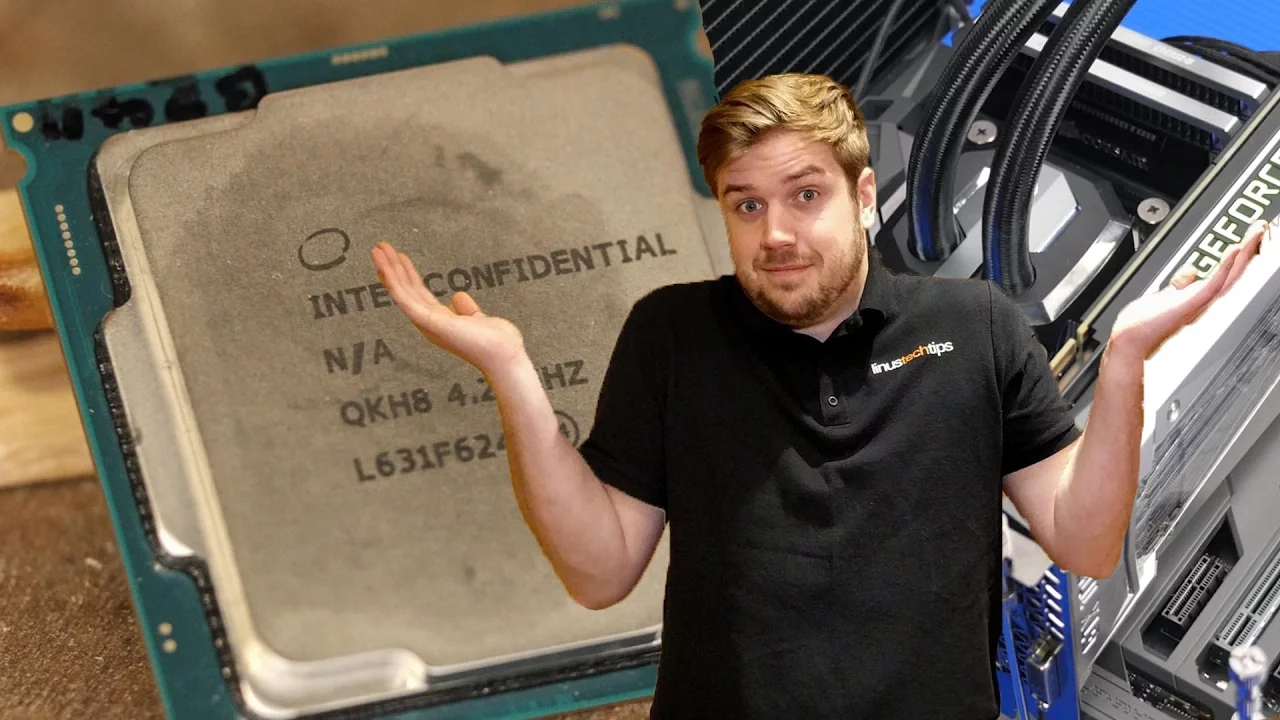
Intel 7700K - Complacent CPU or Ryzen Killer?
0 up · 0 down · 0 ratings
Description
Has Intel pushed performance ahead in the last 10 years? Let's take a look! Buy Core i7 7700K on Amazon: geni.us TunnelBear message: Visit tunnelbear.com to try it free and save 10% when you sign up for unlimited Tunnelbear data EVGA DG-87 Case: geni.us Discuss on the forum: linustechtips.com Our Affiliates, Referral Programs, and Sponsors: linustechtips.com
Channels and socials
Check out our Linus Tech Tips posters at crowdmade.com twitter.com @LinusTech Intro Screen Music Credit: Title: Laszlo - Supernova Video Link: youtube.com iTunes Download Link: itunes.apple.com Artist Link: soundcloud.com Outro Screen Music Credit: Approaching Nirvana - Sugar High youtube.com Sound effects provided by freesfx.co.uk
The video opens by framing the current CPU hype around AMD's Ryzen while Intel counters with the seventh generation Core processors, specifically the Core i7 7700K codenamed Kaby Lake. The host lays out the immediate context, noting that on paper the 7700K shares many specs with Skylake like TDP, PCIe lanes, and process node, yet promises a clock speed bump and feature upgrades such as 4K Netflix DRM and 4K 10-bit VP9 decoding. A key point is that while Kaby Lake improves certain media capabilities, many enthusiasts will pair the CPU with discrete graphics, so the real impact often hinges on platform-level changes rather than raw silicon. The discussion then pivots to the test rig, including an Asus RoG Maximus Z270 motherboard and an emphasis on new features like USB 3.1 Gen 2, additional PCIe lanes, and memory-related enhancements, while also acknowledging that consumer visibility of these changes depends on practical performance gains. Throughout, the host remains measured, noting that 7700K’s biggest talking points are more incremental than revolutionary, and teasing an OC-focused exploration to come. The verdict laid out early is that the 7700K is not a transformative upgrade for most existing Skylake systems, but the platform has interesting capabilities such as Optane memory and upgraded media decoders that could matter in specific use cases. The host closes the segment by inviting debate about whether Intel’s move signals complacency or legitimate competition dynamics and hints at where Ryzen competition may influence pricing and future releases.
Topics · technology · hardware · cpu · consumer_electronics · gaming
Questions answered
- What distinguishes Kaby Lake from Skylake on a practical level for the Core i7 7700K?
- Practically, Kaby Lake offers a clock speed bump and new media capabilities such as 4K Netflix DRM and 4K 10-bit VP9 decoding, while maintaining similar core specs like TDP, PCIe lanes, and the 14nm process. For many users, the upgrade’s value comes more from platform features and media efficiency than a dramatic CPU performance leap.
- Is the 7700K a worthwhile upgrade if you already have a Skylake system?
- For most users, the 7700K offers only modest gains in synthetic benchmarks and gaming, and in some cases may perform similarly to an overclocked Skylake. The decision depends on whether you value the newer platform features (USB 3.1 Gen 2, more PCIe lanes, Optane support) and potential long-term platform benefits over immediate frame-rate increases.