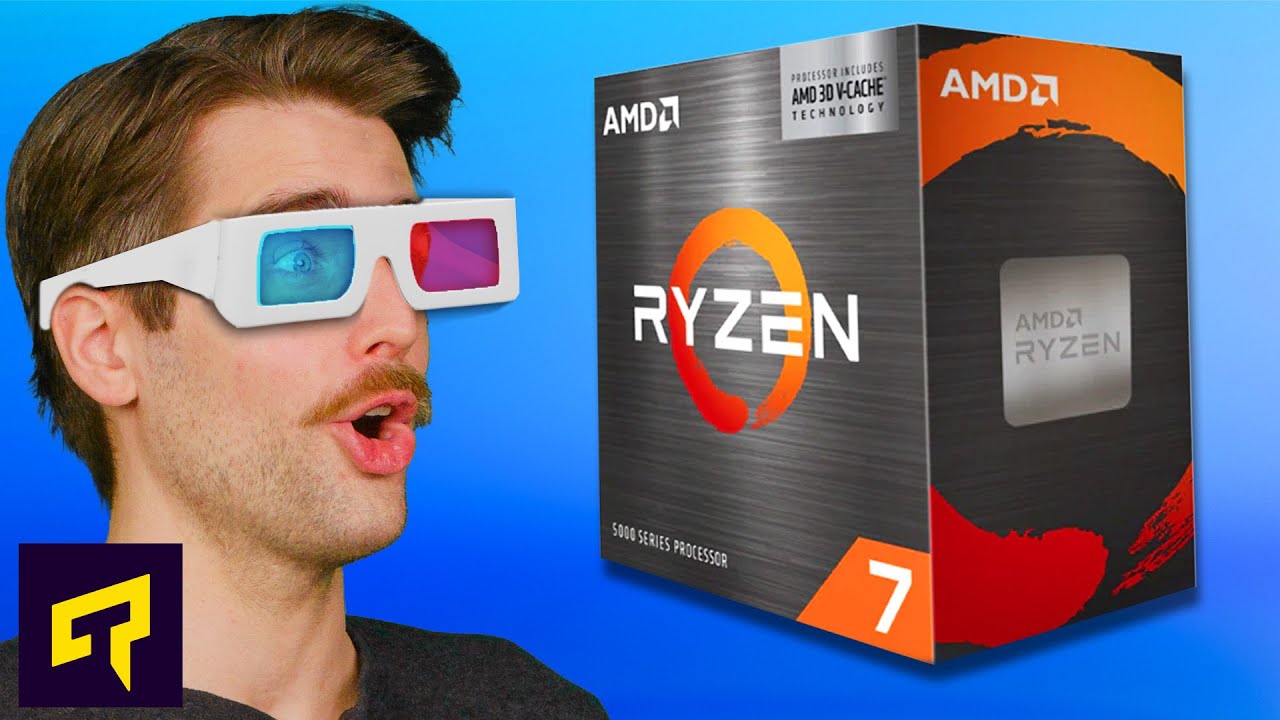
Is This The BEST Gaming CPU? - Ryzen 5800X3D
0 up · 0 down · 0 ratings
Promos
Thanks to Secretlab for sponsoring today's video! Check them out at lmg.gg Is AMD's 3D V-Cache a gimmick or can it really improve performance in your games? Leave a reply with your requests for future episodes. ► GET MERCH: lttstore.com ► AFFILIATES, SPONSORS & REFERRALS: lmg.gg ► PODCAST GEAR: lmg.gg ► SUPPORT US ON FLOATPLANE: floatplane.com FOLLOW US ELSEWHERE --------------------------------------------------- Twitter: twitter.com Facebook: @LinusTech Instagram: @linustech TikTok: @linustech Twitch: twitch.tv
The video introduces the Ryzen 7 5800X3D and unpackes the core idea behind AMD’s 3D V-Cache technology. It explains that 3D V-Cache stacks a large amount of very fast memory directly on the CPU die to reduce the time the processor spends waiting for data from system RAM, which helps improve gaming framerates and smoothness. The narration clarifies that adding cache is technically challenging, so AMD opted to build up the cache in vertical layers rather than shrink transistors, resulting in a 96 MB L3 cache in the 5800X3D compared with 32 MB in the original 5800X. The host notes that while larger cache generally boosts gaming performance, it also increases power consumption and heat, and that the 5800X3D has limited overclocking options due to shared voltage between cache and cores. Benchmark context is provided, with the video highlighting consistent gains in gaming across various titles when compared to non-3D V-Cache CPUs, though other tasks with more cores and higher clocks may favor different CPUs. The segment underscores that the 3D V-Cache technology is particularly beneficial for gamers who are CPU-bound or GPU-bound with streaming data, and it teases that more Ryzen 7000 series and server chips will adopt the approach. The host also mentions ongoing sponsorship and encourages feedback for future episodes, while acknowledging that the technology offers an elegant hardware solution that could redefine gaming performance in the near term. In conclusion, the video presents a balanced view: 3D V-Cache can deliver meaningful gaming benefits despite some tradeoffs, and it positions the 5800X3D as a compelling option for CPU-centric gaming builds while signaling broader industry interest.
Topics · technology · gaming hardware · cpu
Questions answered
- What is 3D V-Cache and how does it work in the Ryzen 5800X3D?
- 3D V-Cache is a stacked cache design where multiple levels of cache are built vertically on the CPU die to provide a large, fast memory buffer close to the cores, reducing data fetch delays from system RAM for frequently used information.
- Why does the 5800X3D have higher cache and what are the tradeoffs?
- The 5800X3D increases L3 cache to 96 MB by stacking cache layers, which improves gaming performance but also raises power consumption and heat output, and it limits overclocking since cache and cores share voltage.
- In what scenarios does the 5800X3D offer the most benefit?
- The greatest gains appear in gaming, particularly in CPU-bound or data-heavy scenes where reducing cache misses lowers frame-time variations, with benefits persisting across a range of titles.