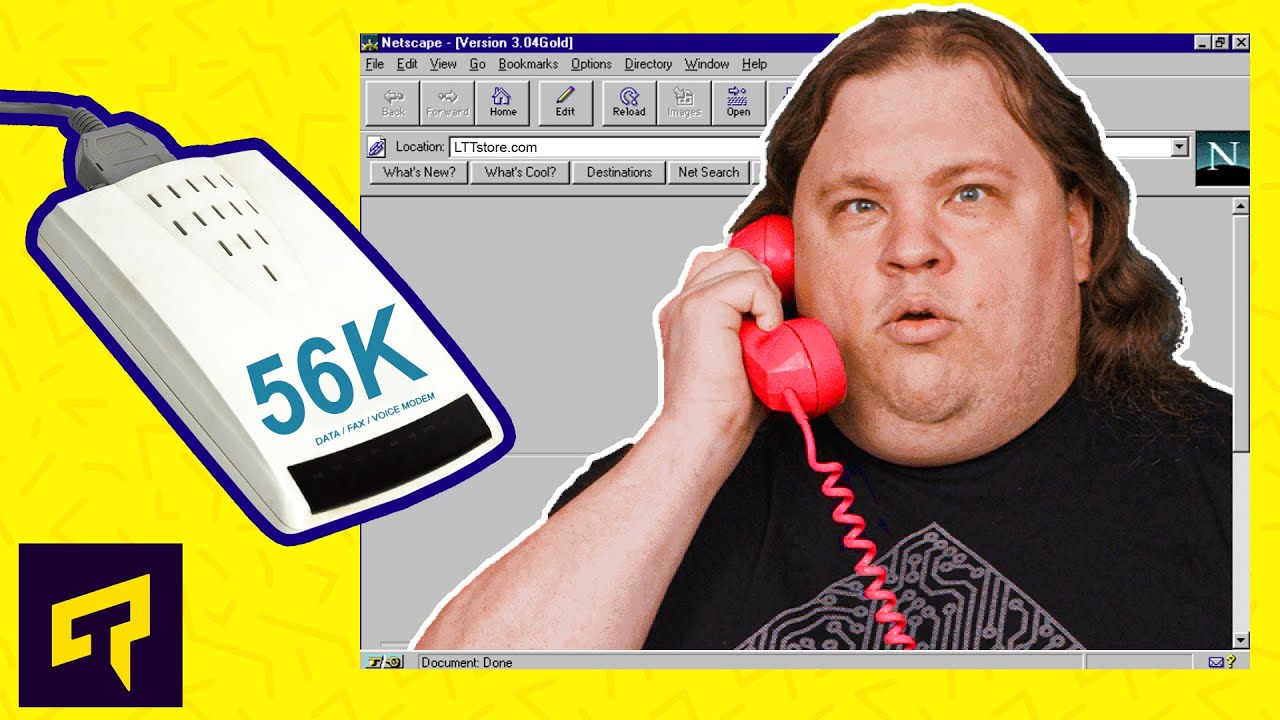
People Still Use Dial-Up Internet!
0 up · 0 down · 0 ratings
Promos
Try FreshBooks free, for 30 days, no credit card required at freshbooks.com Believe it or not, 56K dial-up connections still exist! Leave a reply with your requests for future episodes, or tweet them here: twitter.com ► GET MERCH: lttstore.com ► AFFILIATES, SPONSORS & REFERRALS: lmg.gg ► PODCAST GEAR: lmg.gg ► SUPPORT US ON FLOATPLANE: floatplane.com FOLLOW US ELSEWHERE --------------------------------------------------- Twitter: twitter.com Facebook: @LinusTech Instagram: @linustech TikTok: @linustech Twitch: twitch.tv
The video examines why dial-up internet is not yet obsolete, especially in rural or underserved regions where higher speed options are scarce or cost prohibitive. It begins by contrasting today’s gigabit fiber and 4K streaming with the long familiar dial-up tone, then reveals that in 2021 a substantial number of households in the United States still relied on dial-up, with Canada showing similar trends. The discussion then outlines the main alternatives to dial-up, notably satellite internet, which can be available where other services fail but tends to be slower per dollar than fixed connections like cable or fiber and often carries high latency that hurts activities such as online gaming. The video delves into cost considerations, noting typical satellite plans around 65 dollars per month for modest speeds and the upfront hardware costs associated with providers such as Starlink, while also mentioning weather sensitivity and reliability concerns. It follows with a comparison to DSL, which operates on traditional phone lines and is faster than dial-up but not universally deployed in remote areas due to the expense of enabling it, leading to a broader discussion about geographic inequities in infrastructure. The host argues that the digital divide persists because population density and the high cost of extending infrastructure discourage widespread service in rural areas, where some people rely on dial-up as a practical necessity. The piece closes with a forward-looking note on fixed wireless and mobile backhaul as potential, albeit gradual, solutions to bridging the gap, emphasizing that meaningful progress will require time and investment but could ultimately reduce dependence on disruptive overhauls to backyards and existing networks.
Topics · technology · internet · digital_divide · telecommunications · satellite_internet