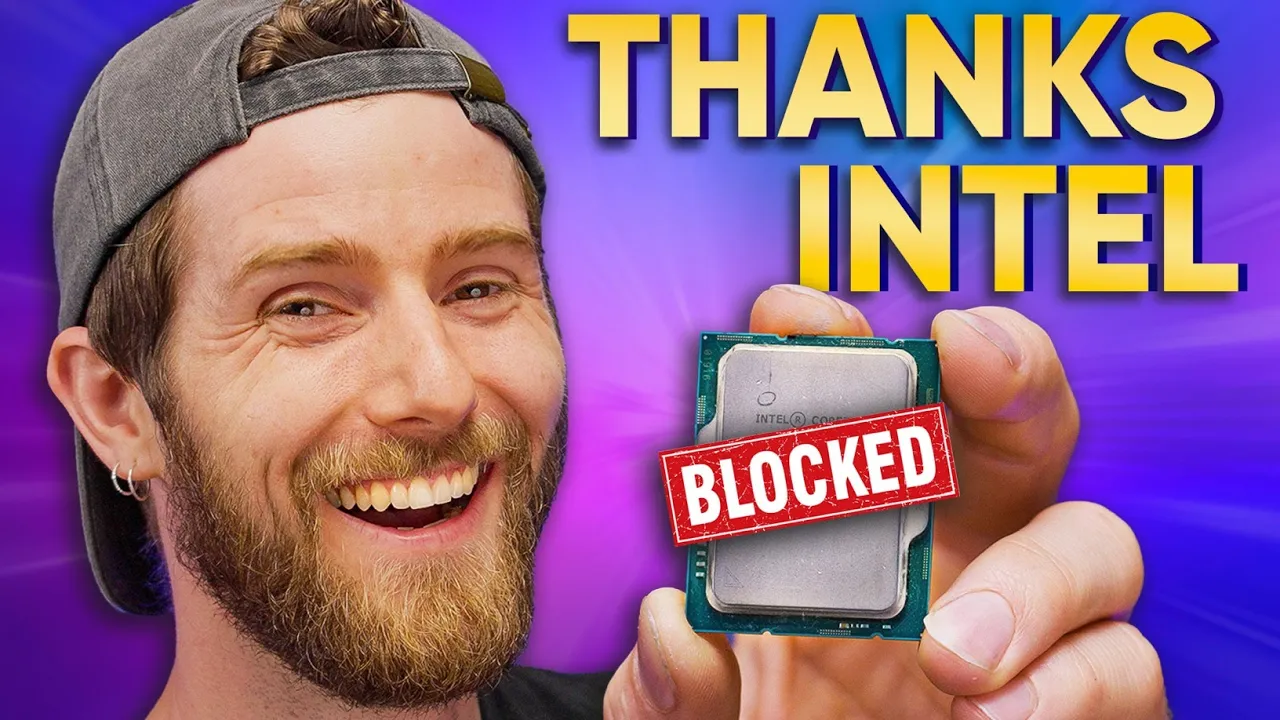
I LOVE Paywalls. Thanks Intel! - ECC Support on Alder Lake
0 up · 0 down · 0 ratings
Promos
Check out Jackery’s Solar Generator 1000 Pro at geni.us or on Amazon: geni.us Use code LinusTechTips for 10% off! Create your build at buildredux.com 12th Gen Intel supports ECC memory, but you're going to need a specific chipset to utilize it. A chipset only available on expensive workstation motherboards that lack other features you might want... So just how badly do you need Error Correction Code memory in the first place? Discuss on the forum: linustechtips.com Purchase an i7-12700K: geni.us Purchase an Crucial Ballistix 3200MHz C16: geni.us Purchases made through some store links may provide some compensation to Linus Media Group. ► GET MERCH: lttstore.com ► SUPPORT US ON FLOATPLANE: floatplane.com ► AFFILIATES, SPONSORS & REFERRALS: lmg.gg ► PODCAST GEAR: lmg.gg FOLLOW US --------------------------------------------------- Twitter: twitter.com Facebook: @LinusTech Instagram: @linustech TikTok: @linustech Twitch: twitch.tv MUSIC CREDIT --------------------------------------------------- Intro: Laszlo - Supernova Video Link: youtube.com iTunes Download Link: itunes.apple.com Artist Link: soundcloud.com Outro: Approaching Nirvana - Sugar High Video Link: youtube.com Listen on Spotify: spoti.fi Artist Link: youtube.com Intro animation by MBarek Abdelwassaa @mbarek_abdel Monitor And Keyboard by vadimmihalkevich / CC BY 4.0 geni.us Mechanical RGB Keyboard by BigBrotherECE / CC BY 4.0 geni.us Mouse Gamer free Model By Oscar Creativo / CC BY 4.0 geni.us CHAPTERS --------------------------------------------------- 0:00 Intro 1:25 12th Gen Intel 2:24 Pentium G6951 5:04 ECC Today 7:44 Thanks Intel 9:00 Business Time 10:25 AMD 11:28 Conclusion 12:39 Outro
The video opens with a critique of feature gating in consumer hardware, drawing a provocative analogy to paywalls in cars and software. The host uses the Alder Lake platform as a case study to explore why ECC memory, despite its clear benefits for stability, is locked behind expensive workstation boards and chipsets. He explains that Intel’s 12th Gen CPUs technically support ECC, but practical access requires a high-end motherboard with a W680 chipset, which significantly raises the entry cost for everyday users. The host then contrasts this approach with AMD’s strategy, noting that AMD allows enabling similar features on consumer platforms through ecosystem flexibility, while Intel historically separated consumer and professional segments. The discussion transitions to a historical look at processors, starting from the Pentium G6951 to illustrate how feature gating and later unlocks have evolved, and why the economics of unlocking or paying more shape consumer decisions. The segment concludes by framing the central question: should consumers pay a premium for features that technically exist on lower-cost hardware, or should these capabilities be accessible as standard options? In the ECC section, the host delves into what ECC memory does, including how parity bits detect and correct errors to prevent data corruption, and why bit flips are a real but probabilistic risk in modern, denser RAM. He cites Google’s server research to underscore that memory errors occur and that ECC can mitigate them, yet benchmarks show modest to noticeable performance penalties when ECC is enabled, raising the cost-benefit question for typical gaming desktops. The analysis covers pricing dynamics, noting that ECC modules cost more to manufacture and deliver only a marginal performance uplift in many consumer workloads. The host argues that while ECC is valuable in servers, the consumer market has accepted a lower level of reliability in exchange for lower costs and broader ecosystem features. Finally, the segment synthesizes the broader industry trend toward gating capabilities behind add-on boards or licenses, asking viewers to consider whether such practices align with consumer interests or corporate strategy. The business-time conclusion ties the thread together with a call for consumer advocacy. The host acknowledges Intel’s testing lab demonstrations of on-the-fly chipset reconfiguration, but questions whether the added cost is justifiable for most buyers, who often prioritize IO, VRMs, and price over ultimate reliability. He weighs AMD’s more permissive approach and DDR5 ECC capabilities against Intel’s historically restrictive stance, arguing that a balance between validated enterprise features and consumer choice would benefit the market. The video ends with a broader takeaway: before embracing paywalls for hardware features, viewers should evaluate whether those features are truly essential for their use case, and consider supporting products that preserve ownership and upgradeability. A sponsor segment and a nod to related content wrap up the discussion, reinforcing the theme of practical hardware decisions over marketing narratives.
Topics · technology · hardware · computing · memory · cpus · motherboards · gaming_pc · consumer_electronics
Questions answered
- Why is ECC memory considered valuable for stability in modern PCs?
- ECC memory detects and corrects data errors, reducing crashes and corruption from memory bit flips, which is especially important for servers and data-sensitive systems.
- What is the main criticism of Intel's ECC gating on consumer platforms?
- The criticism is that ECC is locked behind expensive workstation boards, making a beneficial feature inaccessible to typical consumers who would otherwise benefit from more stable systems.
- How does AMD's approach to ECC differ from Intel's in consumer ecosystems?
- AMD generally allows features related to ECC to be activated through ecosystem and motherboard choices on consumer platforms, rather than strictly gating behind premium, restricted chipsets.