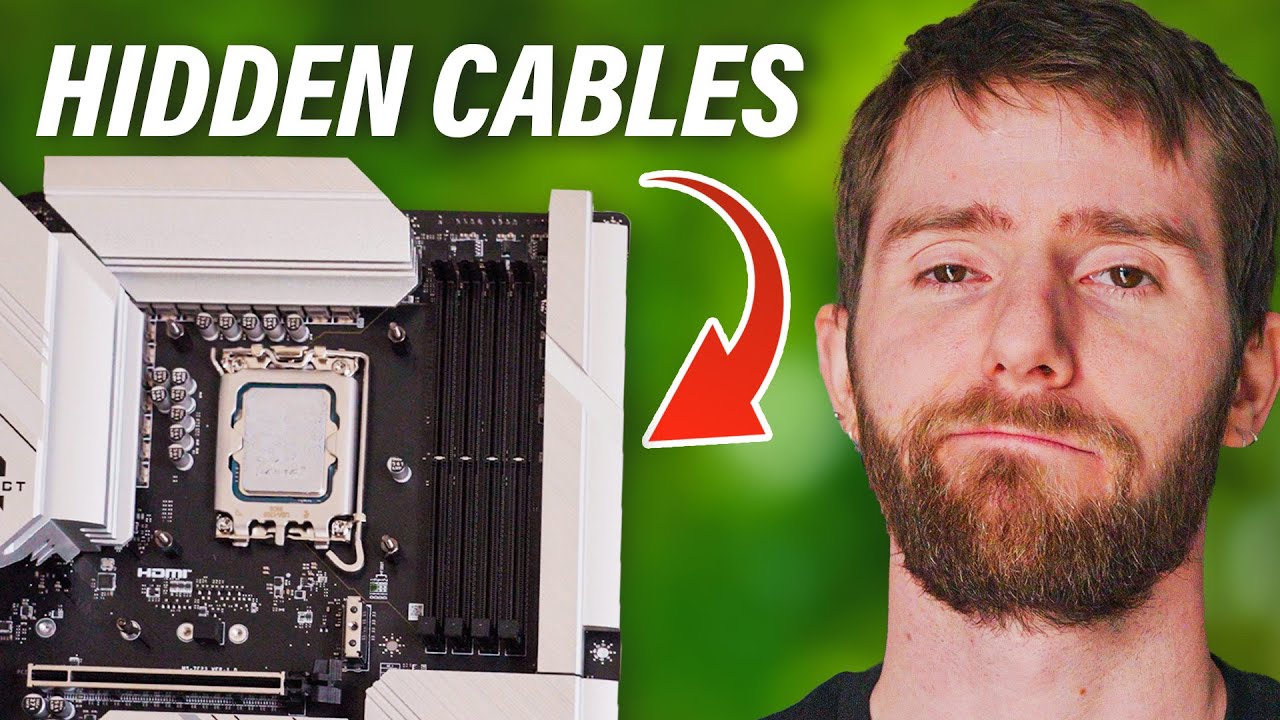
I had NO Faith in this... - Hidden Cable PCs
0 up · 0 down · 0 ratings
Promos
Check out Wicked Cushions at Amazon: lmg.gg or their website: wickedcushions.com Motherboards with all the connectors on the back- and cases that support them. They're coming, despite a ton of challenges that I honestly didn't think the industry would overcome. Corsair, Maingear, Gigabyte, ASUS- they're all in the game, and the results are pretty cool. Discuss on the forum: linustechtips.com ► GET MERCH: lttstore.com ► GET EXCLUSIVE CONTENT ON FLOATPLANE: lmg.gg ► SPONSORS, AFFILIATES, AND PARTNERS: lmg.gg ► EQUIPMENT WE USE TO FILM LTT: lmg.gg ► OUR WAN PODCAST GEAR: lmg.gg FOLLOW US --------------------------------------------------- Twitter: twitter.com Facebook: @LinusTech Instagram: @linustech TikTok: @linustech Twitch: twitch.tv MUSIC CREDIT --------------------------------------------------- Intro: Laszlo - Supernova Video Link: youtube.com iTunes Download Link: itunes.apple.com Artist Link: soundcloud.com Outro: Approaching Nirvana - Sugar High Video Link: youtube.com Listen on Spotify: spoti.fi Artist Link: youtube.com Intro animation by MBarek Abdelwassaa @mbarek_abdel Monitor And Keyboard by vadimmihalkevich / CC BY 4.0 geni.us Mechanical RGB Keyboard by BigBrotherECE / CC BY 4.0 geni.us Mouse Gamer free Model By Oscar Creativo / CC BY 4.0 geni.us CHAPTERS --------------------------------------------------- 0:00 Intro 1:03 Can the big brands agree? 3:15 what do we call this? 4:20 One case to support them all? 6:53 Who benefits from these?? 8:40 GPU power 10:03 Why now? 12:13 BTW, look at this case! 13:11 outro
I had NO Faith in this episode initially, yet the team at Linus Tech Tips delves into a bold shift in PC hardware by highlighting motherboards where connectors live on the back. The video begins by noting the appeal of rear-mounted cables for cleaner aesthetics and simpler builds, but immediately acknowledges the patent and coordination hurdles that have stalled adoption. Through a hands-on teardown and rebuild in a Corsair booth, they demonstrate how rear connectivity could work in practice, while also discussing the challenges of pinouts, space, and rigidity in various form factors. The discussion then broadens to how different brands such as MSI, Asus, and Corsair are navigating the emerging standards, the role of independent standardization, and what this could mean for future motherboard and case designs. The host evaluates practical tradeoffs, like the potential need for magnetic covers to hide gaps in larger to mid-size builds and the feasibility of future eight- or more drive configurations using new PCIe lane strategies. Overall, the episode blends hands-on testing with strategic market observation, outlining why the industry is moving in this direction, who benefits, and what the coming years might look like for builders and manufacturers alike, even if the current ecosystem remains small and evolving.
Topics · hardware_design · consumer_tech · pc_building · modular_standards · patents_and_innovation · case_manufacturing · gaming_pc
Questions answered
- What is the core advantage of motherboard rear IO as presented in the video?
- The core advantage is cleaner cable management and potentially easier, faster builds for novices by moving most connectors to the back of the motherboard.
- What are the main challenges to making rear IO a standard across brands?
- Challenges include coordinating pinouts, ensuring mechanical rigidity, timing with patent issues, and achieving broad ecosystem support from CPU/GPU and case manufacturers.
- Will this shift eliminate the need for traditional front IO cables?
- Not immediately; current designs still rely on front IO for many connectors, and the transition may be gradual with partial adoption in certain cases or sizes.