AMD Mantle Battlefield 4 & Star Swarm Performance and Thoughts
0 up · 0 down · 0 ratings
Channels and socials
I'm sorry this took so long, but due to the BETA nature of AMD's Mantle driver, and DICE's Mantle patch we had some difficulty doing what we set out to do... Which was to determine if, for real actual gamers out there, Mantle was going to make a difference. Some of the issues were caused by our desire to use components that were common in gaming systems (according to Valve's hardware survey) and some of the issues were caused by the BETA nature of Mantle. Either way, it's here now. I hope you enjoy it. Sponsor link: linustechtips.com Pricing & discussion: linustechtips.com Support us: linustechtips.com Join our community forum: bit.ly twitter.com @LinusTech Intro Screen Music Credit: Adhesive Wombat -
Check out his channel here: youtube.com Outro Screen Music Credit: Approaching Nirvana - Sugar High youtube.com
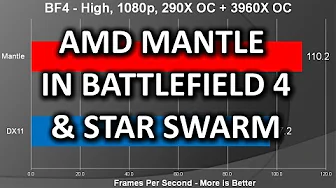
AMD Mantle in Battlefield 4 and the Star Swarm benchmark form the core of this investigation into whether Mantle, AMD's low-overhead graphics API, actually delivers noticeable gaming benefits. The video frames the discussion around Mantle as a programming model designed to reduce CPU and driver overhead by allowing games to interact more directly with GPU hardware. The hosts emphasize that Mantle’s real impact depends on multiple variables including hardware generations, driver maturity, and whether the game is Mantle-enabled or a Mantle-based benchmark like Star Swarm. They recount their initial plan to survey Steam Hardware Survey data to pick common configurations and then benchmark those setups, but acknowledge that beta drivers and patch timing created noisy results. The team then shifts to a more CPU-stressful scenario on the Flight Deck map to better expose Mantle’s potential, contrasting it with DirectX 11, and highlighting that the gains vary significantly with CPU power and GPU generation. Throughout, they stress that Mantle’s value is not simply a flat FPS boost but the potential to unlock new kinds of game design and performance scalability. The discussion also touches on how underclocking a CPU, using different GPUs across generations (GCN 1.0 vs 1.1), and using Star Swarm reveal different magnitudes of improvement, underscoring that Mantle’s benefits are highly contextual. The video closes by inviting viewer interaction, speculating on future Mantle-enabled titles, and proposing that Mantle could enable large-scale AI, more complex RTS-like scenarios, and more ambitious ship-scale simulations in upcoming games. In the end, the hosts acknowledge that Mantle is still a work in progress, with beta drivers and ongoing game patches influencing results, but remain optimistic about Mantle enabling more diverse and scalable graphics and AI implementations in the near future.
Topics · technology · hardware_performance · graphics