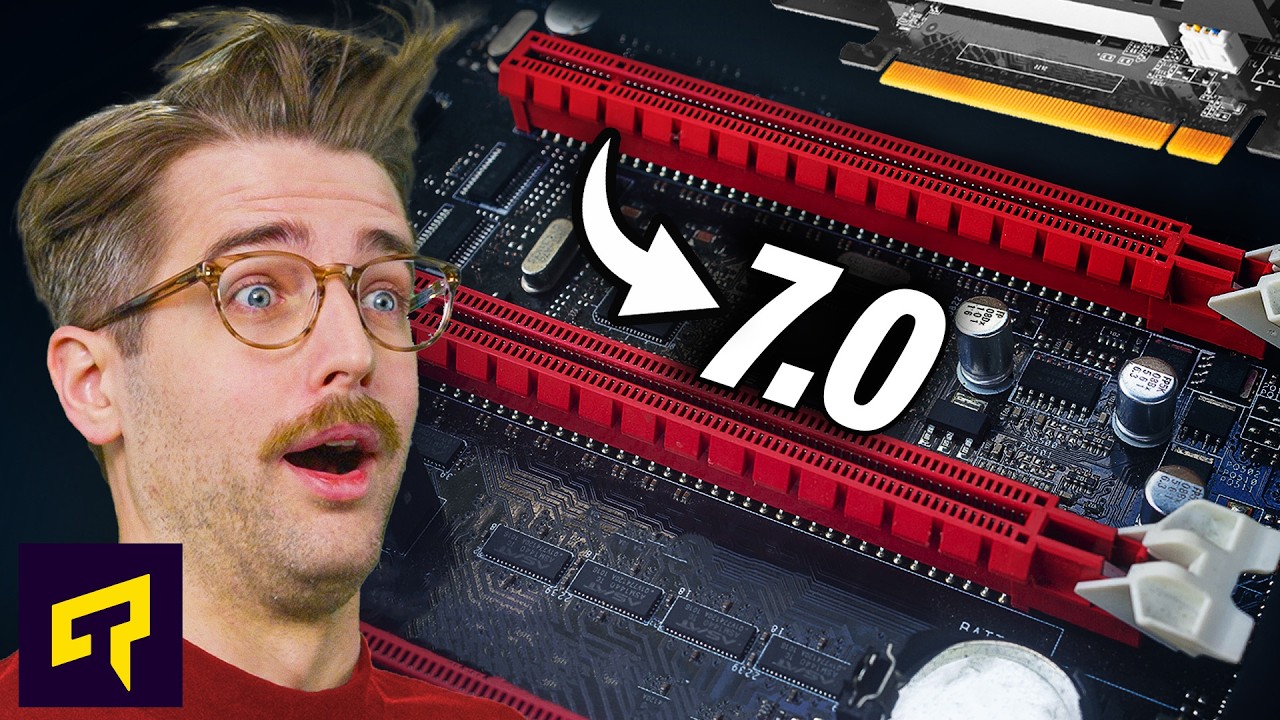
PCI Express 7.0 is INSANE
0 up · 0 down · 0 ratings
Promos
Get 20% off DeleteMe US consumer plans when you go to joindeleteme.com and use promo code Techquickie at checkout. DeleteMe International Plans: international.joindeleteme.com Learn about the upcoming PCIe 7.0 standard. Leave a reply with your requests for future episodes. ► GET MERCH: lttstore.com ► GET EXCLUSIVE CONTENT ON FLOATPLANE: lmg.gg ► SPONSORS, AFFILIATES, AND PARTNERS: lmg.gg FOLLOW US ELSEWHERE --------------------------------------------------- Twitter: twitter.com Facebook: @LinusTech Instagram: @linustech TikTok: @linustech Twitch: twitch.tv
The video breaks down the upcoming PCI Express 7.0 standard and its implications for home PCs and data centers. It begins by highlighting a potential 2 terabit per second link inside a typical motherboard slot, translating to about 256 GB per second of bandwidth in one direction for an x16 connection, and compares this with PCIe 4.0, which is far slower. The host explains that PCIe 7.0 keeps the same PAM4 signaling scheme introduced with 6.0, which uses four voltage levels to encode data, effectively doubling data per cycle and requiring higher frequencies. The central challenge becomes maintaining signal integrity at these speeds, prompting discussions about improvements in the physical layer, such as better materials, robust PCB construction, or even optical solutions to replace copper in some contexts. The PCI-SIG has already formed an optical workgroup to ensure feasibility of PCIe 7.0 and future revisions, including the possibility of full cables in certain scenarios. The video also touches on the broader goals of PCIe 7.0, notably enabling data center workloads, high bandwidth networking like 800 Gbps Ethernet, and the Compute Express Link ecosystem to support higher RAM capacity and memory-centric applications. Finally, it forecasts market timing, suggesting consumer PCIe 7.0 SSDs and devices may not arrive until the late 2020s, with the immediate impact being more pronounced in data centers and cloud services rather than home rigs. The host closes with a light reminder to like and subscribe and teases a future episode on PCIe 6 for context.
Topics · technology · hardware · computer_science · semiconductors · data_center · networking · ai_infrastructure · pcie
Questions answered
- What bandwidth does PCIe 7.0 promise per x16 slot in one direction?
- PCIe 7.0 aims for about 256 GB per second in one direction for an x16 link.
- What signaling method does PCIe 7.0 continue using and why is it significant?
- It continues using PAM4 signaling, which uses four voltage levels to encode data, enabling higher data rates per cycle but requiring improved signal integrity measures.
- When might consumer PCIe 7.0 hardware appear, and where will it first have impact?
- Consumer PCIe 7.0 hardware is not expected until the late 2020s, with the initial impact anticipated in data centers and cloud services rather than home rigs.