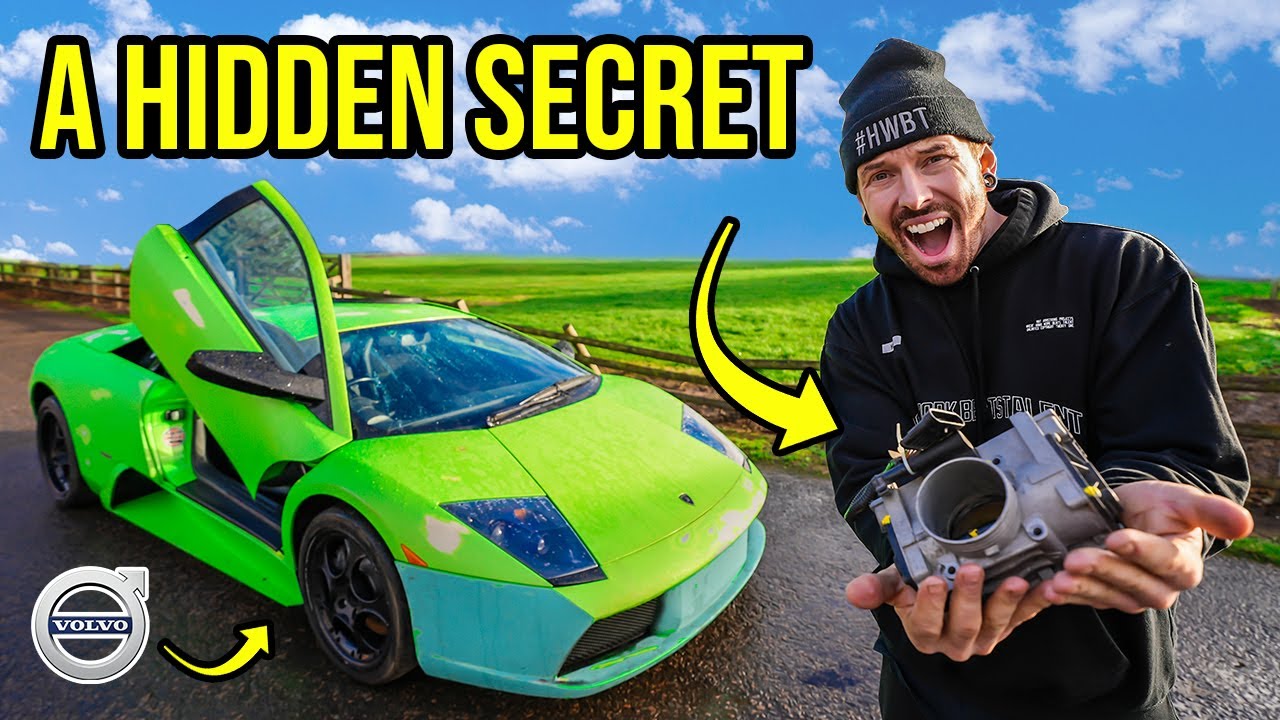
REBUILDING AN ABANDONED LAMBORGHINI MURCIELAGO | PT7
0 up · 0 down · 0 ratings
Description
GRAB A SAVE THE MANUAL HOODIE OR T SHIRT
Promos
Check if your car was damaged with Car Vertical - 10% off here carvertical.com I bought this abandoned Lamborghini Murcielago with a gated manual gearbox from a track experience company for £100,000. The car was taken off the track 7 years ago for an issue with the engine. A mechanic attempted to rebuild it but when he put it back together it wouldn't turn over. As i have stripped apart the v12 engine ive found many surprises and it doesn't just stop there Lamborghini have been using alot of parts from different manufactures to build this car and if i can work them all out its going to save me alot of money!
ALL MA MERCHANDISE
Channels and socials
FOR MORE CONTENT
CHECK OUT MY 2ND CHANNEL
Follow Me Here Aswell
Notes
The video picks up with the Lamborghini Murciélago project in full rebuild mode, focusing on the complexities of using parts from different cars to get the engine running again. From the outset, the presenter explains that initial plans to source an OEM oil pump were stalled by delays, which leads to a resourceful Plan B approach. We see hands-on work on the oil pump, including disassembly, identifying missing circlips, and the decision to assemble a functional unit with aftermarket parts while awaiting a proper Lamborghini part. The process is meticulous, with attention to correct gear alignment, proper sealant application, and careful reassembly of the pump housing. The moment the oil pump is finally assembled and tested, there is a palpable relief as it spins smoothly and appears ready to feed the V12’s lubrication needs, setting the stage for further engine assembly. The narrative then moves to the engine’s lower half and sump area, where the oil pump interfaces with the oil strainer and the gasket setup. A homemade gasket is used to seal the crankcase, and the team proceeds to mount the sump and complete the bottom end. As the bottom half comes together, the focus shifts to the instrument cluster, which has been a recurring headache due to prior electrical faults. A test run with a jumper pack is performed to verify power delivery, and results are mixed, generating suspense about whether the digital readout will cooperate this time. Separately, a clever, budget-minded fix is demonstrated for a broken ashtray using an Audi A6 ashtray and a strategic Lamborghini-style veneer, illustrating the theme that even small details can have outsized cost implications. The mood remains hopeful but measured as more components press toward readiness. With the lower sections secured, attention returns to the top end: installing head gaskets, lifting cylinder heads, and addressing a stubborn obstacle where head bolts were previously under-torqued due to limited access. The presenter discovers an expensive Lamborghini tool with the correct torque spec, but a friend suggests a Ferrari alternative that is dramatically cheaper, and it proves to work. This discovery highlights the habit of cross-brand part compatibility and practical problem solving. As the cams, variator, and timing chain are prepared, the team improvises to align the cam timing precisely, a critical step for a smooth running V12. The father-son dynamic shines as each member handles different sides of the engine, and both emphasize the importance of careful timing to avoid engine damage. The session culminates with a detailed procedure to locate top dead center using a micrometer and an angle gauge, then locking the timing by aligning cam caps and applying Loctite to the variator bolts. The engine is shown to be nearly complete, with only a few throttle bodies remaining; one appears nonfunctional, sparking a quest to source compatible parts at a fraction of Lamborghini prices. The host outlines the plan to test fire the engine once the remaining pieces are in place, inviting viewers to watch the next installment to witness the first start. The overall arc blends ambition with pragmatism, illustrating that restoring a high-end exotic is as much about creative sourcing and precise engineering as it is about raw labor.
Topics · autos & vehicles · car restoration · engine rebuilding · manual transmission · diy & repair · automotive engineering
Questions answered
- What is the main bottleneck delaying the engine rebuild in this video?
- The main bottleneck is the availability of the oil pump, which Lamborghini hoped to supply soon, but delays forced a Plan B using locally sourced components and careful assembly.
- How does the creator handle a broken instrument cluster when testing power?
- The creator tests the instrument cluster by wiring a jumper pack to the battery terminals and flushing through diagnostics to determine if the cluster has any life, while also validating data sources like CarVertical for mileage history.
- What clever parts substitution is used for the ashtray, and why?
- An Audi A6 ashtray is used as a substitute for the Lamborghini ashtray due to compatibility in shape and size, followed by a Lamborghini-style modification to fit and preserve the aesthetic.
- What technique is employed to ensure correct top dead center on the number one cylinder?
- An angle gauge and a micrometer are used to measure the piston position while turning the engine clockwise and counterclockwise, marking readings to locate the exact top dead center for precise timing.
- Why is the Ferraris tool mentioned as a cheaper alternative, and what was the outcome?
- A Ferrari head bolt torque wrench, suggested by a community member, was found to be compatible and significantly cheaper than Lamborghini’s tool, and it successfully delivered the correct torque specification for the head bolts.