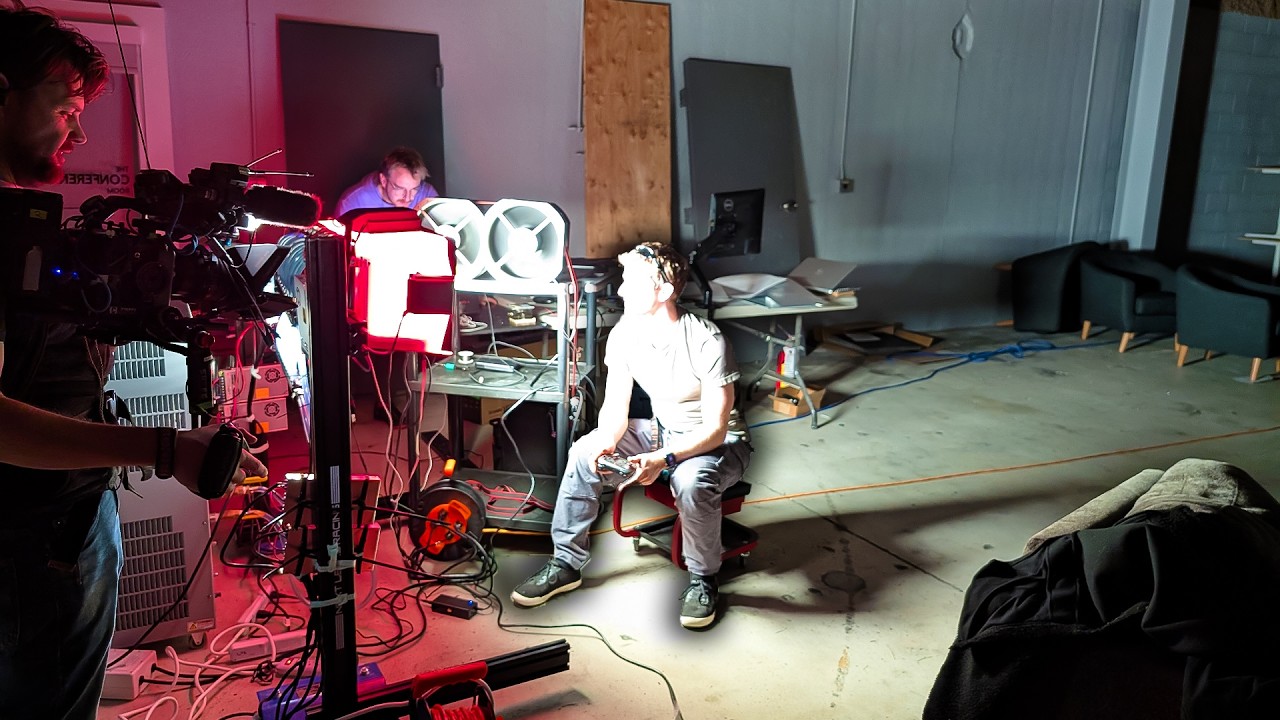
I made the World’s BRIGHTEST Gaming Monitor!
0 up · 0 down · 0 ratings
Promos
Check out Acronis Cyber Protect for businesses at go.acronis.com Checkout NexiGo’s Anniversary Sale at: nexigo.com Sure, TVs and Monitors have gotten brighter, but NOT BRIGHT ENOUGH! That’s why we embarked on a journey to see how many NITs we can hit, how many lumens we can summon, and use HIGH POWER LEDS to make a display so painfully bright, we are putting ourselves at risk every time we use it. We were too concerned if we COULD make the brightest Monitor in History, that we forgot to ask if we SHOULD. Discuss on the forum: linustechtips.com Buy a 4000K COB LED on AliExpress: s.click.aliexpress.com Buy a MEANWELL 350W 36VDC 9.7A Enclosed Switching Power Supply: lmg.gg Buy VIVOSUN Reflective Mylar Film Roll: geni.us Purchases made through some store links may provide some compensation to Linus Media Group. ► GET OUR MERCH: lttstore.com ► GET EXCLUSIVE CONTENT ON FLOATPLANE: lmg.gg ► GET A VPN: piavpn.com ► SPONSORS, AFFILIATES, AND PARTNERS: lmg.gg Purchases made through some store links may provide some compensation to Linus Media Group. CHAPTERS --------------------------------------------------- 0:00 Intro 1:56 What is an LCD panel? 3:06 A Brief Explanation of Backlighting 4:50 Which LEDs are we using? 6:00 How do we Power them? 6:45 How do we cool them? 9:08 Testing out the Backlight 13:43 Turning it ON and testing it! 21:02 How bright is the Monitor?
This video chronicles the team’s ambitious project to build the world’s brightest gaming monitor by massively increasing backlight brightness using an array of high power LEDs. The crew starts by demystifying the LCD structure and backlighting workflow, explaining how liquid crystals align light and how polarizers control what passes through the panel. They then justify selecting a COB LED array for high luminance, discuss power and cooling challenges, and show the decision to implement a custom cooling solution with aluminum and acrylic blocks along with a chiller to manage the heat. The narrative builds from the basics of LCD operation to the practical realities of powering dozens of LEDs, including multiple power supplies and ventilation strategies, all while balancing cost and safety considerations. In the critical reveal, they mount the backlight behind the LCD and test its raw brightness, noting the extreme level of light, potential eye safety concerns, and the breathtaking effect on on-screen content, leading to a discussion about how such brightness could transform or complicate game visuals and mastering practices. Finally, they compare the result to existing high brightness benchmarks, celebrate the achievement of a record setting luminescent display, and pivot to reflections on future improvements, safety, and the implications for display technology going forward.
Topics · technology · hardware · display-technology · gaming · diy · experimentation · engineering
Questions answered
- What is the core principle enabling brightness in LCD displays?
- Brightness comes from the backlight behind the LCD panel; the liquid crystals and polarizers control light passing through, while LEDs or COBs provide the intense light source that is modulated to create the image.
- Why did the team use multiple power supplies instead of a single unit?
- They split the electrical load across several 350W Mean Well supplies to increase flexibility, manage heat, and reduce the cost of a single high-wattage unit while powering hundreds of LEDs.
- What cooling solution was implemented for the LED backlight?
- A custom water cooling block made from aluminum and acrylic fed by an industrial chiller kept the COB LEDs cooler, supplemented by additional fans and venting to handle heat.
- What safety considerations were noted during testing?
- The team acknowledged the risk of eye and house hazards from extreme brightness and used welding goggles during testing to mitigate exposure to intense light.
- How does this brightness level compare to existing monitors?
- The build aimed to exceed known nit ratings, with measurements suggesting the setup reached a level surpassing typical brightest consumer displays, potentially setting a world record within the tested parameters.