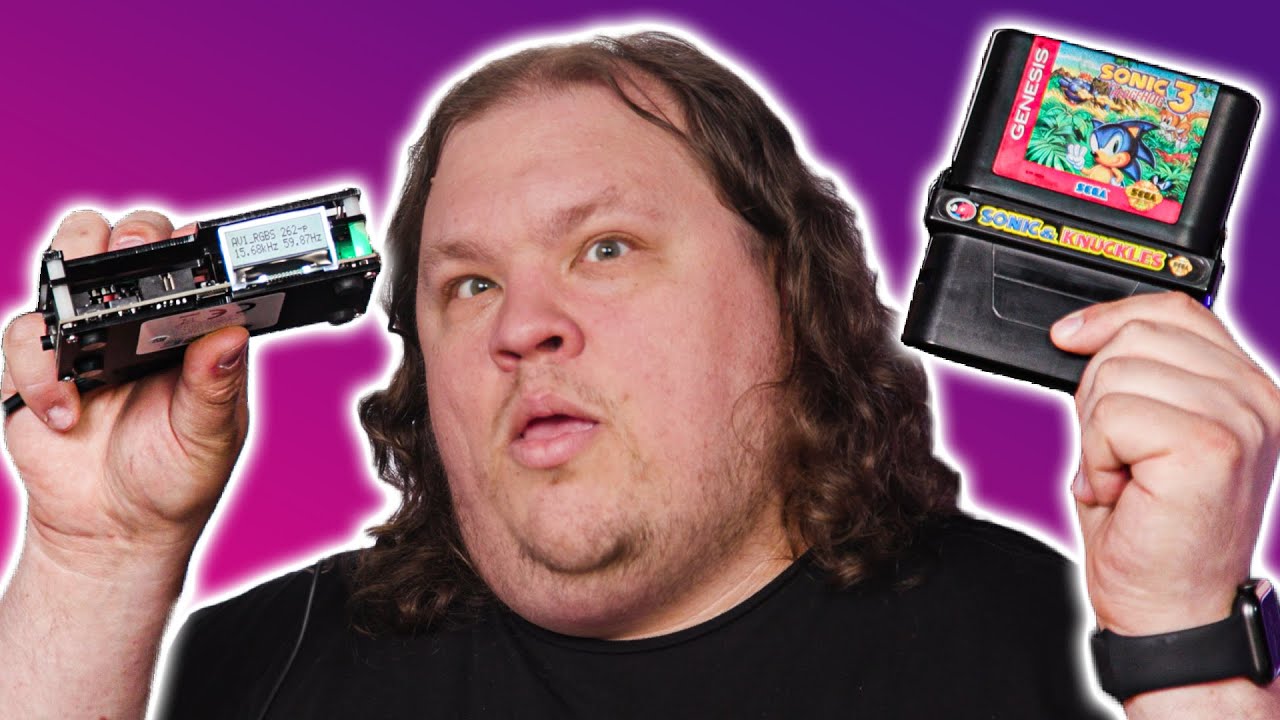
My consoles have NEVER looked THIS GOOD! - Open Source Scan Converter
0 up · 0 down · 0 ratings
Description
Promos
Check out the RAD2X Converter at lmg.gg Purchases made through some store links may provide some compensation to Linus Media Group. ►GET MERCH: lttstore.com ►SUPPORT US ON FLOATPLANE: floatplane.com ►LTX EXPO: ltxexpo.com AFFILIATES & REFERRALS --------------------------------------------------- ►Affiliates, Sponsors & Referrals: lmg.gg ►Private Internet Access VPN: lmg.gg ►MK Keyboards: lmg.gg ►Nerd or Die Stream Overlays: lmg.gg ►NEEDforSEAT Gaming Chairs: lmg.gg ►Displate Metal Prints: lmg.gg ►Epic Games Store (LINUSMEDIAGROUP): lmg.gg ►Amazon Prime: lmg.gg ►Audible Free Trial: lmg.gg ►Our Gear on Amazon: geni.us FOLLOW US ELSEWHERE --------------------------------------------------- Twitter: twitter.com Instagram: @shortcircuityt Facebook: @ShortCircuitYT FOLLOW OUR OTHER CHANNELS --------------------------------------------------- Linus Tech Tips: @LinusTechTips TechLinked: @techlinked Techquickie: @techquickie LMG Clips: @WANShow Channel Super Fun: @ChannelSuperFun Carpool Critics: @TheyreJustMovies
The video opens with Anthony presenting the core problem for retro gaming enthusiasts: classic consoles paired with modern LCDs often produce suboptimal results. He explains that many TVs only support limited input formats, and that old-school RGB output requires hardware capable of carrying separate color and sync signals. The OSSC Open Source Scan Converter is introduced as a solution that accepts component, VGA, and a Scart-like input, converting signals into a clean, high-quality output that can be displayed on newer displays without the typical artifacts. The host contrasts the OSSC with cheaper HDMI adapters that degrade chroma and luma signals by combining them, leading to color bleeding and obvious interference. He also notes that Scart is a familiar standard in Europe and Japan, making the OSSC a practical upgrade for RGB-capable consoles. After outlining the hardware, the video moves into setup details: how to connect the OSSC to a Super Nintendo or Sega Genesis using RGB mod outputs, and how the device can be configured via front-panel controls, an on-board LCD, or a microSD-loaded firmware. The discussion then pivots to demonstrations, first with a baseline using a Raz box to HDMI converter to show typical modern-TV results, which immediately reveal artifacts and subpar color accuracy. Anthony emphasizes that while the Raz box can output a digital signal, it suffers from poor handling of chroma and color information, producing green/magenta shifts and rainbow artifacts in the image. The comparison continues with the OSSC delivering a much crisper, almost emulator-like image thanks to line-by-line processing and minimal lag, a stark improvement over the early digital adapters. Throughout the unboxing and testing, the team highlights practical considerations such as the availability of UK/European SCART cables, the necessity of RGB-capable consoles, and the relative cost versus benefit for dedicated retro enthusiasts. The segment concludes with the OSSC showing superior image fidelity, little to no ghosting, and a latency profile that feels closer to gaming on original hardware, underscoring its value for speedrunners and collectors looking to preserve authentic visuals on modern displays.
Topics · technology · retro-gaming · display-technology · hardware-review
Questions answered
- What problem does the Open Source Scan Converter solve for retro consoles on modern TVs?
- It converts legacy RGB, component, or VGA signals into a clean, low-latency output suitable for modern displays, avoiding the color and artifact issues common with HDMI adapters.
- Why is SCART important for this setup?
- SCART is a versatile connector that can carry RGB, composite, and audio signals, making it a convenient pathway for retro consoles to deliver high-quality video to the OSSC.