Brace For Impact.
0 up · 0 down · 0 ratings
Channels and socials
Try Gamma inside Claude gam.link The biggest risk to the United States economy isn't the AI bubble. Because the country that's quietly been the duct tape holding the global financial system together for the past thirty years, is starting to break. And that is dangerous. In this video, I'll break down: • Japan's Lost Decades: How 30 years of ~zero interest rates ruined Japan's economy • The Yen Carry Trade: How investors have been using cheap Yen to fuel investment • Repatriation: What happens when trillion of dollars decides to return home • What's Next: How does Japan's economy affect the United States economy Complex topics, simple breakdowns. Join my free weekly newsletter to stay ahead of what's actually happening in markets: casualmarkets.co #stocks #stockmarket #economics #investing #finance All illustrations, visuals, and animations in this video are original and hand-drawn by a freelance artist. Disclaimer: The information provided in this video and on this channel (collectively, the “Content”) is for informational, educational, and entertainment purposes only and does not constitute investment, financial, legal, or tax advice, nor a recommendation to buy, sell, or hold any security or investment strategy. Investing involves risk and you must do your own research. Nothing in the Content should be interpreted as creating a fiduciary relationship, financial advisory relationship, or client relationship of any kind. The host, the channel, and all affiliated entities expressly disclaim any and all liability for any direct or consequential loss or damage arising directly or indirectly from the use of, reliance upon, or interpretation of the Content. By viewing or interacting with the Content, you acknowledge and agree to these terms and release the host and all related parties from any and all claims related to your reliance on the information provided.
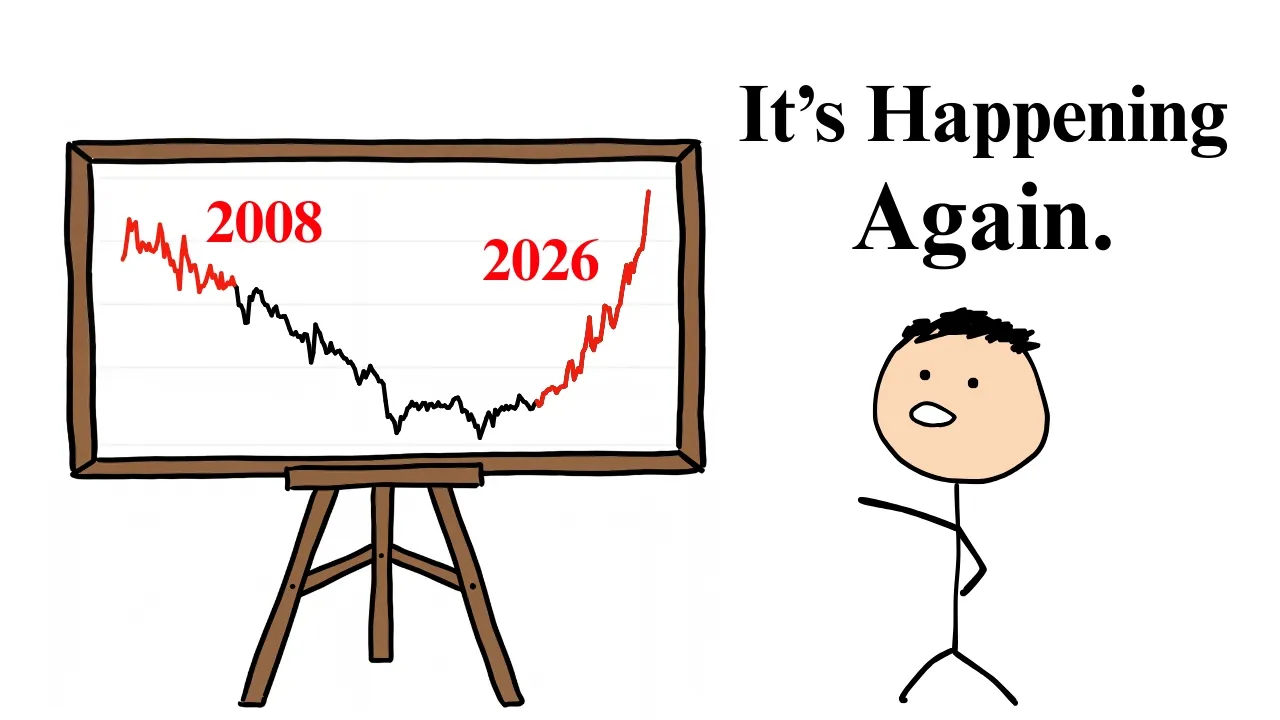
The video argues that the biggest risk to the United States economy is not flashy narratives like an “AI bubble,” China, or politics, but rather a slow moving shift originating in Japan. The host connects several U.S. market anxieties, including why mortgage rates do not fall, why stocks can “freak out,” and why tight financial conditions can persist even when the Federal Reserve discusses rate cuts, to developments in Japanese government bonds. Japan is described as the “duct tape” that has quietly supported the global financial system for decades, especially after its early 1990s asset bubble burst and the ensuing “Lost Decades.” To combat low growth and lack of inflation and wage growth, the Bank of Japan is described as driving interest rates toward zero and below zero and then using yield curve control to cap long term bond yields. This policy effectively left Japanese investors facing near zero returns at home, encouraging them to search abroad for yield. A core mechanism in the explanation is the yen carry trade: investors borrow in yen at near zero rates, convert to dollars, and invest in higher yielding U.S. assets such as Treasuries, with the profit coming from the spread after hedging costs and fees. The host emphasizes that this trade became a major source of global liquidity and that, at its peak, estimates put it in the trillions. The turning point is described as 2024, when the Bank of Japan ended yield curve control and raised interest rates for the first time in 17 years, then raised them again. The host links this repricing to market stress, citing an immediate S&P 500 drop and a sharp Nikkei decline on the second hike decision, framing it as evidence that markets were “spooked.” As Japanese yields rise, borrowing becomes more expensive and currency hedging gets costlier, flipping the economics of the trade and contributing to “repatriation,” meaning capital flowing back toward Japan. The video then focuses on why repatriation and Japan’s role in absorbing U.S. debt can matter for long term rates and broad asset valuations. It explains that the Federal Reserve influences short term rates, but long term yields are shaped more by supply and demand, and that large U.S. deficits mean the Treasury must issue massive amounts of new debt that must be absorbed. Using Ray Dalio as a reference point, the host frames the bond market as the backbone of markets, with bond supply and demand imbalances potentially lifting long rates and weakening currency. The consequences described include steepening yield curves, where short term rates fall but long term yields stay elevated, which the host says can compress stock valuations because models discount cash flows using long term yields. The same logic is applied to mortgage rates, housing affordability, refinancing activity, and corporate credit, arguing that if global demand for Treasuries weakens, the long end can stay pinned despite Fed cuts. The conclusion urges viewers to look beyond headlines and oversimplified narratives, saying the real threats are the ones “hiding in plain sight,” and ends with a call to subscribe for macro topics not covered by traditional financial media.
Viewers repeatedly describe the video as highly informative and helpful for learning macroeconomics and finance concepts, especially for beginners. A common criticism is skepticism about execution quality, with multiple comments claiming the voice or script sounds AI generated, calling it “AI slop,” or questioning coherence. Some commenters express confusion about specific causal claims and even dispute parts of the macro timeline, while others agree with the overall warning that liquidity assumptions can break. The community framing varies from doomscrolling and panic to appreciation, with frequent calls for more practical guidance, such as how to respond day to day or how to position for these risks responsibly.
Topics · education · finance · debt markets · economics · markets · stock market
Questions answered
- What is the yen carry trade and how does it profit from borrowing in yen and investing in higher yielding U.S. assets?
- It involves borrowing in yen at near zero interest rates, converting those yen into dollars, and buying higher yielding U.S. assets like Treasuries. The investor profits from the yield spread after accounting for hedging costs and fees.
- What is repatriation in the context of the yen carry trade unwinding?
- Repatriation is the return of capital back toward Japan when the economics of the carry trade change. As Japanese yields rise and funding and hedging costs increase, investors tend to unwind positions and move money home.
- Why can mortgage rates stay high even if the Federal Reserve cuts short term rates?
- Because mortgage rates are largely anchored to long term Treasury yields rather than only short term policy rates. If long end yields do not meaningfully fall due to weak global demand for Treasuries, mortgage rates may not drop back to lower levels.
- How does a steepening yield curve relate to long term bond yields remaining elevated?
- A steepening yield curve occurs when short term rates fall but long term rates stay elevated. The video frames this as a result of supply and demand keeping long yields pinned even when central banks cut short term rates.
- Why does Japan’s demand for long term U.S. Treasuries matter for long term yields?
- Long term Treasury yields are driven largely by supply and demand, and the U.S. issues large amounts of new debt each year due to deficits. If a major long term buyer like Japan steps back, demand weakens and yields may need to rise to attract new buyers.