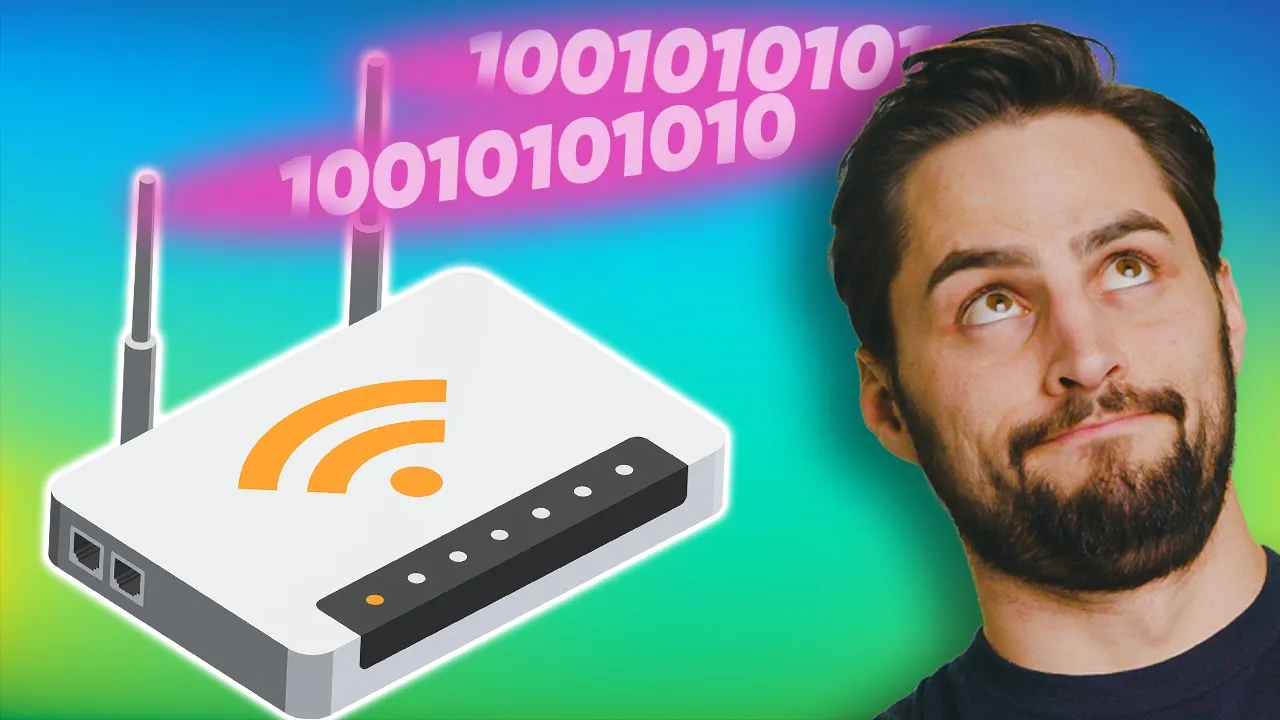
Can Your Router AIM Your WiFi? - BeamForming Explained
0 up · 0 down · 0 ratings
Description
Pre-Order the DROP THX Panda Wireless headphones today at dro.ps How does beamforming work, and does it actually deliver on its promises? Thanks to Joel Crane for the assist in the video!
Promos
Check out his blog at potatofi.com Download Wireshark, click on "PCAP" beside your device of choice - the readout will tell you if beamforming is supported under "IEEE 802.11 wireless LAN management frame clients.mikealbano.com Techquickie Merch Store: lttstore.com Follow: twitter.com Leave a reply with your requests for future episodes, or tweet them here: twitter.com
The video explains beam forming, a technique to aim a WiFi signal toward the devices in your home rather than broadcasting in all directions. It describes two main implementations: chip based beam forming, where multiple antennas inside the access point are coordinated to find the best combination that hears a client device and then time the transmissions from each antenna so signals arrive in phase at the target; and sounding based beam forming, where the router continually queries the client to measure signal quality and adjust timing accordingly. The host uses simple analogies, like throwing rocks into a pond, to illustrate how multiple antenna signals converge to strengthen the signal at a specific location. The video notes that beam forming improves performance at longer range and can boost throughput by up to about ten percent, which can matter for streaming or gaming far from the router. It also cautions that in practice beam forming was made optional in the IEEE 802.11ac standard, meaning many devices may not support it, and even high-end devices may lack beam forming. A practical way to verify support is by using a packet capture tool such as Wireshark to inspect IEEE 802.11 management frames, with links provided in the description and a discussion of how to interpret the data. The host emphasizes that beam forming is one directional improvement, so uplink speeds from client devices may not see the same gains. Ultimately, the video assesses beam forming as helpful but not a miracle cure for WiFi, suggesting it may not be worth heavy changes to a home network setup just to enable it. The sponsor plug for THX Panda wireless headphones appears at the end, with a brief overview of features and specifications.
Topics · Science & Technology · Networking · Wireless Technology · Technology Explanations
Questions answered
- What are the two main ways beam forming can be implemented in WiFi routers?
- Chip based beam forming uses multiple antennas with signal combining and timing to steer the beam toward the client, while sounding based beam forming continually negotiates signal quality with the client to time transmissions from each antenna.
- Why might beam forming not always improve your WiFi experience?
- Because beam forming was optional in the IEEE 802.11ac standard and many devices may not support it, so the gains depend on both the router and client devices. Additionally, uplink transmissions from the client may not see the same improvements as downlink.