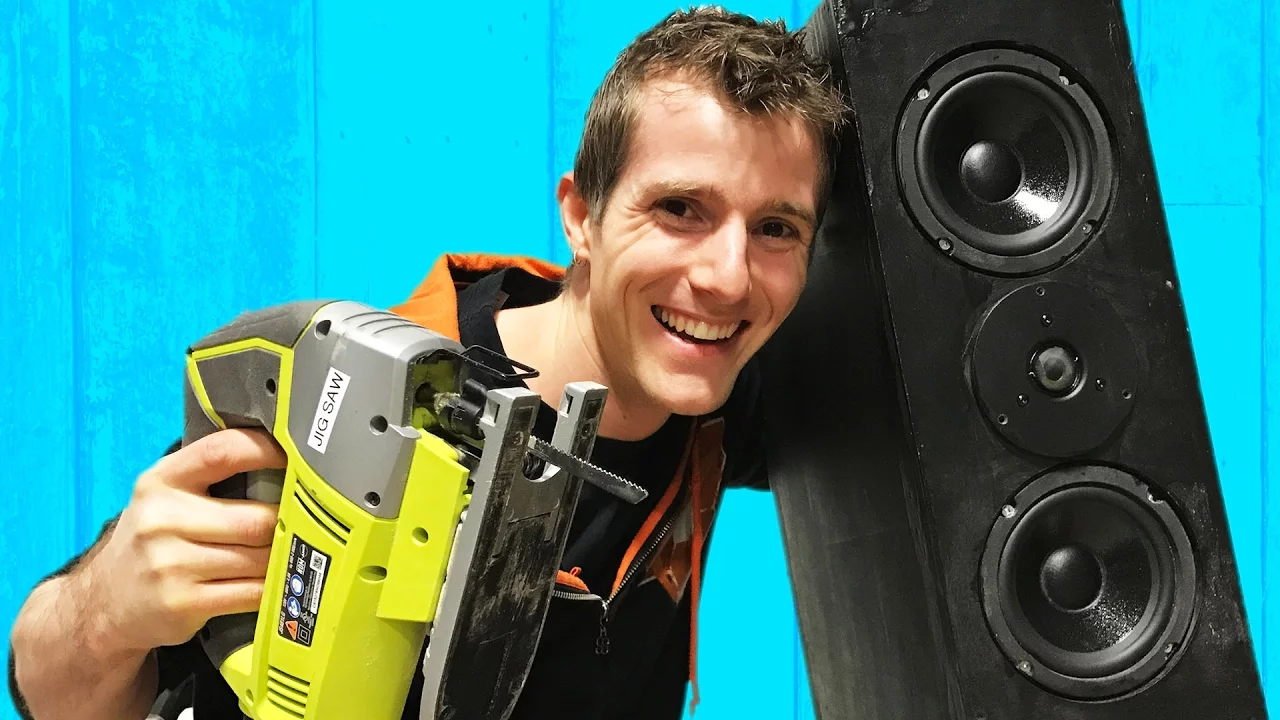
DIY Speakers for Less Than $300!
0 up · 0 down · 0 ratings
Promos
Why spend more money than you have to on a home audio setup? Squarespace link: Visit squarespace.com and use offer code LTT to save 10% off your first purchase. TunnelBear message: Visit tunnelbear.com to try it free and save 10% when you sign up for unlimited Tunnelbear data Buy speaker cabinets on Amazon: geni.us Buy TriTrix MTM Speakers on PartsExpress: geni.us Regalian Ox's experience/overview: regalianox.com Link to the DIY jig page (unfortunately can't put it in a card since it's not a site owned by us, sorry :( ): instructables.com Discuss on the forum: linustechtips.com Our Affiliates, Referral Programs, and Sponsors: linustechtips.com
Channels and socials
Check out our Linus Tech Tips posters at crowdmade.com twitter.com @LinusTech Intro Screen Music Credit: Title: Laszlo - Supernova Video Link: youtube.com iTunes Download Link: itunes.apple.com Artist Link: soundcloud.com Outro Screen Music Credit: Approaching Nirvana - Sugar High youtube.com Sound effects provided by freesfx.co.uk
In this DIY focused episode, the hosts set out to build a pair of Tritrix MTM TL speakers from Parts Express with a goal of delivering high fidelity sound without breaking the bank. They explain why venturing into a self-built cabinet can shave a significant portion off total costs compared with off-the-shelf options, noting that their cabinet construction and material choices let them reach roughly a quarter of the price of a comparable store-bought system after accounting for tools and materials. The team walks through choosing the kit, modifying the cabinet design with ideas from a builder they reference, and then detailing the cutting, drilling, and assembly steps. They describe practical build tips, such as drilling pilot holes, using counter-sunk cabinet screws, and planning a clean internal layout for wiring. The crossover assembly is explained at a high level, including the purpose of the two-inductor layout and how to avoid mutual inductance, followed by wiring and sealing the cabinet before finishing touches. They also discuss cosmetic tweaks, using polyfill and sanding for a polished look, and finally run a blind listening test to compare the DIY build against a commercial Kef Q500 system, providing scores to illustrate perceived differences in brightness, bass presence, and overall balance. The conclusion emphasizes that the DIY route can deliver solid performance at a sizable saving, while noting that buying a pre-cut cabinet kit is a smart alternative for those less confident in woodworking skills. The episode ends with a plug for related gear purchases, sponsors, and additional resources for aspiring builders, underscoring the broader message that affordable, satisfying audio can be achieved with careful planning and hands-on effort.
Topics · diy · audio · home_audio · educational · how_to
Questions answered
- What is the main goal of the project in this video?
- To build a high-fidelity pair of DIY speakers for a fraction of the cost of premium models by using a Parts Express kit and custom cabinets.
- What is one key technical detail explained about the crossover?
- The video explains a second-order crossover that uses a double filter to separate frequencies to woofers and tweeters, and notes the importance of orientating inductors to avoid mutual inductance.
- Why do the hosts modify the cabinet compared to the supplied Parts Express version?
- They adopt modifications suggested by a builder to optimize fit and performance while keeping costs low.
- How do the testers evaluate the sound quality of the DIY speakers?
- Three volunteers listen blindfolded and rate the sound quality of the DIY speakers versus a reference pair on a scale from 1 to 10.