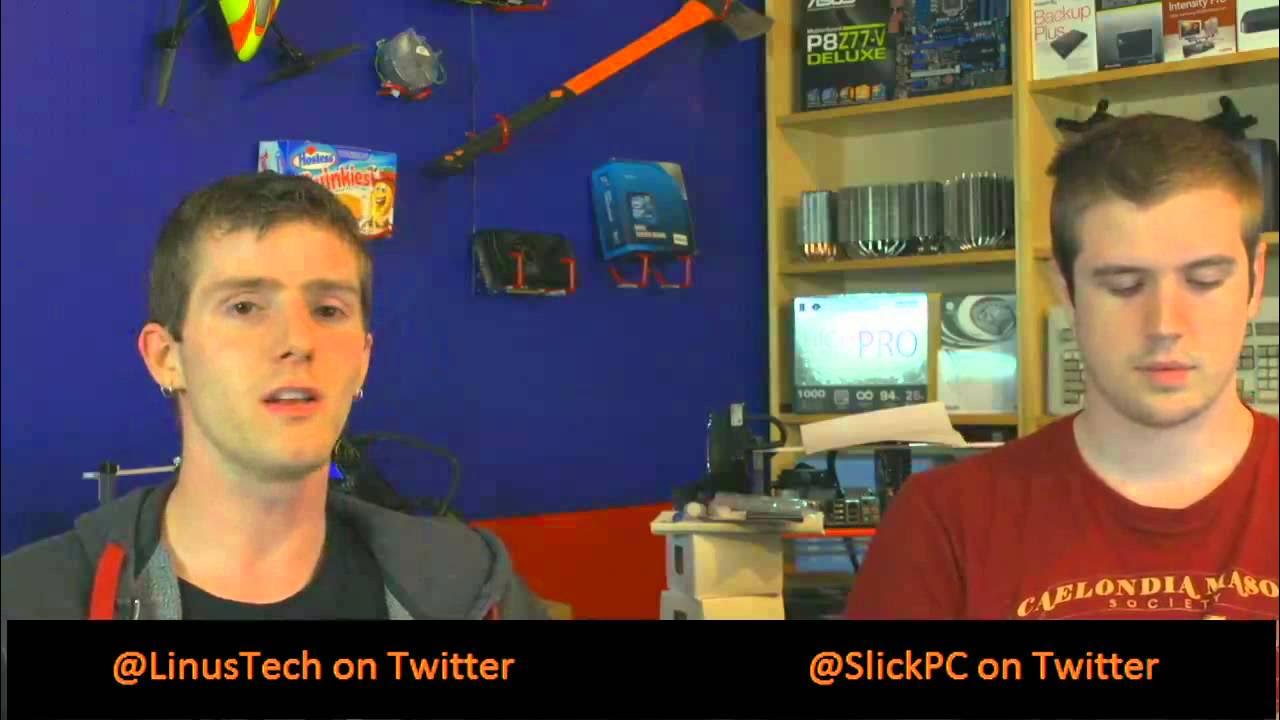
May 17, 2013 Live Stream Archive
0 up · 0 down · 0 ratings
Channels and socials
Check out the after party here! youtube.com 1:00 Holy crap what is going on with Linus' life 10:57 Free things on the forum! 11:50 EA drops online pass! THEY DID SOMETHING NOT HORRIBLE! 14:05 Microtransactions... are they going away? 20:17 EA stops developing for Wii U! That period of not horrible things didn't last long... 22:40 Project Shield goes up for pre-order 32:42 Smart phones are terrible! Why do we deal with this? 38:25 Chevy Volt turned into a whole home UPS 41:50 Car horns should have more options for communication 46:30 Galaxy S4 to hit 10 million sales in just under a month 49:19 ALL THE CAMERA GEAR! 55:15 windows 8.1 is free 1:04:30 Facebook stock tanks 1:09:12 Bitcoin gets legal attention 1:13:60 Hacker renders his own devices useless from jail 1:17:36 Apple app store has 50B downloads 1:19:25 Galaxy S4 on the play store - vanilla experiance 1:25:23 First Build Log - Project Cheappy 1:27:50 Second Build Log - My R4
The video opens with a candid behind the scenes vibe, as the hosts acknowledge a slightly chaotic setup and explain they are juggling equipment, a single camera, and a moving schedule. They joke about the challenges of coordinating a live stream when every part of the studio is in flux, and they tease the big topics of the day that will anchor the discussion. The team then pivots to give viewers a tour of the current disorganized but energetic studio space, showing desks moved aside for an Intel build guide, a photo booth area, and a shelf with hardware goodies in the background. The tone blends humor with a practical focus on the content pipeline, including the pre-roll footage and background gear that will appear in the show, while also acknowledging upcoming Computex related launches. As Linus provides context, he explains how moving house and preparing for a move will intersect with their production schedule, hinting at the kind of behind the scenes upheaval that fans love to see documented. The hosts pivot to a broader discussion about the community and the value of the forum, highlighting free giveaways and the supportive nature of their user base, while emphasizing the importance of maintaining a constructive environment. They pivot to topical tech news, starting with EA and the online pass debate, reflecting on the business model behind resale and multiplayer access. The conversation explores the tension between consumer-friendly moves and the perceived monetization strategies of large publishers, grounding the discussion in Destructoid’s coverage of the topic. They expand on the broader microtransaction discussion, considering whether the model will ever disappear and how it affects player expectations, pricing, and in-game economies. The hosts touch on the Wii U situation, noting EA’s cancellation of certain titles and the broader implications for Nintendo’s home console strategy, while acknowledging Nintendo’s enduring strength in handheld markets and the ongoing evolution of Android-based handheld gaming. Project Shield becomes a focal point, with a primer on how Nvidia’s streaming-enabled handheld can tap into PC graphics power through a local network, enabling high-end titles to run on a portable device. They discuss the practicalities of the Shield’s 720p screen, streaming latency, and potential future iterations, including the notion of a Shield 2 that could blend portable gaming with a more phone-like form factor. The conversation then shifts to the Samsung Galaxy S4 as a case study in mobile gaming potential, examining cost, hardware components, and how the device’s BOM compares to retail pricing, underscoring the broader theme that powerful mobile platforms could challenge traditional handheld consoles. The hosts extrapolate from the hardware discussion to a broader question: if Android devices can deliver comparable performance at reasonable prices, what does that mean for Nintendo and its strategy in a connected, app-centric future? They speculate about a future where Nintendo could leverage Android or similar ecosystems, while weighing the challenges of online service attitudes and the durability of traditional handhelds in a rapidly evolving market. Battery technology emerges as a recurring concern, with a long digression about real-world charging realities, the pace of improvements, and possible future scenarios like wireless charging becoming ubiquitous in devices, cars, and living spaces. A segment on battery life leads into a discussion of a Chevy Volt battery project that repurposes end-of-life EV cells into a house-scale UPS, illustrating a clever use of recycled tech to stabilize home power and reduce waste. The host reflection circles back to the practical implications for content creators, including power reliability for shoots, and how these battery innovations could transform event production and disaster response. Throughout, the hosts maintain a balance of technical detail and approachable commentary, grounding speculative tech ideas in tangible examples and audience context. The live stream closes with an emphasis on community, ongoing build projects, and a teaser for next week’s topics, inviting viewers to join the free forum and participate in future streams. The overall arc blends live show energy with deep dives into hardware, mobile tech, and the evolving models of user-generated content, inviting the audience to think critically about how hardware and software ecosystems shape the way we compute and consume media. Finally, the hosts sign off with appreciation for the audience, a note about upcoming content, and a sense that the show will continue to evolve as they relocate and refine their studio setup for future broadcasts.
Topics · technology · live_stream · hardware_build · news_and_media
Questions answered
- What is Project Shield and how does it work for portable gaming?
- Project Shield is Nvidia’s handheld Android-based gaming device that streams gameplay from a GeForce-powered PC over Wi-Fi to a 720p screen, enabling portable access to PC-grade graphics and titles.
- What is EA online pass and why did it get discontinued?
- EA online pass was a code you bought with a used game to access online multiplayer; it was discontinued because publishers believed it did not generate enough revenue and harmed used-game sales.
- Why are microtransactions a focus in today’s discussion and what are the concerns?
- Microtransactions are debated as a revenue model that can extend game lifecycles and provide cosmetic or optional content, but concerns include aggressive monetization, pay-to-win dynamics, and the overall cost of games for consumers.
- What is the Chevy Volt UPS concept?
- The Chevy Volt UPS concept repurposes end-of-life EV batteries to create a home-based uninterruptible power supply, delivering significant capacity for outages and reducing waste.