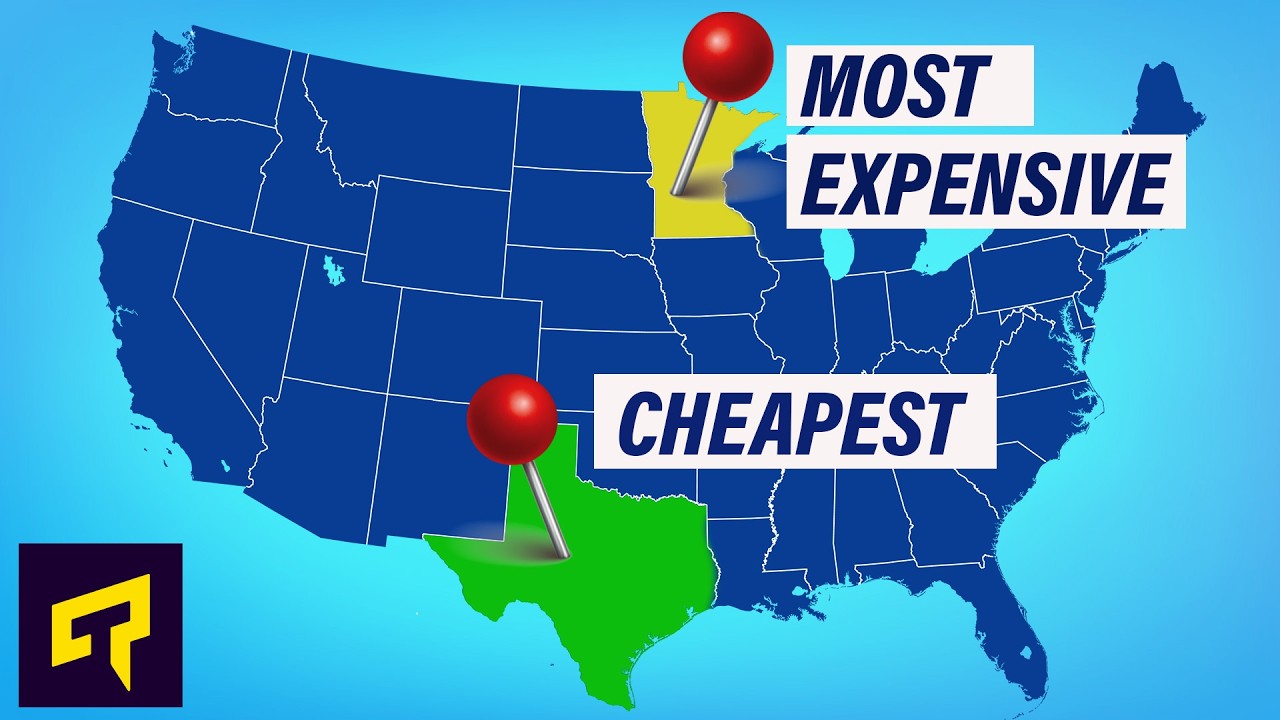
Why Does the Internet Cost More HERE Than THERE?
0 up · 0 down · 0 ratings
Promos
Looking for a reliable mobile provider that won't break the bank? Meet Tello Mobile! With Tello, you get top-notch coverage, no contracts, and fully customizable phone plans that fit your needs. Switch to Tello & start saving now!→ lmg.gg Why do prices for internet service vary widely by location? Leave a reply with your requests for future episodes. ► GET MERCH: lttstore.com ► GET EXCLUSIVE CONTENT ON FLOATPLANE: lmg.gg ► SPONSORS, AFFILIATES, AND PARTNERS: lmg.gg FOLLOW US ELSEWHERE --------------------------------------------------- Twitter: twitter.com Facebook: @LinusTech Instagram: @linustech TikTok: @linustech Twitch: twitch.tv
The video explains why internet prices vary so much by location, even within the same country. It starts by noting that paying around $100 a month for decent home internet in places like Minneapolis can be markedly higher than about $60 in Fort Worth, Texas, and then shifts to unpacking the structural reasons behind these differences. A central theme is the high upfront infrastructure cost required to lay cables and build the necessary network, which creates natural monopolies in many markets. The host describes how these economics make it difficult for new competitors to enter since they must absorb enormous fixed costs before earning any return. Geographic factors, population density, and local regulations interact to determine how many ISPs can survive in a given area, often resulting in one or two dominant providers rather than robust competition. The discussion extends to rural and sparsely populated regions where alternatives like satellite internet are considered as potential game changers, though cost and technology barriers still apply. The narrative then explores policy and organizational options, including public utilities, government subsidies for infrastructure, and cooperative models, as potential levers to improve affordability and access, while noting that moving away from monopolies is complex and requires coordinated action across regulation and market structure. The video closes by highlighting concrete examples such as Chattanooga, Tennessee, a city-owned ISP with notably low prices and high performance, and contrasts these with broader regulatory and market dynamics in Canada, offering a range of potential policy tools to stimulate competition and lower prices over time.
Topics · telecommunications · economy · infrastructure · public policy
Questions answered
- Why are internet prices higher in some regions than others despite similar service quality?
- Prices vary due to high upfront infrastructure costs, geography, population density, and local regulatory barriers that affect how many ISPs can operate in a market, often leading to natural monopolies or limited competition.
- What policy options could increase competition and lower prices in broadband markets?
- Possible options include government subsidies for infrastructure, national or regional public utilities, telecommunications cooperatives owned by customers, and regulatory measures to prevent anticompetitive mergers and encourage access to incumbent networks by new entrants.