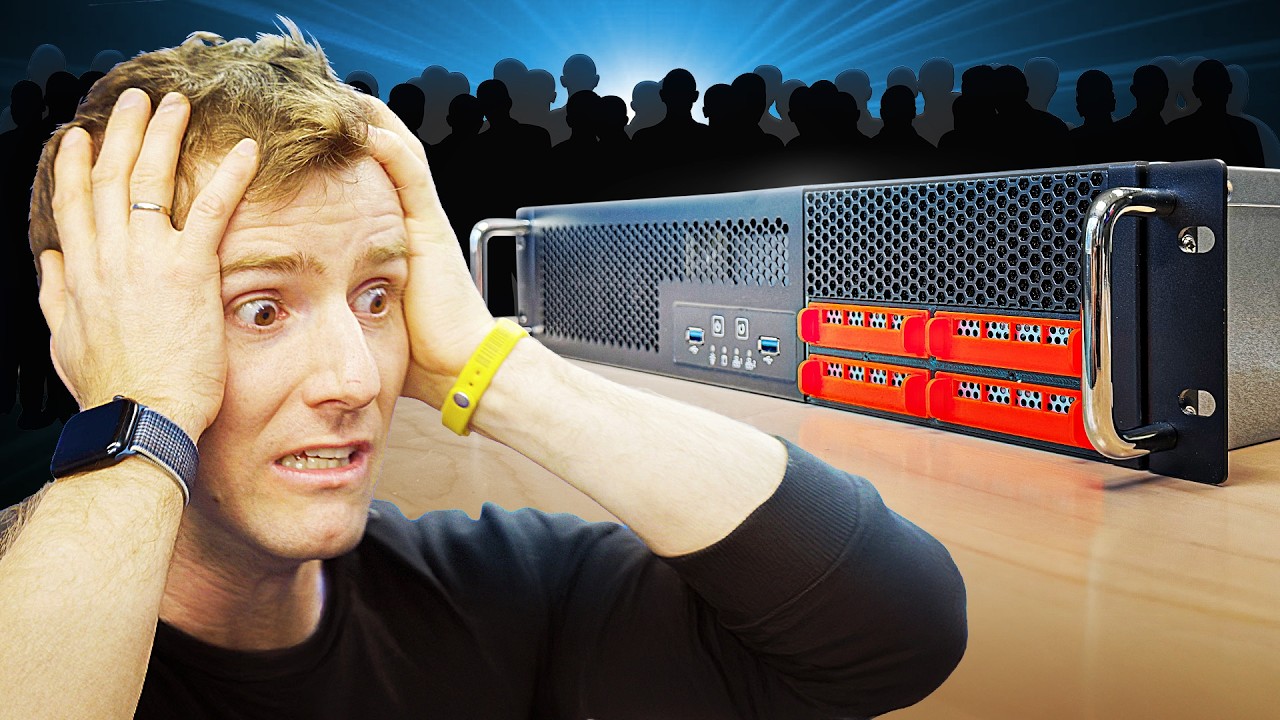
I paid 100 people to test 1 computer.
0 up · 0 down · 0 ratings
Description
Thanks to KIOXIA for sponsoring this video! Check them out at: americas.kioxia.com americas.kioxia.com Majority of the time, Smash Champs is just a badminton facility. But then you might ask, “Why did you hook it up with fiber optic networking, on-site servers, and so much power?”. Well, dear viewer, we are going to host the most BALLING LANs you’ve ever seen, with the help of KIOXIA and our new cache server. Discuss on the forum: linustechtips.com
Check out the parts from the build!
Check out Eaton's Tripp Lite UPS Series: eaton.com
Promos
Check out the Falcon Northwest FragBox SFF Gaming PC: lmg.gg ► GET OUR MERCH: lttstore.com ► GET EXCLUSIVE CONTENT ON FLOATPLANE: lmg.gg ► GET A VPN: piavpn.com ► SPONSORS, AFFILIATES, AND PARTNERS: lmg.gg How to covert your human-readable Butane config into a system-readable Ignition config: lmg.gg LANCache Butane config samples for Flatcar Container Linux: github.com Purchases made through some store links may provide some compensation to Linus Media Group. Affiliate links powered in part by affilimate.com Linus Sebastian is an investor in Framework Computer, Inc CHAPTERS --------------------------------------------------- 0:00 Intro 1:32 LIME DAY 2:28 The cache server 3:49 Wicked fast KIOXIA SSDs 4:30 Linus Drop Tips 4:37 We love rack mount cases 6:11 What an EPYC motherboard 6:41 Assembling the rest of it 10:16 Wouldn’t be LTT without some jank 13:46 Turning it on 14:11 LAN layout 16:33 Making sure the cache server works 17:56 The server is IN 18:21 Jake LAN Cache tips 20:56 Network testing let’s goooooo 23:13 Outro
I paid 100 people to test 1 computer follows Linus Tech Tips as they build and stress test a dedicated LAN cache solution for a badminton venue turned esports playground. The video opens with an ambitious plan to host Whale Land, a large gaming event at Smash Champs, powered by ultra-fast fiber, on-site servers, and a powerful cache server. Early on, the team explains why a cache server matters: to reduce internet bandwidth strain by storing game updates and patches locally so many attendees can pull data from the cache rather than the wider internet. They introduce the core hardware, led by four Kioxia CM7 Gen 5 NVMe SSDs, and describe how these drives enable extremely high sequential read speeds and very high 4K IOps for caching workloads. The host breaks down the overall rack, case, motherboard, and CPU choices, including an AMD Ryzen 9 9950 X3D, chosen for PCIe Gen 5 lanes and favorable cache characteristics. The narrative progresses from teardown and assembly to getting the system booted and integrated with a high‑bandwidth network plan using a 25G NIC initially, with thoughts about dual 25G or even 100G uplinks for future upgrades. The section ends with a sanity check on BIOS settings, RAM, and the RAM cooling approach, emphasizing the practical constraints of a compact 2U form factor and the importance of proper airflow and cable management. The video pivots to software architecture, explaining LAN cache as the heart of the system and Flatcar Container Linux as a minimal host for containerized services, all configured via a simple text configuration for easy reproducibility. Finally, the team runs real network tests with multiple testers, demonstrates live caching behavior, and evaluates the bottlenecks, notably CPU decompression, while confirming the cache’s effectiveness in handling burst downloads during simulated peak demand. The takeaway is clear: the cache server delivers substantial headroom and reduces reliance on the external internet, validating the concept for large live events and scalable LAN environments. The hosts invite viewers to explore simplified configuration sketches and related tutorials, and they close with excitement about broader deployment potential and future optimizations for Whale Land.
Topics · technology · computing · networking · data centers · science-and-technology
Questions answered
- What is the core purpose of the LAN cache in Whale Land?
- The LAN cache stores game updates locally so subsequent downloads are served from the cache, reducing internet bandwidth usage and speeding up updates for attendees.
- Why was the Ryzen 9 9950 X3D chosen for this build?
- Because it offers strong PCIe Gen 5 lane availability and decent cache efficiency in a 2U form factor, making it a cost-effective option for a high‑bandwidth server setup.
- How does Flatcar Container Linux fit into the setup?
- Flatcar runs the cache as a containerized service, configured via a text file for easy reproducibility and simple maintenance.
- What kind of network speeds are demonstrated in the test?
- The test shows aggregated 18x25G or higher uplinks across rows, with individual tester speeds ranging up to multiple gigabits per second, illustrating effective caching under load.
- What lessons were learned during assembly and testing?
- Key takeaways include the importance of BIOS lane configuration, airflow and cable management in a compact 2U rack, and the value of preconfiguring repeatable deployment for events.