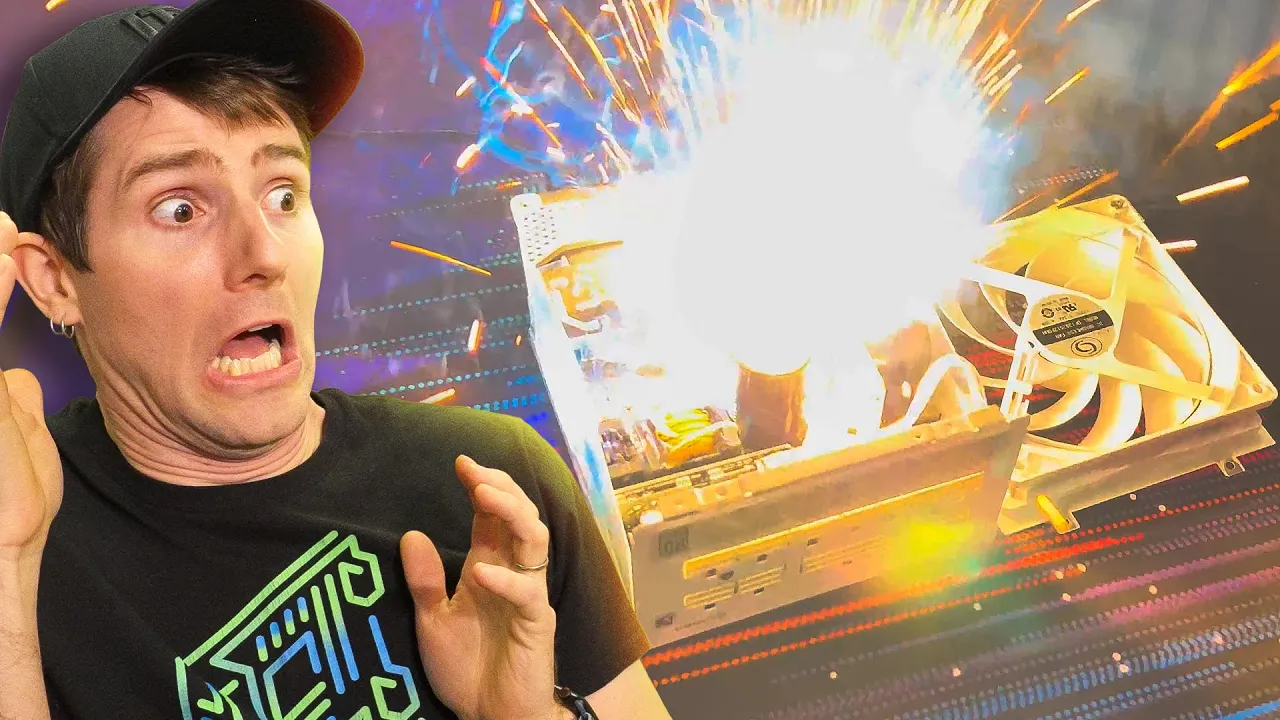
Thousands of You are Buying Dangerous Power Supplies
0 up · 0 down · 0 ratings
Description
Shop Micro Center’s Monitor Madness Event: micro.center Sign up for a FREE 128gig Flash Drive When Santa Clara Opens: micro.center
Check out the MSI MAG CORELIQUID A15 360 at lmg.gg
Promos
Check out the Labs website: lttlabs.com Power Supply Circuit - our new PSU channel - has been hard at work testing power supplies for a while now and it turns out some PSU manufacturers have not exactly been honest. Discuss on the forum: linustechtips.com Buy a Corsair SF850L 850W 80+ Gold PSU: geni.us Buy a FSP VITA-850GM 850W 80+ Gold PSU: geni.us Buy a NZXT C1000 1000W 80+ Gold PSU: geni.us Buy a NZXT C850 850W 80+ Gold PSU: geni.us Purchases made through some store links may provide some compensation to Linus Media Group. ► GET OUR MERCH: lttstore.com ► GET EXCLUSIVE CONTENT ON FLOATPLANE: lmg.gg ► GET A VPN: piavpn.com ► SPONSORS, AFFILIATES, AND PARTNERS: lmg.gg Purchases made through some store links may provide some compensation to Linus Media Group. CHAPTERS --------------------------------------------------- 0:00 - Intro 1:06 - MSI! 1:16 - PSU Tester Overview 4:56 - What makes a PSU good? 7:59 - What kills PSUs? 10:57 - How we test PSUs 13:23 - How PSU Circuit videos are made 15:05 - Micro Center! 15:54 - Outro
Channels and socials
Check out Power Supply Circuit: @PSUCircuit
The video opens by highlighting a dramatic demonstration of a power supply failing during routine testing. It establishes the central premise that some PSUs advertised with high reliability and five star reviews can fail spectacularly under stress, and it frames the broader investigation conducted by the PSU circuit team. The host explains their testing setup, including a fully equipped power supply station capable of delivering up to 1600 W and a 110% load excursion that pushes units beyond their rated capacity. The narrative then shifts to the philosophy behind PSU evaluation, noting ATX specifications, efficiency metrics like 80 Plus ratings, and the importance of long-term reliability beyond mere nominal specs. Throughout, the video emphasizes transparency, sharing that several units failed during 110% load tests and that the team has observed discrepancies between advertised efficiency and real-world performance. The host discusses how findings influence both consumer decisions and more rigorous lab practices, including how results are documented, parsed, and presented to viewers. The segment concludes with context on partnerships, the creative process behind PSU circuit videos, and a tease of practical recommendations for buyers and overclockers alike, anchored by the core message that many PSUs do not live up to their marketed promises under non-ideal conditions.
Topics · technology · lab-testing · safety · consumer-electronics · science-and-technology · computer-hardware
Questions answered
- Why do some power supplies fail under 110 percent load during testing?
- Some PSUs fail under 110 percent load because their components and protections are stressed beyond rated conditions, revealing weaknesses not evident at normal loads. Overcurrent protection, overheating, and inadequate transient response can trigger failures even when most units operate within ATX specs at standard conditions.
- What does Nvidia/ATX specification compliance tell us about PSU quality?
- ATX compliance ensures basic voltage delivery under typical loads, but it does not guarantee long-term reliability or efficiency across all load scenarios. Real-world testing across a wide load range reveals differences in efficiency and robustness that marketing benchmarks may hide.
- How should a consumer interpret 80 Plus Gold vs Platinum labels based on this video?
- The video shows that some PSUs rated as 80 Plus Gold can exceed their target efficiency under certain conditions, while the same units may not consistently hit Platinum across all loads. Consumers should look at full-load efficiency curves, not just box labels, to gauge real-world performance.