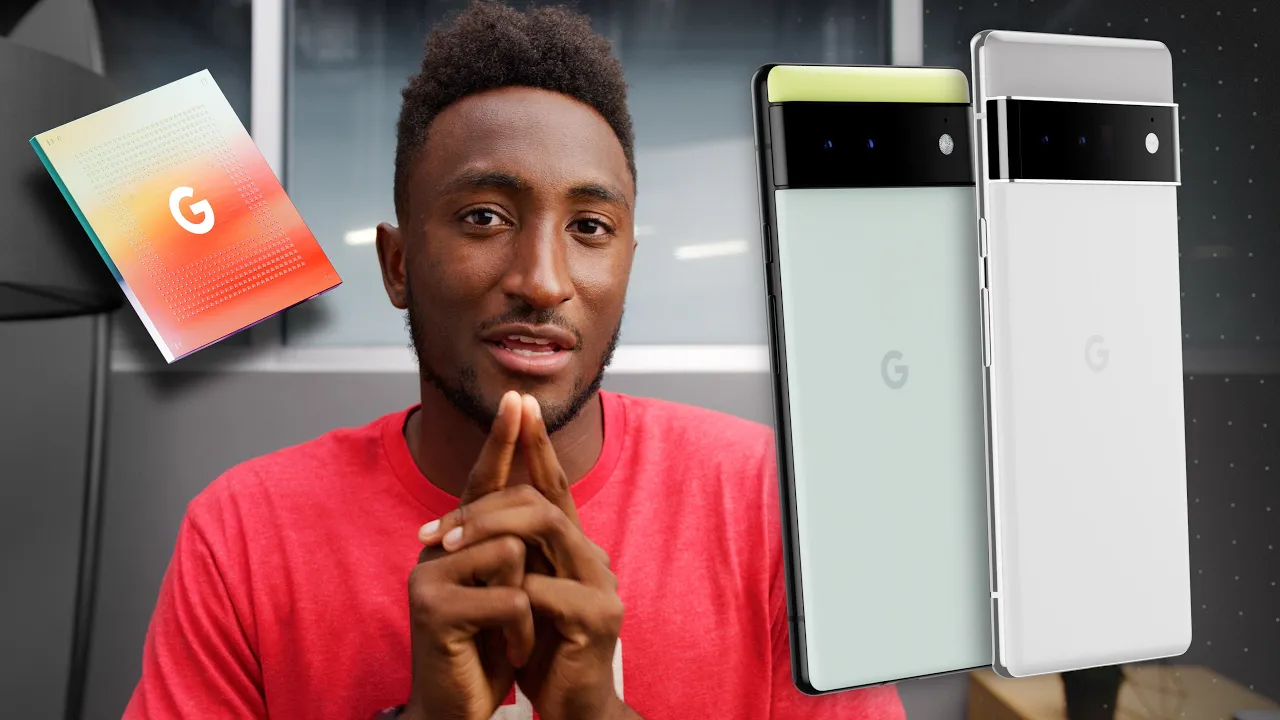
Pixel 6's Tensor Chip: Let's Talk!
0 up · 0 down · 0 ratings
Promos
A first look at Pixel 6 and Pixel 6 Pro, plus let's talk Tensor! Android 12 Top 5 Features! youtu.be MKBHD Merch: shop.mkbhd.com Tech I'm using right now: amazon.com Intro Track: Jordyn Edmonds smarturl.it Playlist of MKBHD Intro music: goo.gl ~ twitter.com @MKBHD @MKBHD
Pixel 6 and Pixel 6 Pro mark a big shift for Google as Marques Brownlee explains the rationale and the hardware ambitions behind Google Tensor. The video kicks off with a recap of the devices’ size, the camera bar design across the back, the Pro model’s larger footprint, and the move to a new on-device Tensor silicon. Brownlee highlights how Google’s approach combines hardware and software optimization, with Android 12 and Material You features fueling a refreshed look and feel while promising deeper integration between the silicon and the camera system. The discussion then pivots to the core benefits of Tensor, emphasizing improved on-device voice recognition and more efficient instruction handling for tasks like Google Assistant, all aimed at longer battery life and potentially extended software updates. The segment concludes with a forward-looking view on how Tensor might unlock a broader Google silicon ecosystem, hinting at future devices such as Pixel Watch, Chromebooks, and other hardware that could leverage the same processing backbone. Overall, the video frames Tensor as a strategic shift for Google that could redefine performance benchmarks for Pixel devices, particularly in photography, video processing, and power efficiency, while also raising questions about pricing and market rollout. The takeaway is that the first generation Tensor chip is positioned as a bold experiment with the potential to unlock substantial software-driven gains, improved user experiences, and a longer lifecycle for Pixel phones, setting up a narrative for future generations and ecosystem expansion.
Topics · technology · mobile devices · hardware · software
Questions answered
- What is the significance of Google designing its own Tensor chip for Pixel devices?
- The Tensor chip represents a move toward deeper hardware-software integration, enabling on-device speech recognition, enhanced video processing, improved camera computation, and potentially longer software update lifecycles by controlling more of the stack.
- How might Tensor affect battery life and efficiency compared to prior Pixel generations?
- Tensor aims to improve power efficiency through optimized processing paths and tighter integration with Android software, which could yield better battery life even if the devices retain ARM-based architectures.
- Could Tensor lead to an ecosystem of devices using the same silicon?
- Yes, the approach could scale to other Google devices like a Pixel Watch or Chromebooks, enabling shared image processing, AI capabilities, and a cohesive hardware-software ecosystem.