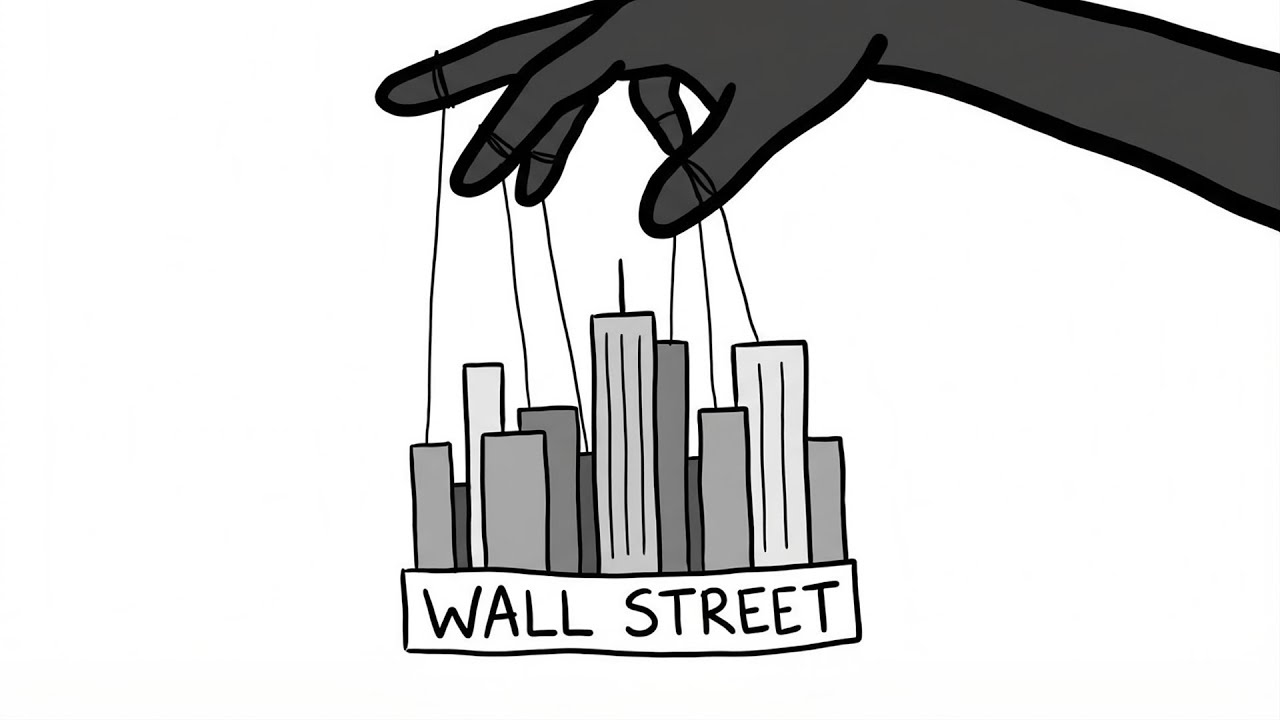
Private Credit: The Secret Industry Taking Over Wall Street
0 up · 0 down · 0 ratings
Channels and socials
This industry has quietly ballooned into a more than $2.5 trillion juggernaut, grown more than tenfold since 2007, and cranked out a new wave of billionaires. Private Credit is Wall Street's best-kept secret. In this video, we cover: • What is Private Credit? • What makes Private Credit so special? • What's the obsession with Private Credit? Complex topics, simple breakdowns. Join my free weekly newsletter to stay ahead of what's actually happening in markets: casualmarkets.co #finance #investing #stockmarket #stocks #wallstreet #economics Disclaimer: The information provided in this video and on this channel (collectively, the “Content”) is for informational, educational, and entertainment purposes only and does not constitute investment, financial, legal, or tax advice, nor a recommendation to buy, sell, or hold any security or investment strategy. Investing involves risk and you must do your own research. Nothing in the Content should be interpreted as creating a fiduciary relationship, financial advisory relationship, or client relationship of any kind. The host, the channel, and all affiliated entities expressly disclaim any and all liability for any direct or consequential loss or damage arising directly or indirectly from the use of, reliance upon, or interpretation of the Content. By viewing or interacting with the Content, you acknowledge and agree to these terms and release the host and all related parties from any and all claims related to your reliance on the information provided.
The video explains how private credit has quietly grown into a large Wall Street industry, describing it as a “boring-sounding” corner of finance that has ballooned into a more than $2.5 trillion market and grown more than tenfold since 2007. The host frames the audience surprise by contrasting private credit with other popular topics like stocks, crypto, real estate, and AI, arguing that institutional investors have instead been “obsessing” over this asset class. The video claims private credit has delivered nearly identical returns to the stock market over the last 20 years, while showing far less volatility, resulting in “stock-like gains” without frequent mood swings. It emphasizes why most people outside Wall Street do not know about it, and positions the rest of the episode as a breakdown of what private credit is, why it became important, and what could go wrong. After setting the size and performance context, the video explains private credit as lending to companies by non-bank lenders, stepping in after banks tightened after the 2008 financial crisis. It describes how banks responded to new regulation by increasing capital reserves, cutting leverage, and tightening lending standards, which the host says caused lending to middle market companies to plummet by around 2010. With middle market firms too big for local community banks and too small to issue bonds on Wall Street, private credit funds stepped in with direct loans from firms like Blackstone, Apollo, and Aries, often charging higher rates and adding fees. The video highlights investor appeal using a “stable returns” argument, noting a stated comparison of about 9.6% annually for private credit versus about 10.2% annually for the stock market, and describing private credit as smoother and consistent. It then warns that this stability depends on borrowers continuing to pay, and outlines key risks such as liquidity issues, mark-to-market valuation uncertainty, defaults, leverage, and the lack of centralized exchange price quotes that make loan values hard to know until payments stop. The episode ends with uncertainty, suggesting private credit could be a bubble of the same sort as other past episodes, while noting that for now interest payments keep the story moving.
Viewers strongly praise the video as high-quality and entertaining, repeatedly calling it a “banger,” “great video,” and “underrated,” and highlighting the host’s humor and real-world analogies as key strengths. A common theme is fascination with how private credit works and why it sounds boring but ties up billions or trillions, with some commenters asking for more videos on the topic and on how to evaluate risk or participate as a regular investor. Several viewers express bubble concerns, comparing private credit to other bubbles at once and questioning the sustainability of “stable returns,” especially pointing out skepticism about smoothness due to limited pricing and liquidity. Some viewers debate differences in risk exposure, noting taxpayer backstops like FDIC for banks versus private credit investors being at risk, while others question underwriting and downstream effects if private credit collapses. Overall sentiment is enthusiastic but cautious, mixing excitement and learning with critical scrutiny of hidden risks.
Topics · finance · debt markets · markets · stock market · education
Questions answered
- What is private credit?
- Private credit is lending to companies by non-bank lenders, rather than traditional bank lending. Companies borrow from private credit funds and similar lenders that provide direct loans, typically with higher rates and fees.
- Why did private credit grow after the 2008 financial crisis?
- After 2008, regulators required banks to increase capital reserves, cut leverage, and tighten lending standards. That reduced bank lending to higher-risk middle market companies, creating a funding gap that private credit stepped in to fill.
- Why do investors view private credit as attractive compared with the stock market?
- The video argues private credit can deliver stock-like returns with lower volatility and more consistency, often described as “stable returns.” It frames the main appeal as smoother performance, paired with target returns in the roughly 8% to 10% range.
- What risks are associated with private credit?
- The video highlights risks including liquidity limitations, uncertainty from mark-to-market valuations, potential defaults, and leverage. It also notes that there is no centralized exchange and limited public pricing, so loan values are difficult to assess until borrowers stop paying.