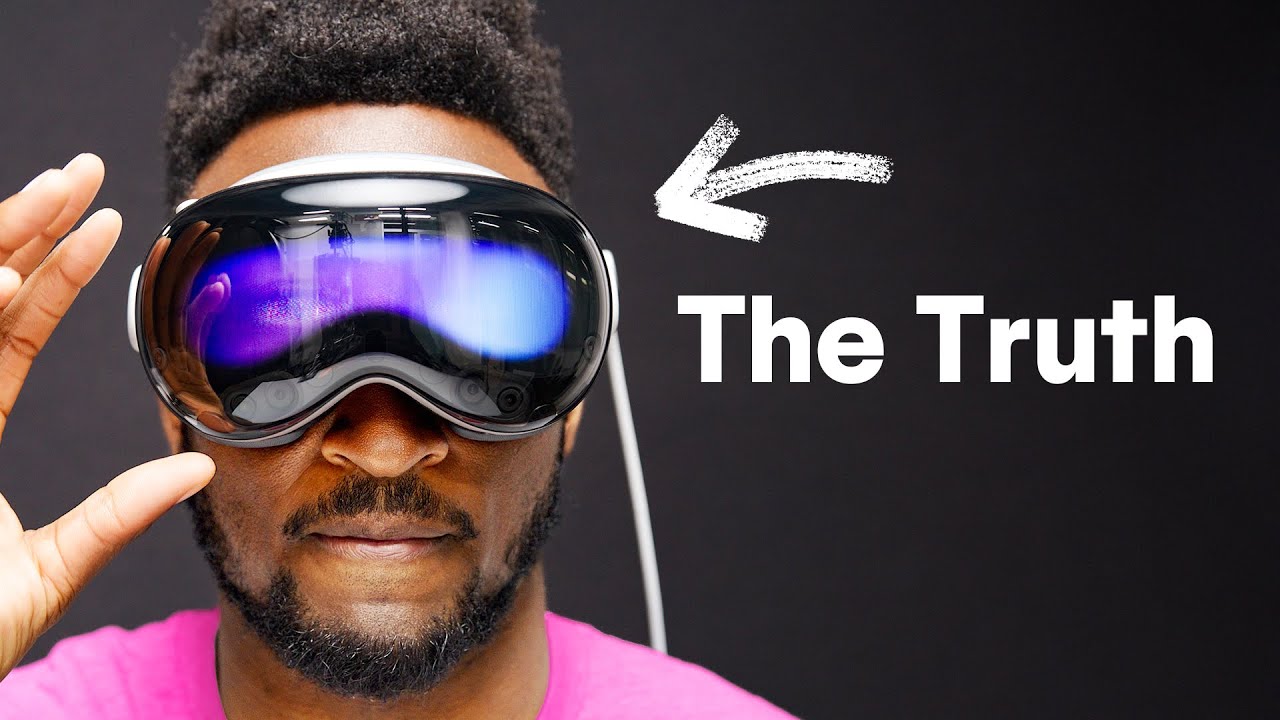
Apple Vision Pro Review: Tomorrow's Ideas... Today's Tech!
0 up · 0 down · 0 ratings
Promos
Apple Vision Pro is a glimpse into the future... with today's technology Actually using Vision Pro: youtu.be MKBHD Merch: shop.mkbhd.com Tech I'm using right now: amazon.com Intro Track: youtube.com Playlist of MKBHD Intro music: goo.gl 0:00 Intro 2:48 Immersiveness 6:35 Looking through glass 9:10 The Ecosystem 13:17 The Apps 16:06 The Comfort Issue 19:55 Eyes on the outside 21:40 So should you buy It? ~ twitter.com @MKBHD @MKBHD
Apple Vision Pro Review: Tomorrow's Ideas, Today's Tech dives into a first generation headset that Marques Brownlee presents as both risky and fascinating. He frames it as a generational leap for Apple, while acknowledging that many aspects are still early and imperfect. The video emphasizes how the device combines high density micro-OLED displays with advanced eye tracking, foveated rendering, and a sophisticated inside-out camera system to deliver sharp visuals and responsive interaction. He notes that the overall fidelity is outstanding for a head-mounted display, yet the real-world limitations of today’s hardware become apparent in field of view, battery life, and app availability. The review sets up a larger conversation about whether first-gen devices can spark a lasting ecosystem and a future reality beyond the initial product. In a deeper technical breakdown, the reviewer explains how the Vision Pro achieves high perceived resolution through foveated rendering, using eye tracking to render the exact area you look at in high detail. He discusses the seven and a half micron pixel size and a native 90 Hz refresh rate that can scale to 96 Hz for certain content, while also noting the inevitable trade-offs between rendering complexity and image quality. The concept of an edge-to-edge sharp center with softer periphery is described as natural and effective, though he points out that the field of view is a notable weakness when you look at the experience holistically. This section also highlights the cleverness of the R1 chip and how it minimizes latency from outside light to the image on the eyeball. A significant portion is devoted to passthrough quality, where the reviewer argues Vision Pro offers the best real-world overlay experience available today. He explains that Apple leans into a future vision that overlays digital elements onto the real world, using very high quality camera feeds and displays to create a convincing transparency mode. Yet he also demonstrates the limitations: exposure controls, lighting dynamics, and occasional occlusion issues remind us that this is still premium, current technology rather than a sci-fi inevitability. The hands-on demonstrations,moving around a room, catching items, and interacting with spatial interfaces,underscore how immersive and natural the interaction can feel when the hardware is tuned correctly. The ecosystem and software story is presented as the strongest selling point for a broad consumer audience, even if the initial app catalog is modest. He highlights iMessage continuity, photos syncing, and cross-device text copying as seamless benefits of the Apple ecosystem. FaceTime with spatial audio and a Mac Virtual Display feature are singled out as standout experiences, enabling new ways to collaborate or work that feel uniquely possible with Vision Pro. However, he cautions that the app situation is still nascent, with a limited number of Vision Pro-specific apps and the absence of some major streaming services, which dampens the early value proposition for many users. Finally, the review weighs comfort, wearability, and price as critical verdict factors. The weight is acknowledged as substantial, with the front-heavy balance causing discomfort after short periods unless theDual Loop band is used for longer sessions. He praises the included second band option for lighter, quick-use scenarios, but argues that for extended use the dual-band setup remains the best choice. The video ends with a balanced stance: Vision Pro is an expensive yet highly capable piece of technology that generates compelling use cases, especially for media creation and collaborative work, while leaving clear questions about a sustainable, mass-market adoption path. The future potential remains bright, but the next generations will determine whether this device becomes an enduring platform or a captivating prototype.
Topics · technology · consumer electronics · augmented reality · virtual reality · wearable
Questions answered
- What makes Vision Pro technically impressive according to the review?
- Key factors include high-density micro-OLED displays with very small pixel sizes, fast eye tracking, foveated rendering to render only where you look in high detail, and a low-latency passthrough system enabled by the R1 chip.
- What are the main drawbacks highlighted for first-generation Vision Pro?
- Notable downsides are weight and comfort, limited native app availability, shorter battery life, and a higher price point.
- Which features did the reviewer praise the most for everyday use?
- The Mac Virtual Display, FaceTime with spatial audio, iMessage continuity, and overall ecosystem integration were highlighted as strong daily-use advantages.