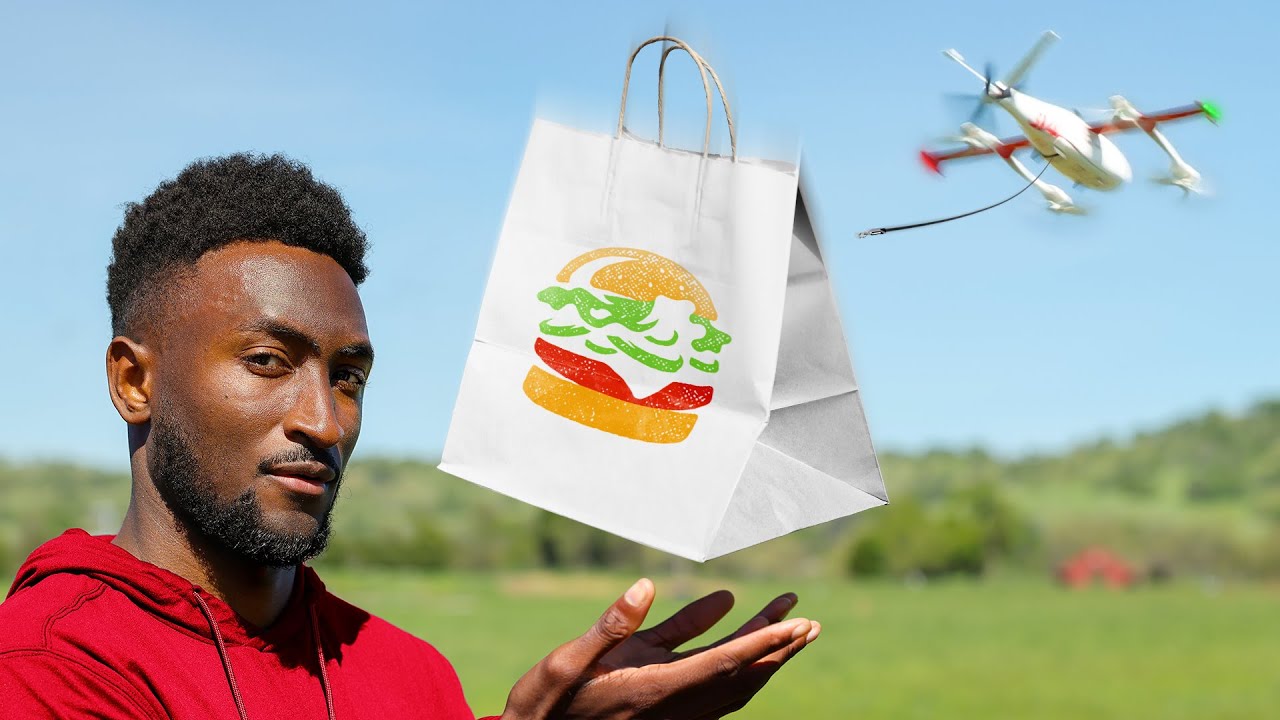
The Truth about Drone Deliveries!
0 up · 0 down · 0 ratings
Promos
Weren't we supposed to have drone deliveries by now? Real Engineering video: youtu.be Mark Rober video: youtu.be MKBHD Merch: shop.mkbhd.com Playlist of MKBHD Intro music: goo.gl ~ twitter.com @MKBHD @MKBHD
The video begins by reframing the idea of drone delivery, contrasting the dramatic, consumer-facing clips with the real engineering and logistics behind these systems. The host explains that the most common drone deliveries are lightweight parcels under five pounds and highlights how Zipline has evolved beyond the initial, simplistic pictures to a sophisticated autonomous platform. A tour of Zipline’s Platform 1 shows a fixed-wing drone launched by a slingshot, delivering payloads with a parachute, and then being reeled back, illustrating the early, large-scale approach to autonomous delivery. The narrative then shifts to the current generation, Platform 2, which combines a main drone with an attached ground-delivery droid that lowers and drops packages with high precision. Throughout, the host connects the tech details to real-world impact, including lifesaving medical deliveries in Rwanda, and shows how the system manages safety, wind, and acoustics, while maintaining a vision for scalable, 24/7 operations. The video emphasizes a nuanced takeaway: drone delivery is not a universal replacement for trucks, but for small, time-sensitive, and high-value items, it offers dramatic benefits in speed, cost, and accessibility, supported by ongoing regulatory and logistical work in places like Rwanda and the United States.
Topics · science and technology · innovation · logistics · drones · safety · ai and analytics · environment and energy
Questions answered
- What is Zipline Platform 2 and how does it differ from Platform 1?
- Platform 2 uses a main drone with both articulating propellers and a fixed wing, plus a smaller droid that lowers the delivery from the bottom, enabling precise ground placement. Platform 1 was a fixed-wing drone launched from the ground and dropped payloads with a parachute before returning, which represented an earlier, less integrated approach.
- Why is drone delivery not a complete replacement for trucks?
- Drone delivery excels for small, time-sensitive, and high-value items, offering lower cost, faster delivery, and 24/7 operation, but trucks remain necessary for larger, heavier, or multi-stop payloads and for areas without drone infrastructure.