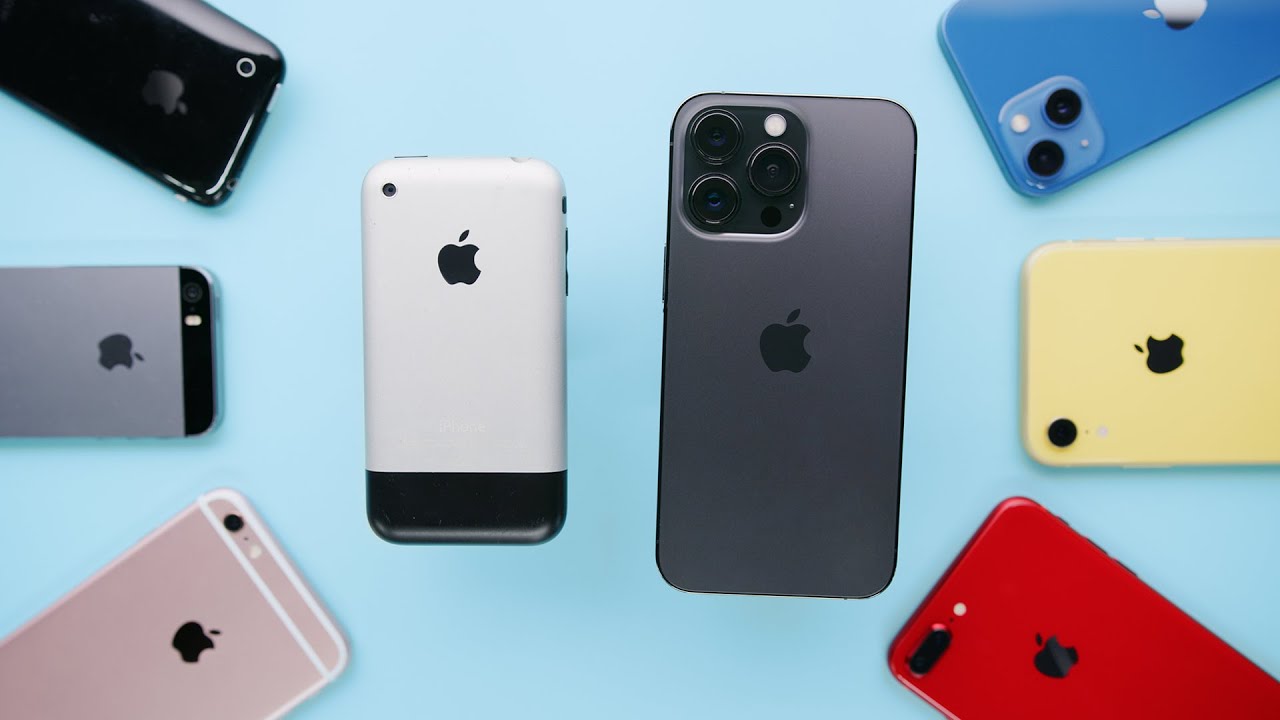
Reviewing EVERY iPhone Ever!
0 up · 0 down · 0 ratings
Promos
There have been 33 iPhones in 14 years. Let's take a look at every single one of them! (Android version next?) MKBHD Merch: shop.mkbhd.com 0:00 Intro 1:52 The Original iPhone 3:50 iPhone 3G 4:48 iPhone 3GS 6:19 iPhone 4 9:00 iPhone 4S 9:44 iPhone 5 11:17 iPhone 5S 11:55 iPhone 5C 13:07 iPhone 6/6 Plus 15:05 iPhone 6S/6S Plus 16:37 iPhone SE 17:42 iPhone 7/7 Plus 19:55 iPhone 8/8 Plus 20:22 iPhone X 22:28 iPhone XS/XS Max 23:05 iPhone XR 23:46 iPhone 11 Series 25:37 iPhone SE (2020) 26:35 iPhone 12 Series 28:15 iPhone 13 Series 29:29 THE GRAPHS Tech I'm using right now: amazon.com Intro Track: youtube.com Playlist of MKBHD Intro music: goo.gl ~ twitter.com @MKBHD @MKBHD
The video presents a comprehensive retrospective that tracks the iPhone from its original 2007 debut to the iPhone 13 lineup, framing how each generation contributed to the smartphone landscape. The host begins by establishing the original iPhone as a legendary inflection point, highlighting its multitouch interface, web-based OS, and the way it unified phone, internet, and iPod functionalities. He notes the absence of an App Store at launch and the early limitations, such as a basic wallpaper and limited storage, while emphasizing how its design language and interface set the template for future devices. The narrative then progresses generation by generation, underscoring how each model refined hardware and software, from the iPhone 3G’s App Store introduction to the iPhone 4’s design and antenna considerations, and later the 4S with Siri and faster internals. With each step, the video highlights pivotal shifts like the introduction of Retina display on the iPhone 4, Touch ID on the 5S, and the transition to larger screens and metal bodies with the iPhone 6 family, culminating in the controversial but transformative iPhone 7 notch removal era and the iPhone X redesign. The host also reflects on mid-cycle strategy with models like the SE and the more affordable options (5C, 12 mini) that broaden accessibility, and on the shift toward multiple devices within a single generation (Pro, Pro Max, Plus, Max, Mini) as the lineup expanded. Through this journey, the video ties design language to market forces, noting how Apple’s choices around screen size, materials, port changes, and camera capabilities influenced the broader smartphone ecosystem. The visual graph segments at the end crystallize the data: storage capacities grow from a few gigabytes to over a terabyte, RAM scales up while staying within practical limits, and megapixel counts climb from 2 MP to 12 MP with continuing ambition for higher resolution video formats. The discussion also captures pricing evolution, mentioning the leap to $999 as a psychological threshold and the impact of pricing on consumer perception and competition. Finally, the host projects a future-oriented note, acknowledging ongoing questions about the next iPhone after 13 and the broader evolution of the iPhone ecosystem, while reflecting on the momentum generated by the iPhone’s design language, camera capabilities, and propulsion of the smartphone market forward. The overall takeaway is that the iPhone’s evolution mirrors broader tech trends: bigger displays, faster processors, improved cameras, new interaction paradigms, and a willingness to experiment with premium pricing, all of which have shaped both consumer expectations and competitive strategies in mobile devices.
Topics · technology · smartphones · history · consumer_electronics
Questions answered
- What was the significance of the original iPhone’s multitouch interface?
- It demonstrated a shift toward touch-first interaction, making a capacitive screen central to navigation and on-device input.
- Why did Apple remove the headphone jack on the iPhone 7?
- The change aligned with a move toward wireless audio and a thinner device profile, reflecting broader trends in the ecosystem.
- What design changes came with the iPhone X?
- A notch for Face ID and camera sensors, an OLED display, no home button, and a gesture-driven interface marking a top redesign.
- What was noted about pricing in the iPhone lineup?
- Prices climbed to $999 and beyond, signaling a willingness to price premium flagships higher as features and ecosystems expanded.