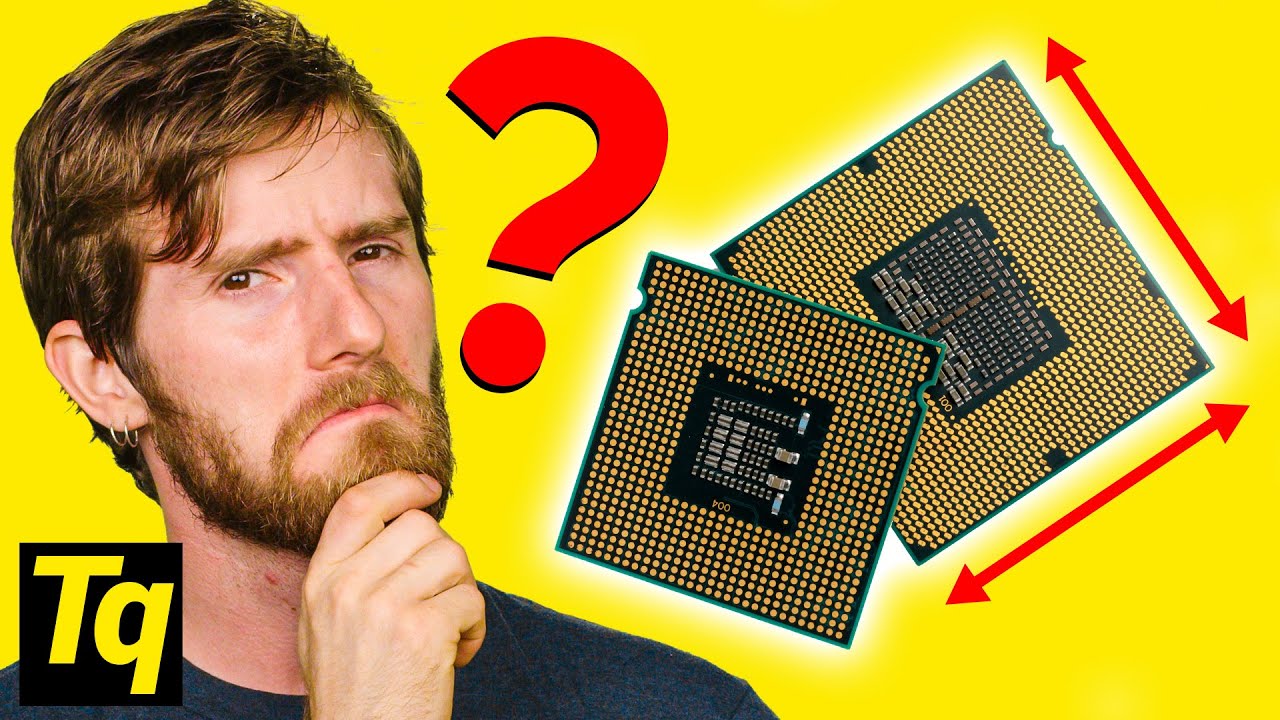
Why Don't They Make BIGGER CPUs?
0 up · 0 down · 0 ratings
Promos
Sign up for Private Internet Access VPN at privateinternetaccess.com Would larger CPUs help performance? Leave a reply with your requests for future episodes, or tweet them here: twitter.com GET MERCH: lttstore.com SUPPORT US ON FLOATPLANE: floatplane.com LTX EXPO: ltxexpo.com AFFILIATES & REFERRALS --------------------------------------------------- Affiliates, Sponsors & Referrals: lmg.gg Get Private Internet Access VPN at lmg.gg Get a Displate Metal Print at lmg.gg Nerd or Die Stream Overlays & Templates: geni.us Support a Creator code LINUSMEDIAGROUP on Epic Games Store: lmg.gg Get a 30-day free trial of Amazon Prime at lmg.gg Our Test Benches on Amazon: lmg.gg Our Production Gear: amazon.com FOLLOW US ELSEWHERE --------------------------------------------------- Twitter: twitter.com Facebook: @LinusTech Instagram: @linustech Twitch: twitch.tv FOLLOW OUR OTHER CHANNELS --------------------------------------------------- Linus Tech Tips: lmg.gg TechLinked: lmg.gg ShortCircuit: lmg.gg LMG Clips: lmg.gg Channel Super Fun: lmg.gg Carpool Critics: lmg.gg
This TechQuickie episode explores why CPU makers do not simply enlarge the silicon die to gain more cores or higher performance. The host explains that a bigger CPU die would reduce manufacturing yields, meaning more chips fail quality checks and are discarded, which drives up cost per usable chip. Heat management becomes more challenging as die size grows, and maintaining synchronized performance across a larger package can require lower clock speeds to avoid thermal throttling. The video uses an analogy with car engines to illustrate the trade-offs: a bigger engine can deliver more power but costs more to produce and may not fit the intended use case efficiently. It also notes that higher core counts often come with slower single-thread performance, which matters for many applications like gaming. Instead of brute-forcing with more transistors, CPU designers optimize architecture for specific workloads, such as video transcoding or fast storage interconnects, balancing core count, cache, and clock speed to meet real-world use cases. The presenter closes by emphasizing that bigger is not inherently better and hints at how product teams design CPUs around target workloads and market needs rather than chasing the largest possible die.
Topics · science and technology · computer hardware · cpu design · manufacturing · engineering
Questions answered
- Why don't CPU makers just redesign a CPU with a larger die to gain more cores and higher performance?
- Larger dies reduce production yields, increase manufacturing costs per usable chip, and raise heat and synchronization challenges, which can lower real-world performance and margins.
- How do CPU designers decide on core count versus clock speed and cache?
- They optimize architecture for intended workloads, balancing core count, cache, and clock speeds to meet use cases like gaming or video transcoding while managing heat and power constraints.