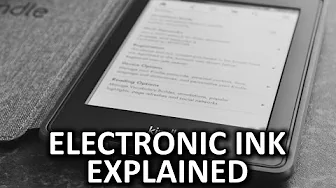
Electronic Ink As Fast As Possible
0 up · 0 down · 0 ratings
Promos
The electronic ink in your e-reader is very different than the LCD screen on your smartphone. Learn all about how it works! TunnelBear message: TunnelBear is the easy-to-use VPN app for mobile and desktop. Visit tunnelbear.com to try it free and save 10% when you sign up for unlimited TunnelBear data. Follow: twitter.com Join the community: linustechtips.com Licenses for image used in this video: creativecommons.org creativecommons.org
Electronic Ink As Fast As Possible explains the core differences between electronic ink and traditional LCD displays, focusing on the practical advantages of e-ink for reading. The video begins by contrasting the ancient concept of ink with modern e-readers, then dives into the micro-scale mechanism: each pixel is a tiny capsule filled with white and black pigment particles that respond to electric fields. By applying targeted charges to individual capsules, the device makes white or black particles rise to the surface to form text or images. The narration also notes how grayscale can be achieved by manipulating charges across a capsule, improving edge sharpness and perceived resolution. A key practical point is that e-ink only consumes power when the image changes; simply displaying a page uses no additional energy, which helps explain why e-readers boast long battery life measured in days or weeks. The host touches on lighting considerations, explaining built-in LEDs on models like the Kindle Paperwhite to enable reading in the dark, while also acknowledging the trade-off of reduced battery life. The discussion expands to more speculative uses of e-ink, including color variants, external displays on flash drives, smartwatches, or even walls and furniture that could change appearance. The video ends with a light plug for TunnelBear, before inviting viewers to subscribe and comment on future topics, underscoring the channel's focus on quick, informative tech explanations.
Topics · technology · science
Questions answered
- What makes electronic ink energy efficient compared to LCD displays?
- Electronic ink only uses power when the image changes; once the page is rendered, no continuous power is required, unlike LCD screens which consume energy continuously while displaying content.
- How do e-ink displays achieve grayscale and sharper text?
- E-ink achieves grayscale by applying different charges to opposite sides of a capsule to create mixed white and black particle positions, and by precise control over the electric fields across capsules edges are enhanced, improving the smoothness and readability of text.